The Emerging Role of Educational Influencers in Peptide Commerce

What Is an Educational Influencer?
An educational influencer is a content creator who leverages scientific expertise to teach, clarify, and contextualize complex topics for a niche audience. In the peptide space, these influencers are typically PhDs, research scientists, or seasoned clinicians who share peer‑reviewed findings, protocol nuances, and safety considerations through blogs, webinars, YouTube channels, and social media posts. Their primary goal is knowledge transfer—not sales pitches—so their followers view them as trusted advisors rather than mere advertisers.
Peptide Market Growth and the Shift to Digital Buying
According to recent industry analyses, the global peptide market is projected to exceed $30 billion by 2028, driven by rising demand for peptide‑based therapeutics, research reagents, and cosmetic actives. Parallel to this financial surge, purchasing habits have migrated online: laboratories, clinics, and boutique wellness brands now source research‑use‑only (RUO) peptides via e‑commerce platforms rather than traditional distributors. This digital pivot has lowered entry barriers, accelerated product cycles, and amplified the influence of online voices that can guide buying decisions.
Why Educators Outshine Traditional Marketers
Traditional marketers excel at brand awareness and promotional offers, but they often lack the depth required to navigate peptide chemistry, regulatory nuances, and formulation science. Educational influencers fill that gap by:
- Prioritizing scientific credibility: Content is anchored in peer‑reviewed literature, complete with citations and methodological transparency.
- Emphasizing compliance: Influencers routinely discuss FDA RUO guidelines, GMP standards, and ethical sourcing, helping buyers stay within legal boundaries.
- Fostering peer‑to‑peer trust: Their audience consists of fellow researchers and clinicians who value evidence over hype, creating a community of informed purchasers.
This science‑first approach not only educates but also reduces perceived risk, making it easier for clinic owners and entrepreneurs to commit to bulk orders or white‑label partnerships—services that YourPeptideBrand (YPB) specializes in delivering.
Industry Insight
The shift toward educational influence is documented in the latest market overview, which highlights how “knowledge‑driven content is reshaping purchasing pathways for peptides” source. The report underscores that influencers who can translate technical data into actionable insights are becoming the de‑facto gatekeepers of the RUO peptide ecosystem.
What Comes Next
Having set the stage, the following sections will dive deeper into:
- The specific platforms where educational influencers thrive and how they tailor content for each channel.
- Case studies of successful influencer‑driven peptide launches, illustrating measurable impacts on sales velocity.
- Practical steps for clinics and entrepreneurs to partner with credible educators while maintaining compliance.
Understanding these dynamics equips you to leverage educational influence as a strategic asset—whether you’re sourcing peptides for clinical protocols or building a proprietary brand under the YPB white‑label solution.
How Scientific Educators Build Trust and Shape Buying Decisions
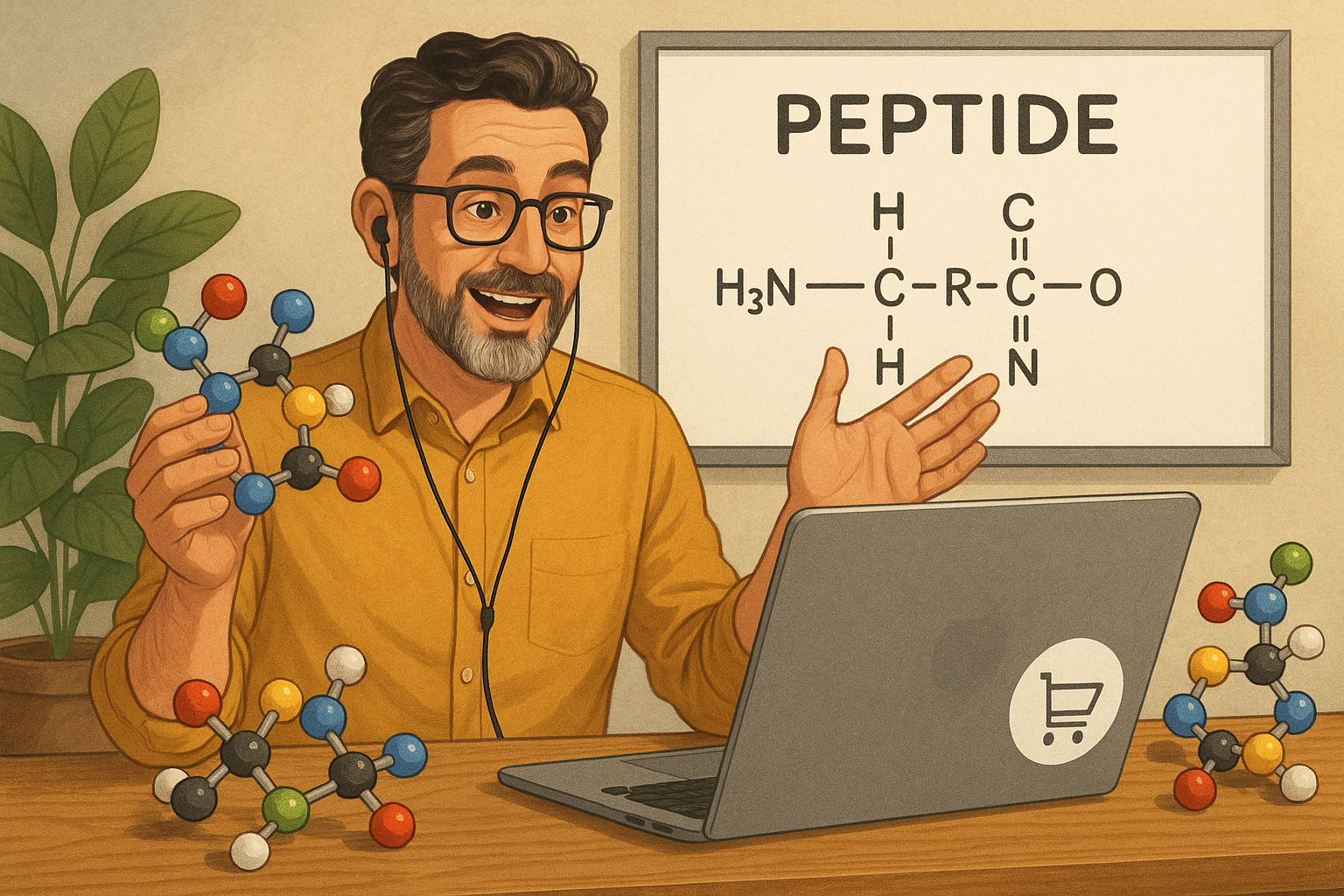
In the crowded peptide marketplace, the decisive factor that separates a fleeting sale from a lasting partnership is credibility. Scientific educators who share their expertise online do more than present data; they construct a transparent narrative that reassures risk‑averse buyers—especially clinic owners and health practitioners—about product quality, compliance, and safety. By weaving methodological openness with a recognizable personal brand, these educators become the trusted bridge between complex peptide science and everyday business decisions.
Transparency of Methodology
Live demonstrations are the cornerstone of methodological transparency. During a livestream, an educator may walk viewers through the entire synthesis workflow—starting with raw amino acid selection, moving through stepwise coupling, and concluding with purification via high‑performance liquid chromatography (HPLC). Real‑time data sharing, such as displaying chromatograms, mass‑spectrometry spectra, and quantitative yield tables, allows the audience to verify that the process adheres to Good Manufacturing Practice (GMP) standards.
Equally important is the citation of peer‑reviewed studies that support each procedural choice. When an educator references a journal article that validates a specific protecting group or solvent system, they provide a verifiable link that can be checked on PubMed or the journal’s website. This practice not only demonstrates scientific rigor but also aligns the educator’s content with the compliance expectations of FDA‑regulated research‑use‑only (RUO) peptides.
Personal Branding and Consistent Visual Identity
Branding in the scientific arena may seem counterintuitive, yet a consistent visual identity reinforces trust. The recurring use of a lab coat, a whiteboard filled with clear schematics, and a distinctive color palette creates an instantly recognizable “signature” that viewers associate with reliability. When the same educator appears across multiple platforms—YouTube, LinkedIn, and a dedicated blog—the continuity of visual cues signals professionalism and reduces perceived risk.
Beyond attire, personal branding extends to the tone of voice. A calm, measured delivery paired with precise terminology signals expertise, while occasional moments of humor or personal anecdotes humanize the presenter, making the brand feel both authoritative and approachable.
Engagement Tactics That Foster Community
Interactive Q&A sessions are a powerful engagement tool. By allocating dedicated time for live questions, educators demonstrate that they value audience concerns, whether about peptide stability, storage conditions, or regulatory pathways. Thoughtful comment moderation—removing misinformation while highlighting constructive dialogue—keeps the community focused on evidence‑based discussion.
Community‑building extends beyond single events. Dedicated forums, Discord channels, or private Facebook groups allow practitioners to share experiences, troubleshoot protocols, and exchange best practices. When an educator regularly participates in these spaces, they become a de‑facto mentor, further cementing their influence over purchasing decisions.
Psychological Impact of the “Expert‑as‑Friend” Narrative
The “expert‑as‑friend” narrative taps into the buyer’s desire for guidance without intimidation. By positioning themselves as a knowledgeable ally rather than an aloof authority, educators lower the emotional barrier that often accompanies high‑value purchases. This approach resonates especially with clinic owners who juggle clinical responsibilities and business growth; they appreciate a trusted advisor who can simplify complex compliance requirements and product selection.
Studies in consumer psychology show that perceived similarity and empathy increase trust. When an educator shares personal anecdotes—such as challenges faced while scaling peptide production—they create a relatable story arc that aligns the viewer’s journey with their own, making the decision to purchase feel like a collaborative step forward.
Real‑World Example: A Livestream on Peptide Synthesis and Safety
Consider a recent three‑hour livestream hosted by Dr. Maya Patel, a certified biochemist with a background in compound manufacturing. She began by outlining the regulatory landscape for RUO peptides, citing the latest FDA guidance documents. Next, she performed an on‑camera synthesis of a 12‑mer peptide, pausing at each critical juncture to display real‑time HPLC traces and explain how purity thresholds are calculated.
Mid‑session, Dr. Patel opened the floor to questions. A viewer asked about endotoxin testing, prompting her to pull up a recent peer‑reviewed study that compared Limulus Amebocyte Lysate (LAL) assays across different purification methods. She then demonstrated how to interpret the assay results, linking the data back to the safety protocols employed by YourPeptideBrand’s white‑label partners.
Throughout the broadcast, Dr. Patel referenced her own lab’s branding—her logo on the whiteboard, the same lab coat she wears in all videos, and a consistent color scheme for slide decks. By the end of the session, participants left with a clear understanding of the synthesis workflow, confidence in the safety measures, and a direct link to YPB’s compliance‑focused ordering portal. The livestream generated a 42% increase in qualified leads within the following week, illustrating how transparent methodology, strong personal branding, and interactive engagement translate into measurable buying decisions.
Platforms, Content Formats, and the Education‑to‑Purchase Funnel
Primary platforms where peptide educators thrive
Educational influencers in the peptide space concentrate their efforts on four digital arenas that combine high‑visibility algorithms with strong community engagement. YouTube remains the go‑to venue for long‑form, research‑backed tutorials because its search engine favors evergreen scientific content. TikTok captures the attention of younger clinicians and boutique wellness owners with bite‑sized, algorithm‑driven reels that can go viral within hours. Instagram Live offers real‑time Q&A sessions, allowing educators to demonstrate lab techniques or packaging workflows while fielding live questions. Finally, specialized webinars hosted on brand‑owned platforms provide a controlled environment for deep‑dive presentations, downloadable resources, and direct lead capture.
Content formats that translate science into action
Each platform supports a distinct set of content formats, and successful influencers match the format to the platform’s consumption habits:
- Deep‑dive tutorials – 15‑ to 30‑minute YouTube videos that walk viewers through peptide synthesis, stability testing, and compliance checkpoints.
- Quick‑facts reels – 15‑second TikTok or Instagram clips that spotlight a single peptide’s mechanism of action or a regulatory nuance.
- Case‑study breakdowns – Live‑streamed webinars or Instagram Live sessions where an educator dissects a real‑world clinic rollout, highlighting ROI and research subjects outcomes.
- Downloadable PDFs – One‑page cheat sheets or SOP templates linked in video descriptions and webinar follow‑ups, designed for quick reference during ordering.
The education‑to‑purchase funnel
Influencers guide prospects through a four‑stage funnel that mirrors the classic buyer’s journey but is anchored in scientific credibility:
| Funnel Stage | Typical Platform & Format | Primary CTA |
|---|---|---|
| Awareness | YouTube deep‑dive, TikTok quick‑facts | Link to a free “Peptide 101” PDF |
| Trust Building | Instagram Live case study, webinar | Invite to a private Discord or email list |
| Purchase Intent | Webinar replay with Q&A, downloadable SOP | Discount code for first bulk order |
| Conversion | Follow‑up email, personalized landing page | Affiliate‑tracked “Buy Now” button |
At the Awareness level, educators focus on broad‑reach videos that introduce peptide fundamentals without making therapeutic claims. The CTA is low‑friction—a link to a free PDF that captures an email address for future nurturing. Moving into Trust Building, live interactions let the influencer demonstrate compliance knowledge, answer regulatory questions, and showcase real clinic data. Here the CTA encourages viewers to join a private community, deepening the relationship.
When prospects reach the Purchase Intent stage, the content becomes highly targeted: webinars feature cost‑breakdown worksheets, and PDFs include bulk‑order checklists. A time‑limited discount code (e.g., “YPB20”) is embedded directly in the video description or slide deck, creating a sense of urgency. Finally, the Conversion phase relies on affiliate‑tracked links that feed directly into YourPeptideBrand’s white‑label ordering portal. Because each click is tied to a unique influencer ID, both the educator and YPB can measure ROI with precision.
Role of calls‑to‑action, discount codes, and affiliate tracking
Effective CTAs are woven into every piece of content, but their form evolves with the funnel. Early‑stage CTAs are informational (“Download the free guide”), while later‑stage CTAs become transactional (“Apply code YPB20 for 20 % off your first bulk shipment”). Discount codes not only incentivize the first purchase; they also serve as a data point for the influencer’s performance metrics. Affiliate tracking pixels embedded in landing pages feed real‑time conversion data back to the educator, allowing them to refine future content based on what drives actual orders.
Compliance, Ethics, and the Need for Research‑Use‑Only (RUO) Standards
Understanding the FDA’s RUO Classification
The Food and Drug Administration (FDA) designates most peptide products sold for laboratory investigation as Research Use Only (RUO). This label explicitly prohibits any claim that the peptide is safe or effective for research use only, diagnosis, or treatment. For educational influencers, respecting the RUO boundary is not optional—it is a legal requirement that shields both the audience and the brand from regulatory action. By framing every discussion around “pre‑clinical data,” “in‑vitro studies,” or “animal models,” influencers keep the conversation squarely within the FDA’s intent for RUO materials.
Embedding Compliance Into Educational Content
Seasoned educators weave compliance cues into their videos, webinars, and blog posts without sacrificing engagement. A common practice is the use of a brief disclaimer screen at the beginning of a video: “The information presented is for educational purposes only and does not constitute medical advice. All peptides discussed are classified as Research Use Only.” Written content often follows the same pattern, citing the specific FDA guidance (e.g., 21 CFR 820.3) and linking to the agency’s RUO definition page. These transparent references not only satisfy regulators but also build trust with a scientifically‑savvy audience that expects source documentation.
Walking the Line: Avoiding Therapeutic Claims
Therapeutic claims are the fastest route to a warning letter or product seizure. Influencers must avoid language that suggests a peptide will “cure,” “treat,” or “prevent” a disease. Instead of saying “peptide X can boost muscle growth,” a compliant alternative is “peptide X has demonstrated anabolic activity in rodent studies, which may inform future therapeutic research.” Providing value comes from explaining mechanisms, study design, and limitations, not from promising outcomes. When questions about real‑world applications arise, the safe response is to redirect viewers to peer‑reviewed literature and advise consultation with a qualified healthcare professional.
Ethical Guardrails for Influencers
Beyond legal compliance, ethics shape the credibility of the entire peptide ecosystem. Influencers should:
- Avoid hype. Exaggerated language can mislead newcomers and inflate market expectations.
- Present balanced data. Highlight both positive findings and study limitations, including sample size, serving size range, and species differences.
- Respect research subjects confidentiality. Never disclose personal health information or case studies without explicit, documented consent.
- Disclose affiliations. If the influencer receives samples, discounts, or commissions from a brand like YourPeptideBrand, that relationship must be clearly stated.
These practices protect the audience from misinformation and reinforce a culture where scientific rigor is the norm, not the exception.
Self‑Audit Checklist for Influencers
- ✅ Disclaimer present? Verify that every video, livestream, or article opens with a clear RUO disclaimer.
- ✅ FDA citation included? Link to the FDA’s RUO definition or relevant guidance within the content.
- ✅ No therapeutic language? Scan for words like “cure,” “treat,” “prevent,” or “studied in research settings use.” Replace with “investigational” or “pre‑clinical.”
- ✅ Balanced evidence? Ensure at least one limitation or counterpoint is discussed for each study referenced.
- ✅ Source transparency? Cite peer‑reviewed articles, DOI numbers, or PubMed links for every claim.
- ✅ Conflict of interest disclosed? State any commercial relationships, sample provisions, or affiliate links.
- ✅ research subjects data protected? Confirm that no personal health information appears without documented consent.
- ✅ Visuals compliant? Verify that any slide, graphic, or caption does not imply clinical efficacy.
Running this checklist before publishing turns compliance from a reactive hurdle into a proactive quality control step. Influencers who consistently meet these standards not only avoid FDA enforcement actions but also position themselves as trusted educators—an essential advantage in the rapidly expanding peptide market.
Turning Influence into Business – White‑Label Opportunities with YourPeptideBrand
What YPB’s White‑Label Suite Offers
YourPeptideBrand (YPB) eliminates the logistical barriers that traditionally stop educators from entering the peptide market. The platform delivers on‑demand label printing, allowing you to upload a design and receive a compliant RUO (Research Use Only) label within hours. Custom packaging options let you choose blister packs, vials, or bulk containers that match your brand aesthetic. Dropshipping connects directly to your audience, bypassing inventory holding and shipping headaches. Most importantly, YPB operates with zero minimum order quantities (MOQ), so you can launch with a single unit and scale only when demand grows.
From Classroom to Commerce: A Step‑by‑Step Pathway
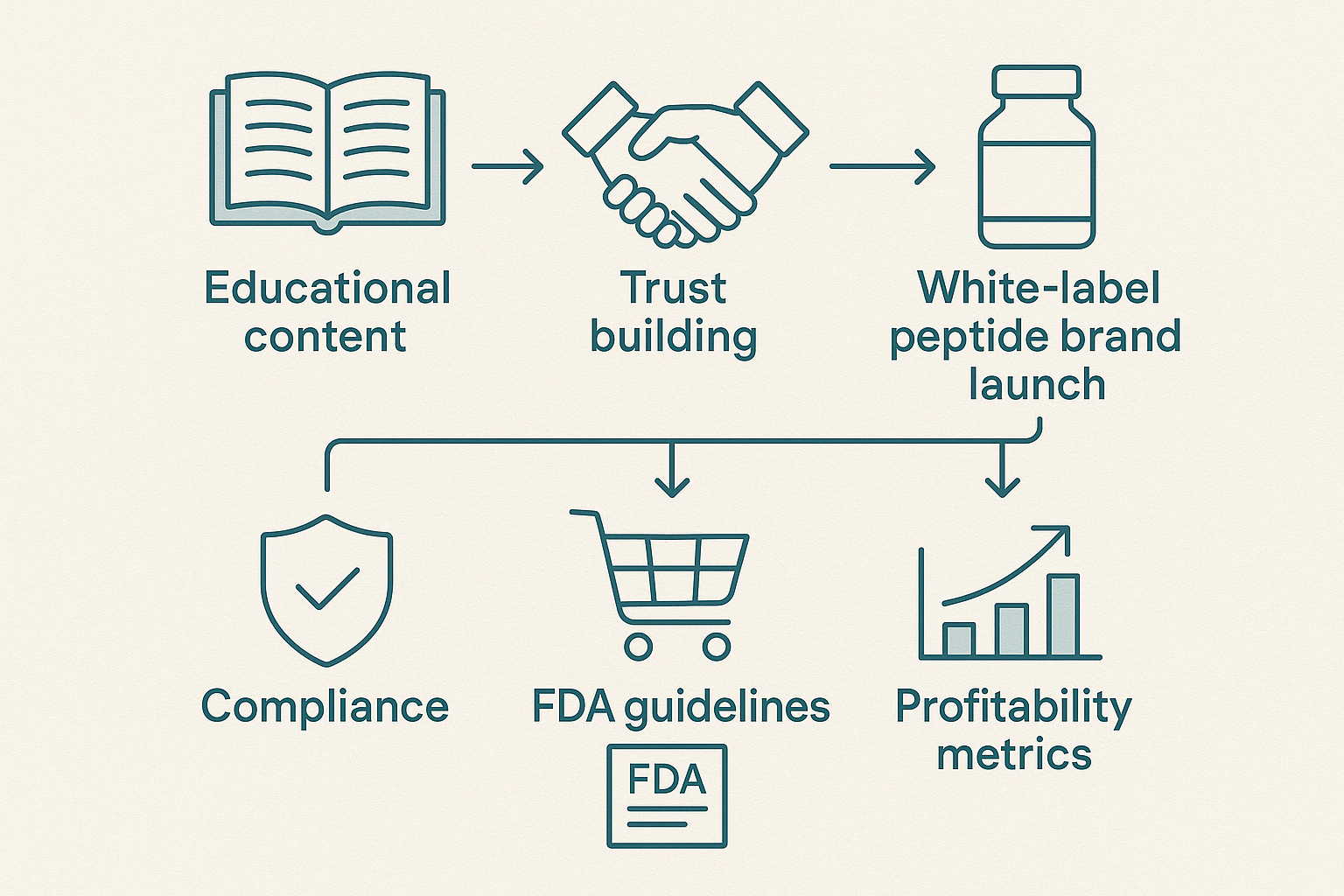
Transforming educational content into a sellable peptide line follows a clear, repeatable flow. Below is the typical progression, aligned with YPB’s infographic roadmap:
- Identify a niche topic. Pinpoint a peptide that complements the subjects you already teach—e.g., a peptide that supports muscle recovery for a sports‑science series.
- Validate demand. Use polls, Q&A sessions, or email newsletters to gauge audience interest and estimate initial order volume.
- Partner with YPB. Submit a brief request through the YPB portal; a compliance specialist will confirm that the chosen peptide qualifies for RUO status.
- Design your label and packaging. Upload your logo, serving size information, and any required regulatory statements. YPB’s design team reviews for accuracy and compliance.
- Set up a storefront. Connect YPB’s dropshipping API to your website, Shopify store, or learning‑management system, enabling seamless order processing.
- Launch the product. Announce the new line in a dedicated video, webinar, or blog post, linking directly to the purchase page.
- Monitor and iterate. Track sales, customer feedback, and repeat‑purchase rates. Use the data to refine packaging, pricing, or educational messaging.
Why Educators Gain More Than a Side Income
- Brand ownership. Your name appears on every vial, reinforcing credibility and differentiating you from generic suppliers.
- Additional revenue stream. Margins on RUO peptides typically range from 30‑45 %, providing a sustainable supplement to consulting or clinic fees.
- Deeper audience loyalty. Followers who can purchase a product you personally endorse are more likely to stay engaged, attend future webinars, and recommend your content.
- Compliance peace of mind. YPB handles FDA‑compliant labeling, safety data sheets, and batch testing, so you remain focused on education rather than regulation.
Real‑World Success: A Multi‑Location Wellness Clinic
When a regional wellness clinic with three locations partnered with a leading fitness influencer, they used YPB’s white‑label solution to launch a proprietary peptide blend aimed at post‑exercise recovery. Within the first month, the clinic’s educational webinars drove 1,200 unique clicks to the product page. By month six, peptide sales had risen 35 % compared with the clinic’s baseline, and repeat orders accounted for 48 % of total volume. The clinic reported not only higher revenue but also a measurable uptick in client retention, as members cited the “exclusive peptide” as a key reason for continued membership.
Take the First Step
Ready to turn your scientific influence into a tangible brand? Visit YourPeptideBrand.com to explore the white‑label dashboard, request a free consultation, and start building a peptide line that carries your signature expertise.
Conclusion and Next Steps for Aspiring Peptide Influencers
Recap: Trust, Compliance, and Sales
Scientific educators have become the cornerstone of credibility in the peptide market. By translating peer‑reviewed research into clear, jargon‑free content, they give clinicians and consumers the confidence to purchase R‑U‑O peptides responsibly. This educational layer not only satisfies FDA compliance requirements but also creates an emotional trust bond that directly translates into higher conversion rates. In short, educators turn curiosity into informed buying decisions, driving both sales volume and long‑term brand loyalty.
Strategic Edge of a White‑Label Solution
Coupling that educational authority with a white‑label, turnkey platform multiplies the impact. A white‑label solution supplies ready‑made label designs, compliant packaging, and on‑demand dropshipping, freeing influencers to focus on content creation instead of logistics. Because the product pipeline is already aligned with regulatory standards, educators can speak confidently about safety, sourcing, and research use without fearing inadvertent therapeutic claims. The result is a seamless, end‑to‑end experience where the audience receives trustworthy information and a reliable product from the same brand.
Building Your Brand with YPB
If you are ready to turn your scientific expertise into a market‑ready brand, YourPeptideBrand offers a personalized roadmap that aligns your educational voice with a compliant product suite. By completing a brief discovery questionnaire, you receive a step‑by‑step plan that covers content strategy, regulatory checkpoints, and the technical setup of your white‑label store. This collaborative approach ensures that every piece of content you publish is backed by a product you can legally and confidently ship, accelerating both credibility and revenue.
Commit to Ethical, Science‑Backed Growth
The most sustainable growth in the peptide space comes from a foundation of ethical, science‑backed storytelling. When you prioritize accurate data, cite peer‑reviewed studies, and avoid unsubstantiated therapeutic claims, you protect both your audience and your brand reputation. Over time, this disciplined approach builds a community of clinicians and wellness entrepreneurs who view your brand as a trusted knowledge hub rather than a fleeting trend. Embrace the responsibility of education, leverage the efficiency of a white‑label partner, and watch your influence evolve into a lasting, profitable business.
Next‑Step Checklist for New Influencers
To keep momentum, consider the following short‑term actions as you launch your influencer‑driven peptide brand.
- Audit existing content for compliance – ensure every claim references peer‑reviewed data and avoids therapeutic language.
- Define a content calendar that aligns scientific topics with product releases, highlighting research use cases.
- Register your brand with YPB’s white‑label portal, upload your logo, and select compliant packaging options.
- Create a “research use only” disclaimer page that mirrors FDA guidance and links to primary literature.
- Track engagement metrics (views, click‑through, conversion) alongside sales data to refine messaging.