
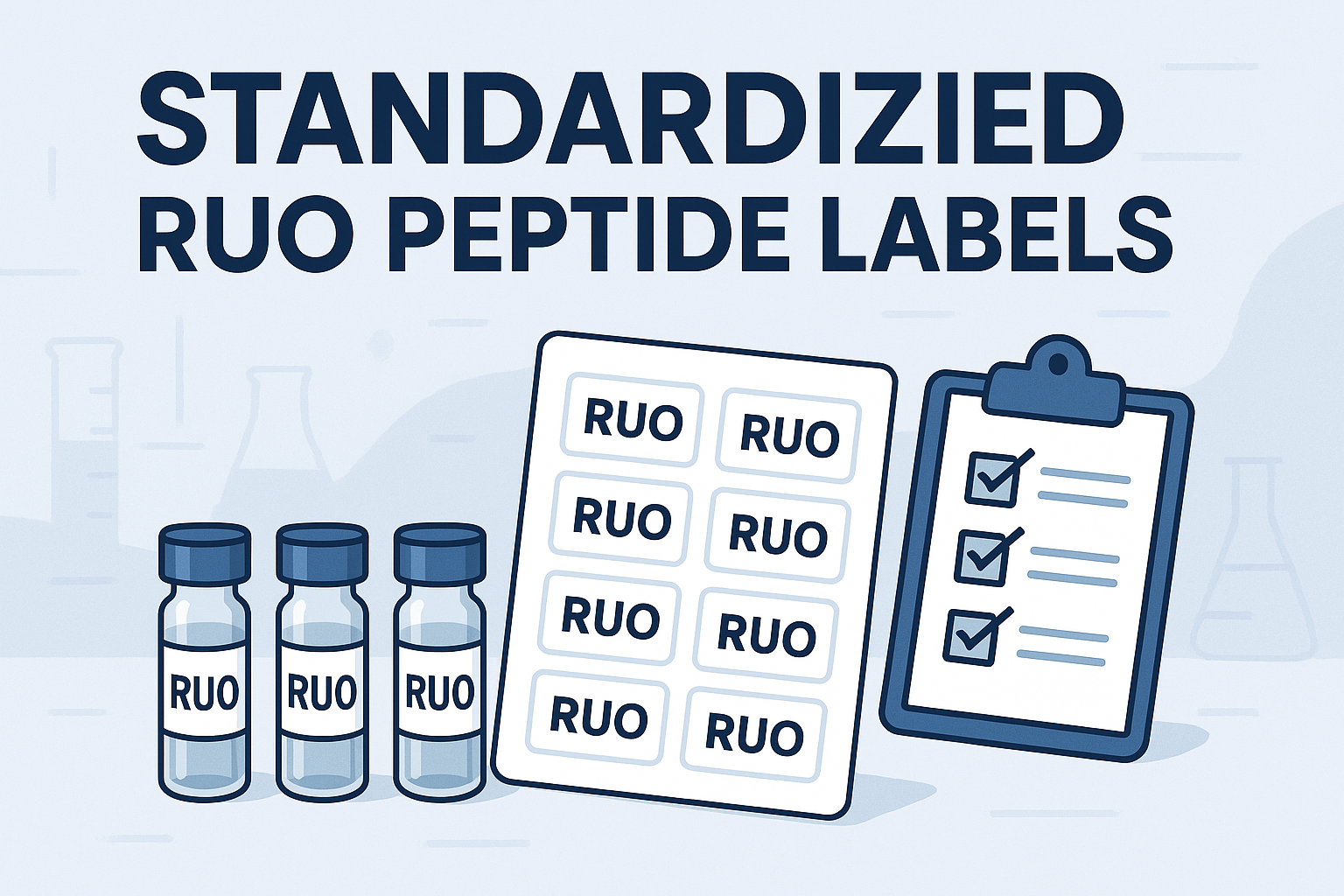
The Compliance Landscape for RUO Peptide Labeling
What is an RUO peptide?
Research Use Only (RUO) peptides are biologically active molecules that are expressly marketed for non‑clinical, investigational purposes. Under the Federal Food, compound, and Cosmetic Act, the FDA classifies RUO products as “research use only” items, which means they may not be advertised, sold, or distributed for therapeutic or diagnostic use in humans. This classification places the onus on manufacturers and distributors to provide clear, accurate labeling that unequivocally communicates the product’s intended research‑only status.
Compliance risks of inaccurate labeling
When a label fails to convey the RUO designation or contains ambiguous information, several regulatory hazards emerge:
- Misbranding: The FDA can deem a product misbranded if its label suggests clinical applicability, exposing the company to warning letters or product seizures.
- Off‑label use: Ambiguous labels can inadvertently encourage clinicians to use the in research models and preclinical studies, violating the “research only” restriction and triggering enforcement actions.
- Audit penalties: During FDA or third‑party audits, inconsistent labeling often leads to documented deficiencies, fines, and mandatory corrective‑and‑preventive actions (CAPA).
- Reputational damage: Even a single labeling misstep can erode trust among clinic owners and partners, jeopardizing long‑term business relationships.
Regulatory actions from labeling failures
Real‑world cases illustrate the stakes. In 2022, a mid‑size biotech firm was cited for “failure to include the RUO statement on peptide vials,” resulting in a $75,000 civil monetary penalty and a mandatory recall of the affected lot. Another incident involved a wellness clinic that repackaged RUO peptides without updating the label; the FDA issued a warning letter citing “potential off‑label promotion” and required the clinic to halt distribution until compliant labeling was verified. These examples underscore that even unintentional oversights can trigger costly regulatory interventions.
Laboratory organization as a first line of defense
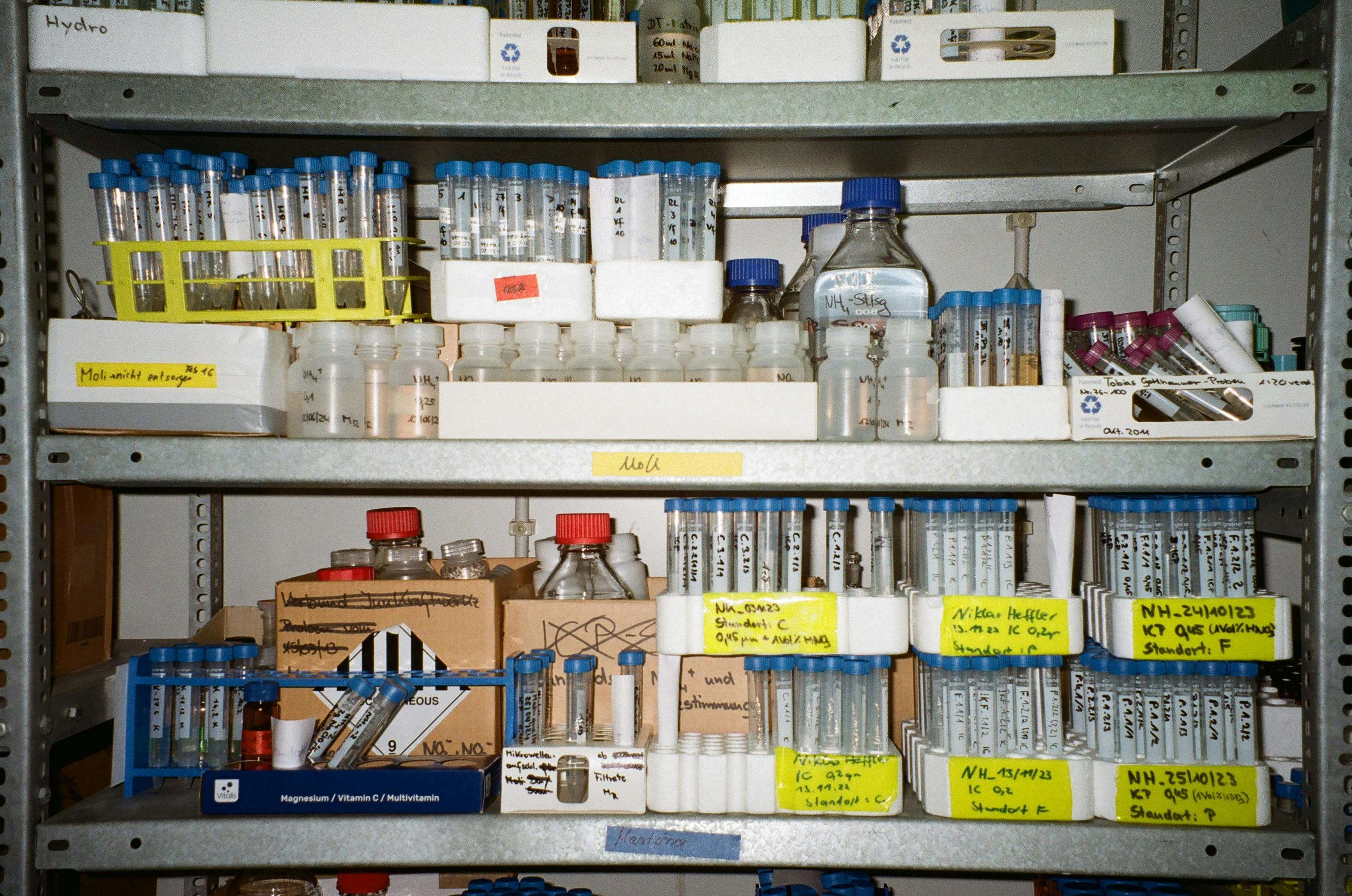
Beyond paperwork, the physical layout of a laboratory can dramatically reduce labeling errors. Imagine a tidy lab shelf where every vial sits in a clearly marked slot, each slot bearing a printed label template that matches the product’s batch number, concentration, and RUO disclaimer. In such a scenario, technicians can quickly verify that the label on the container aligns with the printed template, catching mismatches before the product leaves the bench. This visual cue system not only speeds up workflow but also creates a documented trail that auditors can easily follow.
Standardized label templates: a systematic safeguard
The solution that ties regulatory rigor to everyday lab practice is a set of standardized label templates. By pre‑defining font size, required statements (e.g., “Research Use Only – Not for Human Consumption”), and barcode placement, templates eliminate guesswork and ensure uniformity across every peptide batch. When integrated with on‑demand printing platforms—such as the turnkey service offered by YourPeptideBrand—templates become a dynamic tool: updates to FDA guidance can be rolled out instantly, and each printed label carries a unique identifier that links back to a digital compliance record. In short, standardized templates transform labeling from a manual chore into a reliable, auditable process.
How Template‑Based Labeling Lowers Compliance Risk
What a label template looks like
A label template is a pre‑designed layout that locks in fixed fields—such as product name, concentration, and storage conditions—while mandating specific data points required by the FDA. Each field draws from controlled vocabularies, ensuring that terms like “Research Use Only” or “RUO” are used consistently and never omitted.
Automatic population of mandatory FDA elements
When a template is linked to a batch record system, critical identifiers—lot number, expiration date, and the “For Research Use Only” disclaimer—are auto‑filled from verified sources. This eliminates the manual copy‑and‑paste step that often introduces typographical errors or missing information, both of which can trigger a warning during an FDA inspection.
Pre‑validated drop‑down menus and format checks
Every required entry is presented as a drop‑down menu or a masked input field. For example, the lot number field accepts only alphanumeric strings of a set length, while the expiration date field forces a MM/YY format. These built‑in validations catch mistakes at the point of entry, reducing human error rates dramatically.
Uniformity across batches, sites, and personnel
Uniform labels create a predictable audit trail. Whether a technician in New York or a partner facility in Texas prints a label, the same template guarantees identical wording, font size, and placement of regulatory statements. Inspectors appreciate this consistency because it demonstrates that the organization has a repeatable, controlled process rather than ad‑hoc, case‑by‑case labeling.
Alignment with external guidance
Regulatory bodies and industry groups endorse template‑driven labeling as a best practice. The guidance on standardized label templates for RUO peptides explicitly recommends fixed‑field designs, controlled vocabularies, and automated data pulls to meet FDA expectations and mitigate compliance risk.
Quick comparison: ad‑hoc vs. template‑based labeling
| Aspect | Ad‑hoc labeling | Template‑based labeling |
|---|---|---|
| Error rate (typographical or missing fields) | ≈ 12 % | ≈ 1 % |
| Audit readiness (time to compile documentation) | 3–5 days per audit | Same‑day, pre‑validated package |
| Label creation time per batch | 5–10 minutes (manual entry) | 1–2 minutes (auto‑populate) |
| Consistency across sites | Variable, often divergent | Uniform, centrally controlled |
| Regulatory compliance confidence | Low to moderate | High – documented SOP compliance |
Why the reduction matters for your brand
For clinics and entrepreneurs building a private RUO peptide line, each label is a legal safeguard. A single missing disclaimer can halt distribution, while a mislabeled lot number can trigger a costly recall. By embedding compliance into the labeling workflow, template‑based systems turn risk mitigation from a reactive afterthought into a proactive, measurable part of daily operations.
Bottom line for YPB partners
Choosing a template‑driven labeling solution means you inherit a proven compliance engine. Your staff spend less time wrestling with paperwork and more time focusing on research subjects care or business growth, while regulators see a clear, auditable trail that aligns with industry standards. In short, templates turn labeling from a liability into a strategic advantage.
YPB’s Step‑by‑Step Workflow for White‑Label Creation
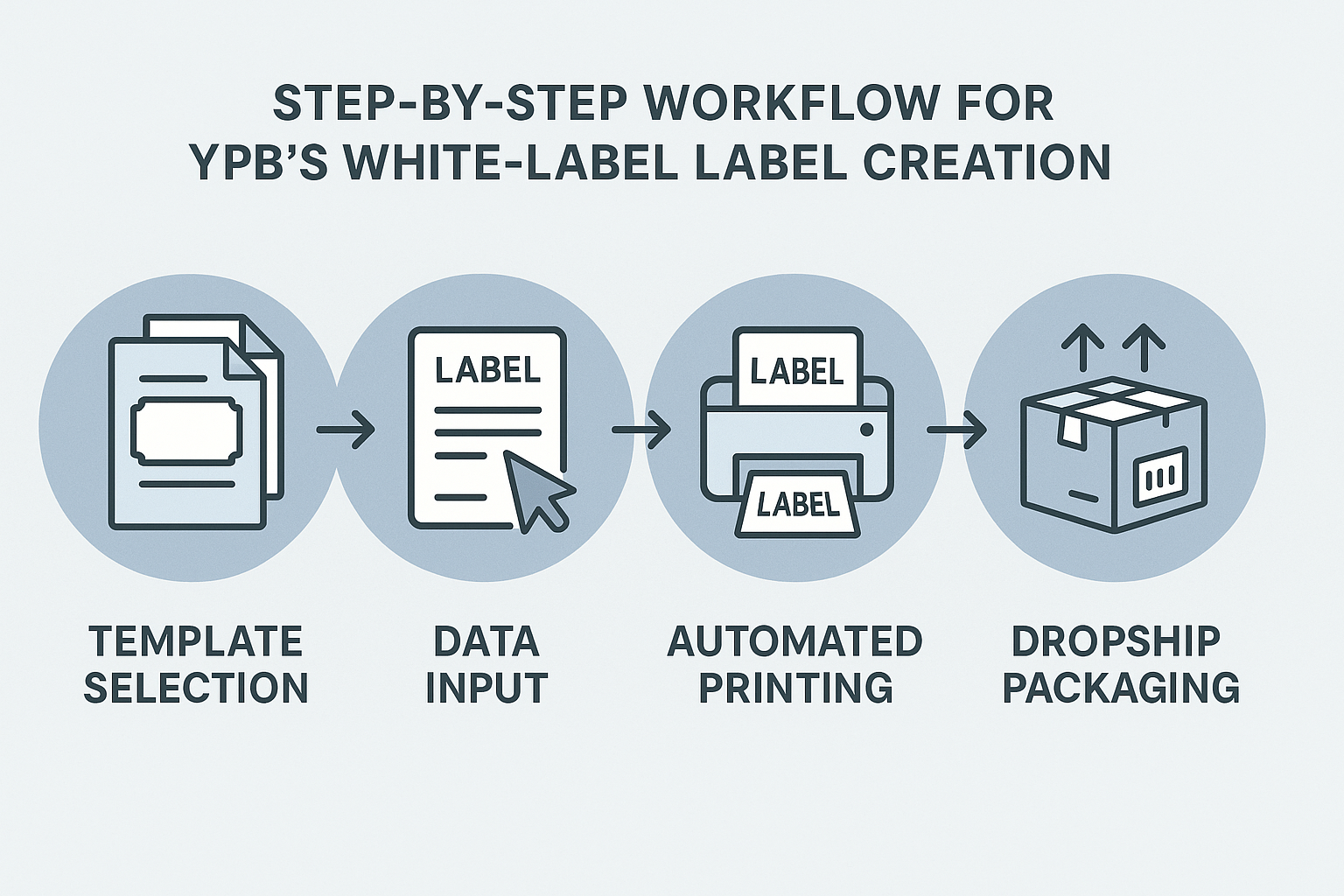
Overview of YPB’s white‑label turnkey solution – YourPeptideBrand (YPB) has built a fully automated pipeline that turns a raw peptide batch into a clinic‑ready product with a custom label, QR‑code traceability, and sealed packaging—all without any manual transcription. The platform is designed to keep every data point under regulatory control, so the moment a label is printed it already meets FDA‑compliant RUO standards. By centralising template selection, data entry, validation, printing, and dropshipping, YPB removes the “human‑error” layer that typically fuels compliance risk.
Step 1: Selecting an FDA‑compliant template from the YPB library
The first click presents a curated library of pre‑approved label templates. Each template incorporates the mandatory RUO disclaimer, required lot‑number placement, and a pre‑validated field hierarchy that mirrors FDA guidance. Users can filter by peptide class, concentration range, or packaging size, ensuring the chosen layout aligns with the specific product’s regulatory envelope. Because the templates are locked down by YPB’s compliance team, there is no chance of omitting a required warning or using a prohibited phrase.
Step 2: Inputting product‑specific data into a guided form
Once a template is locked, a dynamic form appears. The form asks for the peptide name, purity, concentration, batch identifier, expiration date, and any ancillary information (e.g., storage temperature). Real‑time tooltips reference the FDA’s “Research Use Only” labeling guidance, so users understand why each field matters. Auto‑fill options pull batch data directly from YPB’s inventory system, eliminating the need to copy‑paste numbers from spreadsheets—a common source of transcription errors.
Step 3: Automated validation checks
Before a label can be generated, the platform runs a series of automated checks:
- Field length verification – Ensures text fits within the printable area and complies with size limits for QR codes.
- Prohibited term scanner – Flags any therapeutic claim language (e.g., “treats,” “cures”) that would convert an RUO product into a compound claim.
- Required warning enforcement – Confirms that the RUO disclaimer, batch‑traceability statement, and safety symbols are present and correctly positioned.
- Duplicate batch detection – Cross‑references the entered batch number against existing records to prevent accidental reuse.
If any issue is detected, the system highlights the offending field and offers a concise remediation suggestion. This loop guarantees that only audit‑ready data proceeds to printing.
Step 4: High‑resolution, on‑demand printing with QR code integration
After validation, YPB’s cloud‑based printer receives a vector‑ready file. The printer produces a high‑resolution label on demand, embedding a unique QR code that links back to an immutable digital record stored on YPB’s secure server. Scanning the QR code at any point in the supply chain instantly reveals the full batch history, formulation details, and compliance certificates—providing an additional layer of traceability that satisfies both FDA expectations and clinic‑level quality control.
Step 5: Direct dropshipping to the clinic with sealed, tamper‑evident packaging
The final step is logistics. Once printed, the label is applied to the vial, and the product is sealed in a tamper‑evident pouch. YPB’s integrated dropshipping module routes the package directly to the clinic’s address, bypassing any third‑party warehousing that could introduce handling errors. Each shipment includes a packing slip that mirrors the label’s QR‑code, reinforcing the chain‑of‑custody from manufacturing to end‑user.
How each step eliminates manual transcription and ensures audit‑ready documentation – By moving from paper‑based worksheets to a single digital workflow, YPB removes the “copy‑and‑paste” step that historically leads to mismatched lot numbers or missing warnings. Validation checks act as a built‑in auditor, while the QR‑code creates a permanent, searchable record. The result is a label that can survive a regulatory inspection without the need for retroactive corrections.
Customization options within regulatory limits
Clinics can still express their brand identity. YPB allows logo placement, brand‑specific colour palettes, and optional tagline fields—provided these elements do not obscure mandatory FDA text or introduce prohibited therapeutic language. The platform automatically re‑calculates spacing to keep the RUO disclaimer legible, and any custom element undergoes the same validation routine as the core data fields.
In practice, a multi‑location wellness chain can upload its logo once, select the appropriate template for each peptide, and let YPB handle the rest. The workflow guarantees that every label, regardless of brand flair, meets the same stringent compliance checklist, dramatically reducing the risk of costly recalls or FDA warning letters.
Real‑World Impact: Standardized Labels on Clinic Shelves
Walk into a typical wellness clinic and you’ll see a neatly organized shelf lined with dozens of small amber bottles, each containing a research‑use‑only (RUO) peptide. The bottles vary in size, shape, and manufacturer, but they share one common denominator: a label that conveys the peptide’s name, concentration, lot number, and expiration date. In many clinics, those labels are handwritten or printed on generic templates, resulting in a collage of fonts, colors, and layouts that can be difficult to scan at a glance. This visual clutter not only looks unprofessional, it also creates a hidden risk for the staff who must verify each product before dispensing.
When every bottle carries a uniform, YPB‑designed label, the shelf transforms from a chaotic inventory to a streamlined reference board. Consistent typography and color‑coding let a pharmacist or technician locate the correct peptide within seconds, dramatically cutting the time spent cross‑checking batch records. Uniform labels also embed QR codes that link directly to the product’s compliance dossier, eliminating the need to flip through paper files during a busy appointment. The result is a three‑fold operational gain: faster identification, fewer dispensing errors, and tighter inventory control because each label includes a barcode that updates stock levels in real time.
- Quick identification: Standardized fonts and layout let staff recognize the peptide name and strength at a glance.
- Error reduction: Integrated QR codes and barcodes provide instant access to verified data, lowering the chance of mixing up similar‑looking bottles.
- Inventory accuracy: Scannable labels feed directly into the clinic’s inventory management system, preventing over‑stocking or stock‑outs.
- Regulatory readiness: Every label meets FDA‑compliant formatting, making audit preparation a matter of routine scanning.
research subjects notice the difference, too. A sleek, consistent label conveys a sense of professionalism that reassures them the clinic adheres to high‑quality standards. Practitioners, meanwhile, gain confidence knowing that every product on the shelf is traceable, compliant, and presented with the same visual language. This transparency builds trust, because research subjects can ask to see the label and instantly receive a clear, verifiable answer rather than deciphering a handwritten note. The overall atmosphere shifts from “just another supplement” to “a rigorously documented research tool,” reinforcing the clinic’s commitment to safety and scientific integrity.
One multi‑location wellness chain put YPB’s template system to the test across its five clinics. Within three months of swapping out ad‑hoc labels for YPB’s standardized designs, the chain reported a 40 % drop in labeling‑related audit findings—a metric that includes misplaced lot numbers, unreadable expiration dates, and missing compliance documentation. Staff also logged a 25 % reduction in time spent on label verification during daily dispensing rounds. The clinic’s compliance officer highlighted the new labels as a “game‑changer” for both internal quality checks and external regulatory reviews, noting that the visual uniformity made spot‑checks faster and more reliable.
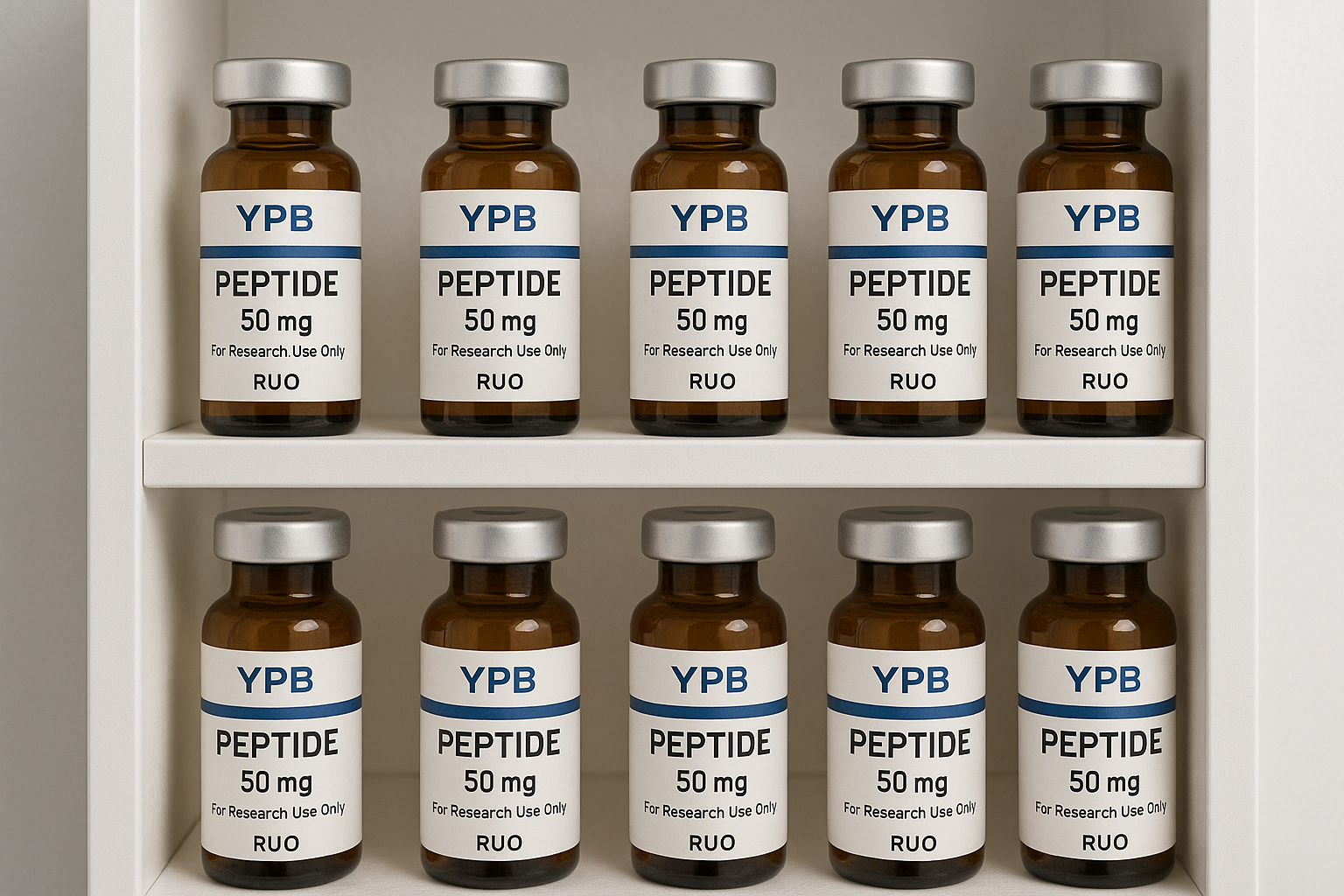
The rendering above illustrates exactly what a clinic shelf looks like after adopting YPB’s label templates. Each bottle stands out with a clean, color‑coded header, a legible typeface, and a discreet QR code that blends into the design without cluttering the visual field. By picturing this organized setup, clinic owners can instantly see how standardized labeling turns a routine storage area into a compliance‑focused showcase—one that projects confidence to research subjects, eases the workload of practitioners, and safeguards the business against costly audit findings.
Best Practices for Implementing Standardized Label Templates
Checklist Before Rollout
Before you press “print,” run through a concise verification list. First, confirm that every field in your template mirrors the latest FDA guidance for Research Use Only (RUO) peptides – from active ingredient nomenclature to required warning statements. Next, conduct a hands‑on training session with the staff who will populate the input portal; a short role‑play can reveal hidden ambiguities in data entry. Finally, establish a version‑control system (e.g., a shared Google Sheet or a dedicated LIMS folder) that timestamps each template iteration and records the responsible reviewer.
- Align template sections with current FDA RUO labeling requirements.
- Document step‑by‑step input procedures and train all label operators.
- Implement version‑control with clear audit trails.
Ongoing Maintenance
Regulatory landscapes shift, and your labels must keep pace. Schedule a quarterly review cycle that cross‑checks the template against any new FDA notices, guidance updates, or industry standards. When a change is required, edit the master file, increment the version number, and circulate a brief change‑log to all stakeholders. Equally important is archiving every released label version – store PDFs in a read‑only repository so you can retrieve historic records during an audit.
- Quarterly regulatory review meetings.
- Version increment and change‑log distribution.
- Secure archive of every printed label for at least three years.
Integration Tips
Linking label generation to your existing inventory management software eliminates manual copy‑pasting and reduces transcription errors. Most modern ERP platforms offer API endpoints; map the label‑template fields (batch number, concentration, expiration date) to the corresponding inventory attributes. Adding a QR code to each label provides instant batch traceability – scanning the code can pull up the full label, safety data sheet, and shipment history on a mobile device.
- Use API calls to pull real‑time batch data into the label template.
- Embed QR codes that resolve to a secure label‑view page.
- Validate QR‑code data integrity with checksum algorithms.
Common Pitfalls to Avoid
Even well‑intentioned teams can slip into risky shortcuts. Over‑customizing warning statements—such as adding clinic‑specific jargon—may dilute the FDA‑mandated language and trigger compliance flags. Likewise, introducing non‑standard abbreviations (e.g., “Rx” for “research protocol”) can confuse downstream distributors and regulators. Resist the urge to “personalize” every label; stick to the approved template language and only modify fields that are truly variable (batch ID, potency, etc.).
- Do not replace FDA‑required warnings with custom phrasing.
- Avoid non‑standard abbreviations that lack regulatory definition.
- Limit customization to data‑driven fields only.
Resources
YPB provides a suite of tools to streamline adoption. Visit the YPB Support Portal for step‑by‑step video tutorials and a downloadable Compliance Quick‑Guide. For peer‑to‑peer advice, join the YPB Community Forum, where clinic owners share real‑world labeling workflows and alert each other to emerging regulatory updates.
Secure Your Brand with Compliant, Ready‑to‑Ship RUO Peptides
Why Template‑Based Labels Matter
Standardized label templates are more than a formatting convenience—they are a frontline defense against compliance pitfalls. By embedding FDA‑mandated language, batch identifiers, and clear “Research Use Only” statements into a pre‑approved design, you eliminate the guesswork that often leads to labeling errors. The result is a streamlined workflow that slashes the time spent on label creation, reduces the risk of costly recalls, and projects a professional image to research subjects and partners alike. In short, a consistent label blueprint translates directly into lower regulatory exposure, faster market entry, and heightened brand credibility.
YPB’s Turnkey Offering
YourPeptideBrand (YPB) builds on that foundation with an all‑in‑one solution that removes every logistical hurdle. Our service covers every step from on‑demand label printing to custom packaging that matches your brand’s aesthetic. Because we operate on a dropship model without minimum order quantities, you can launch a private‑label RUO peptide line without tying up capital in inventory. Whether you need a single vial for a pilot clinic or a full catalog for a multi‑location practice, our platform scales instantly, delivering compliant, ready‑to‑ship products directly to your customers.
Start Your Private‑Label Journey Today
Imagine a clinic that not only uses premium peptides internally but also offers them under its own name, creating an additional revenue stream while reinforcing research subjects trust. With YPB, that vision is within reach and requires no upfront commitment. We invite doctors, health practitioners, and wellness entrepreneurs to schedule a risk‑free consultation. During the call we’ll walk you through the label template library, show how our packaging options can be tailored to your brand voice, and outline the simple steps to activate dropshipping on your terms. The process is designed to be as effortless as ordering a lab test—no hidden fees, no MOQ, just a clear path to a compliant, market‑ready product line.
Ready to protect your reputation and expand your offering? Visit YourPeptideBrand.com now to book your free consultation and see how quickly you can launch a compliant, private‑label RUO peptide brand.