
For research use only. Not for human consumption, diagnostic, or potential wellness benefit.
What Is Research Peptide Dropshipping and Why Compliance Matters
Dropshipping research peptides offers a low-barrier entry into the RUO market, but the model introduces unique compliance risks that traditional retail fulfillment does not. When a brand owner never touches the product, every handoff becomes a potential compliance gap.
According to a 2025 analysis of gray-market research peptide products, approximately 30% of samples from non-compliant sources had mislabeling or contamination issues (BSCG, May 2026). As of 2026, the FDA’s enforcement posture toward research peptide distribution has sharpened. The March 2025 FDA Final Guidance requires explicit chain-of-custody documentation at every distribution point (Real Peptides, April 2026).
This guide dissects the compliance considerations unique to research peptide dropshipping: labeling integrity, intended-use doctrine, COA verification, record-keeping, and state regulations. For entrepreneurs building a white-label RUO brand, understanding these risks is foundational for a defensible, scalable business.
Research peptide dropshipping is a B2B fulfillment model where a brand owner markets and sells research-grade peptides under their own label while a white-label supplier like YourPeptideBrand (YPB) handles manufacturing, third-party testing, labeling, packaging, and direct shipping. The brand owner never holds inventory, enabling rapid market entry with zero warehouse overhead.
For a deeper breakdown of labeling, record-keeping, and regulatory documentation requirements, see our complete FDA and FTC compliance guide for research peptide brands.
The Unique Compliance Risks of the Dropshipping Model
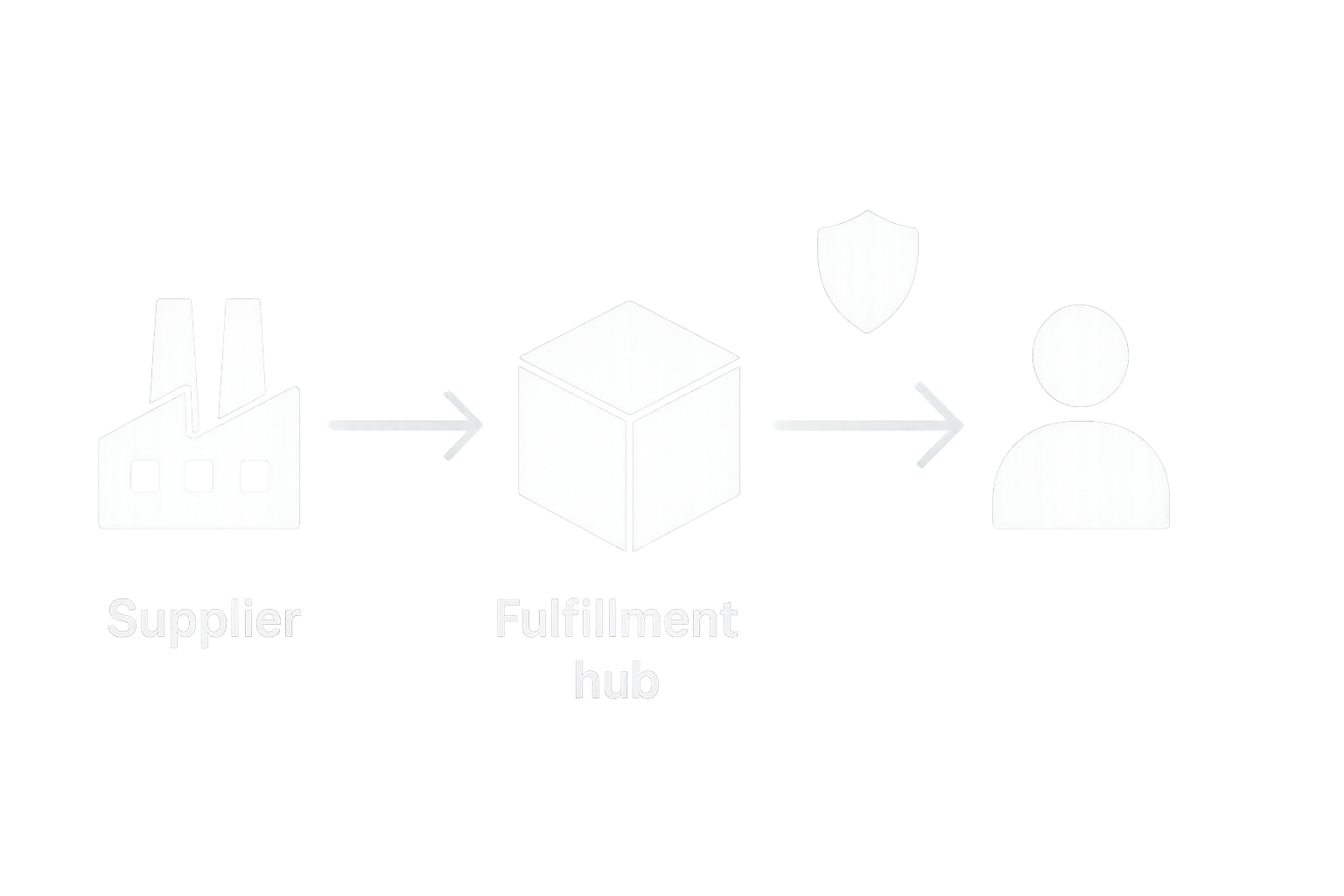
Unlike direct sales, where the seller controls every touchpoint from storage to shipping, dropshipping introduces a fundamental separation between the brand owner and the physical product. When a clinic owner or entrepreneur sources research peptides through a dropship model, three distinct compliance vulnerabilities emerge.
First, labeling responsibility becomes split: the supplier applies the label, but the brand owner remains legally responsible for its accuracy. If the label omits required RUO language or includes prohibited therapeutic wording, liability falls on the brand. Second, chain-of-custody documentation must bridge the supplier, the fulfillment center, and the end customer. Without a clear paper trail, a regulator cannot verify that the research peptide remained in proper conditions. Third, the brand owner’s website is often the first piece of evidence regulators examine. A site without RUO disclaimers on every product page signals non-compliance from the start.
According to compliance analyses cited by YourPeptideBrand (June 2026), brands that embed RUO disclaimers across all page touchpoints face significantly lower risk than those relying on footer-only placement. Simply having one disclaimer at the bottom of the page is not enough.
Dropshippers must verify that every batch from their supplier carries a third-party Certificate of Analysis (COA) and that those COAs are accessible to end customers. This closes the documentation gap. For a deeper look at how the drop-ship model can actually protect compliance, read this detailed guide on why third-party fulfillment protects compliance. Also see the red flags that could trigger a research peptide brand audit.

The Intended-Use Doctrine and Your Dropship Storefront
The FDA’s intended-use doctrine determines how a product is classified based on its “total product presentation” across every customer touchpoint. For a dropship business, that includes the physical vial, the website product page, blog content, email campaigns, and social media. A single phrase on any of those channels can reclassify a research peptide from a research-use-only chemical to a misbranded compound.
Dropshippers often assume that a bold “For research use only” label on the vial is enough. It is not. The FDA evaluates the entire brand owner’s presentation of the product, not just the physical label. Since the product ships from a third-party warehouse, the brand owner’s website becomes the primary site of regulatory scrutiny.
As Informed Peptide noted in April 2026, a misplaced phrase such as “supports joint function” or “used by athletes for recovery” can reclassify a research peptide as a misbranded compound, regardless of what the vial says. In March 2026, Health Law Alliance documented FDA warning letters to companies selling peptides as “research use only” where advertising indicated intended human use.
For a compliant dropship storefront, every piece of copy must be audited. That means product page descriptions, blog posts, email sequences, and even Instagram captions. No language should imply human consumption, serving size, or therapeutic outcome. To go deeper, see our comprehensive breakdown of the intended-use doctrine or learn about the legal boundaries of research-use-only peptide sales. For practical storefront setup, refer to our guide to building a professional peptide business website.
Download Our Full 60+ SKU Catalog
White-label research peptides, wholesale pricing, and dropshipping details.
In a direct-sales model, the seller controls labeling from start to finish. Dropshipping shifts that control to the supplier, but the brand owner’s name still appears on the label. That creates shared liability: both parties are responsible if a label is noncompliant.
Every RUO research peptide must display the product name, net quantity, lot or batch number, expiration date, and the mandatory RUO disclaimer statement on the primary label surface in at least 8pt type (YPB labeling guide, January 2026). The March 2025 FDA Final Guidance extends these requirements to all accompanying documentation. For dropshippers, that means packing slips, shipping labels, and digital invoices must also carry the disclaimer.
Brands must verify that every label uses the correct chemical name, the exact milligram quantity, and a batch-specific lot number that matches the Certificate of Analysis. A mismatch between label and COA is a common audit trigger. For a complete breakdown of required elements, see our guide on FDA labeling requirements for research peptides. To understand how labeling fits into the broader business setup, read what entrepreneurs need to know before selling peptides online.
COA Verification and Documentation Flows
The Certificate of Analysis (COA) is the single most important quality document in research peptide dropshipping. Every batch must be tested by an independent third-party laboratory using HPLC for purity (typically 98%+), mass spectrometry for identity, and endotoxin/sterility testing for research protocols. Without a verifiable COA, a brand owner cannot demonstrate that the research peptide meets the specifications advertised.
The dropshipping model requires a system for automatically delivering batch-specific COAs to the end customer, ideally before or at shipment. Paper inserts are unreliable; digital delivery ensures the document reaches the researcher and can be archived.
YourPeptideBrand’s COA Library provides downloadable certificates for every SKU, allowing brand owners to link directly to verified batch records from their product pages. This eliminates manual handling and ensures each order has a traceable quality document.
Record retention is critical. Most state frameworks require maintaining purchase records, protocol approval documents, and chain-of-custody logs for a minimum of seven years (Real Peptides, April 2026). For dropshippers, this means storing supplier COAs, shipping manifests, and customer invoices in an immutable digital archive. A simple spreadsheet will not survive an audit.

For a full walkthrough of labeling, disclaimers, and marketing claims, see the complete FDA and FTC compliance guide for research peptide brands.
Ready to Build Your Compliant Research Peptide Brand?
Schedule a free consultation to discuss compliance, sourcing, and dropshipping setup for your brand.
The White-Label Opportunity – Compliance as a Competitive Moat + State-Level Regulations + Profit Calculator CTA
For entrepreneurs building a research peptide dropshipping business, compliance is not a cost center – it is a competitive advantage. Suppliers that force bulk minimums often cut corners on labeling and documentation. Brands that invest in proper RUO framing, COA transparency, and clear intended-use language attract more sophisticated buyers: clinics, research institutions, and practitioners who need a documented chain of evidence.
YourPeptideBrand provides on-demand label printing, custom packaging, and direct dropshipping with zero minimum order quantities. Every label, safety data sheet, and shipping manifest is generated in line with RUO requirements. Compliance-ready product page templates meet current FTC standards. For clinic owners and practitioners purchasing research peptides for in-house research, this documentation trail is essential for institutional oversight. By prioritizing compliance, dropshippers become premium partners in the B2B space.
State-Level Shipping Regulations
Shipping research peptides across state lines adds complexity. As of 2026, at least 14 states have enacted additional restrictions beyond federal requirements (3plGuys, October 2025). Federal regulations establish the floor, not the ceiling. For example:
- Florida requires registration with the state Board of Pharmacy and 48-hour chain-of-custody reporting for certain research peptides.
- California mandates state-specific MSDS disclosures.
- Texas requires seven-year record retention.
- New York requires quarterly reporting for suppliers shipping more than 50 units per quarter.
Understanding these state-level rules is critical for any entrepreneur building a compliant dropship brand. To navigate this landscape, read our guide on the legal boundaries of research-use-only peptide sales. Also, review our advice on how to build a professional website for your brand.
Estimate Your Profit Potential
Ready to see how compliance-friendly dropshipping can improve your margins? Use our Profit Calculator to model different order volumes, costs, and shipping scenarios. No minimums, no guesswork.
Compliance Checklist for Dropshipping Research Peptides
Operational compliance in research peptide dropshipping requires more than a well-written disclaimer page. The actions below translate regulatory requirements into daily logistics, documentation, and review workflows that protect your business from common compliance gaps.
Each item represents a concrete step you can implement with your white-label supplier and fulfillment process. Work through them in order, then cycle the quarterly audit to maintain compliance over time.
| Action Item | Details |
|---|---|
| Verify batch-specific COAs for every SKU | Your white-label supplier must provide a Certificate of Analysis that ties each production batch to a specific SKU, with results from an independent third-party test. |
| Confirm all labels display the required elements | Labels must include the RUO disclaimer in minimum 8pt type plus all five required labeling elements. Review every label proof before approving production. |
| Audit website copy for implied human use | Remove all testimonials, dosing references, and health-adjacent phrasing. Research published by Informed Peptide underscores that intended-use wording is a primary focus in regulatory review of online research peptide sellers (Informed Peptide, 2026). |
| Implement chain-of-custody documentation | Track each shipment from your white-label supplier to the end customer with dated records, lot numbers, and shipping confirmations. Full traceability supports both compliance and dispute resolution. |
| Enable automated COA delivery at shipment | Send the batch-specific COA to customers automatically when the order ships. Automation removes the risk of manual documentation gaps. |
| Establish a record-retention system | Store batch records, shipping logs, and customer-facing documentation for a minimum of seven years. A structured filing system makes scheduled audits faster and more reliable. |
| Review state-specific requirements per destination | Compliance obligations vary by state. Check the regulations for every state you ship to and adjust labeling or documentation requirements accordingly. |
| Schedule quarterly compliance audits | Review product pages, labels, and marketing materials every quarter. A recurring cadence catches wording drift and labeling changes before they become compliance gaps. |
Building these eight steps into your dropshipping operations creates a defensible compliance position. For a complete walkthrough on structuring your online storefront around these requirements, read the guide to building a professional peptide business website.
Frequently Asked Questions About Research Peptide Dropshipping Compliance
What is research peptide dropshipping?
Research peptide dropshipping is a B2B fulfillment model where a reseller (the brand owner) takes orders for research-grade peptides while a white-label supplier like YourPeptideBrand (YPB) handles manufacturing, third-party testing, labeling, packaging, and direct shipping to the end customer. The reseller never holds inventory and owns the brand and customer relationship.
How does the FDA’s intended-use doctrine apply to peptide dropshipping?
The intended-use doctrine evaluates the total presentation of a product across all touchpoints. According to the FDA’s guidance, even with an RUO label on the vial, a dropshipper’s website copy, product descriptions, blog posts, and social media collectively signal intended use. If any of these suggest human consumption or potential wellness benefit, the FDA may classify the product as a misbranded compound regardless of vial labeling (Informed Peptide, April 2026).
What labeling requirements apply to dropshipped research peptides?
Every Research Use Only (RUO) peptide must display five required elements: product name, net quantity, lot/batch number, expiration date, and a clear ‘For Research Use Only – Not for Human Consumption’ statement. The disclaimer must appear on the primary label surface in at least 8pt type. YourPeptideBrand’s on-demand label printing system embeds these requirements automatically for every batch.
Why is chain-of-custody documentation critical in peptide dropshipping?
According to the March 2025 FDA Final Guidance, suppliers must provide chain-of-custody documentation linking each batch from manufacturing to the end customer. In a dropshipping model with multiple handoffs (supplier to fulfillment to end user), gaps in documentation create compliance risk. Brands using dropship models must be particularly vigilant about maintaining batch records, shipping logs, and COA delivery confirmations (3PLGuys, October 2025).
What happens when a peptide website makes health-adjacent claims?
The FDA actively monitors peptide websites for language suggesting human use. In 2025-2026, the FDA issued warning letters citing marketing copy as evidence of intended human use, even when products carried RUO labels. Phrases like ‘supports recovery’ or ‘popular among athletes’ can trigger enforcement. Research peptide suppliers that embed RUO disclaimers across all page touchpoints face significantly lower compliance risk (YPB, June 2026).
How does YourPeptideBrand handle compliance in its dropshipping model?
YourPeptideBrand embeds compliance checkpoints at every handoff: on-demand label printing with FDA-compliant artwork verification, automated COA generation for each batch, chain-of-custody documentation for every shipment, and pre-structured product page templates with RUO disclaimers. The platform ships directly to end customers under the brand owner’s label with no minimum order quantities.
What records should a peptide dropshipping brand maintain for compliance?
Brands should retain labeling proofs (scans showing RUO disclaimer), batch records linking lot numbers to shipments, COA receipts for every order, customer inquiry logs, and internal compliance audit documentation. Most state frameworks including Texas require institutions to retain peptide purchase records and chain-of-custody logs for a minimum of seven years (Real Peptides, April 2026).
Can a white-label partner reduce compliance risk for dropshippers?
Yes. Partners that automate label verification, COA distribution, and chain-of-custody tracking reduce documentation gaps that create enforcement exposure. YourPeptideBrand provides batch-specific COAs through its COA Library, compliance-ready product templates, and a fulfillment pipeline with built-in regulatory checkpoints at each handoff. Brand owners can estimate potential margins using the Profit Calculator.
Ready to Launch Your White-Label Research Peptide Brand?
Book a free call with our team. We will walk you through pricing, setup, and your first order. For more on building your brand’s online presence, see our guide to building a professional peptide business website.
Last updated: July 2026