For research use only. Not for human consumption, diagnostic, or potential wellness benefit.
Why Longevity Clinics Are Building Private-Label Research Peptide Lines
The global longevity clinic service market was valued at $11.08 billion in 2025 and is projected to reach $33.4 billion by 2034, growing at a compound annual growth rate of 12.9% (MarketIntelo, 2025). More than 700 dedicated longevity clinics operate worldwide as of April 2026, with that number expected to triple by 2034.
For multi-location clinic owners, launching a private-label research peptide line represents a strategic revenue channel. It captures the margin between wholesale cost and branded retail pricing without managing synthesis, testing, or fulfillment yourself.
This guide walks through every step: brand positioning, RUO compliance, custom packaging, COA documentation, and white-label fulfillment through YourPeptideBrand, which requires no minimum order quantities.
For a deeper look at the model, read How to Build a Research Peptide Brand for Longevity Research.
What Is a Private-Label Peptide Line for Longevity Clinics?
A private-label research peptide line is a catalog of research-use-only (RUO) compounds branded under a clinic’s own name and logo. The clinic owns the brand, sets its own pricing, and manages customer relationships while a partner like YourPeptideBrand handles sourcing, third-party testing with batch-specific Certificates of Analysis (COAs), custom label printing, packaging, and direct dropship fulfillment.
Unlike suppliers that force bulk minimums, YPB requires no minimum order quantities for private-label programs. This model lets clinics launch a branded line quickly without upfront inventory risk. For more on the compliance framework, see Legal Boundaries of Research Use Only Peptide Sales.
The Private-Label Supply Chain: From Synthesis to Branded Vial
YourPeptideBrand’s private-label workflow operates in five stages. Stage one is compound selection from a 60-plus SKU catalog of research peptides, each manufactured under cGMP conditions. Stage two is third-party analytical testing with HPLC purity verification and mass spectrometry identity confirmation. Stage three is custom label design and printing that includes the clinic’s branding, the RUO disclaimer, a batch number, and a QR code linking directly to the Certificate of Analysis (COA). Stage four is on-demand packaging and fulfillment labeled under the clinic’s own brand. Stage five is direct dropship to the clinic’s customers.
This model eliminates inventory risk because labeling happens at the point of shipment. Products remain unbranded until an order arrives; the clinic never sits on pre-labeled stock that it cannot sell.
Suppliers that force bulk minimums typically require 250 to 500 units per SKU before running a private-label batch. YourPeptideBrand’s zero-MOQ structure means a clinic can order a single vial with its own label and scale up only when demand materializes.
Why Longevity Clinics Are the Fastest-Growing Channel for Research Peptides
Market data confirms a rapid expansion. Future Market Insights (2026) reports the longevity clinic chain infrastructure market was valued at $2.4 billion in 2025 and is projected to reach $6.9 billion by 2036, a compound annual growth rate (CAGR) of 10.3%. Research and Markets (2026) adds that the overall longevity clinic market grew from $5.35 billion in 2025 to $6.02 billion in 2026, a CAGR of 12.5%.
North America holds the largest regional share at 38.5% (MarketIntelo, 2025). PubMed indexed over 180 BPC-157 research papers in 2025 alone, up from 45 in 2020 — a 4x increase that reflects surging research interest in tissue-repair research peptides relevant to longevity protocols. The peptide research market benefits from what experts call the ‘clinic-as-brand’ model, where private-label lines generate margin differentials unavailable through generic resale.
Download Our Full 60+ SKU Catalog
White-label research peptides, wholesale pricing, and dropshipping details.
Why Clinic-Owned Peptide Brands Capture Higher Margins
A clinic that orders 100 vials of a research peptide under its own brand captures the full margin between wholesale cost and branded retail pricing, without managing synthesis, testing, or fulfillment. That margin differential is the core economic engine of the private-label model.
Three structural advantages make this especially compelling for longevity clinics.
Brand Differentiation
A custom label sets the clinic apart from competitors relying on generic suppliers. When the same research peptide carries a clinic’s own name and design, it signals a proprietary quality standard that generic white-label bottles cannot match.
Pricing Control
The clinic sets margins reflecting its service level and demographic without being locked into a supplier’s price list. A practice with a premium research subjects population can price accordingly; a volume-focused clinic can compress margins to drive adoption. The decision stays in-house.
Scalable Distribution
A private-label catalog extends across multiple locations or into an e-commerce dropshipping model. Once the brand and labeling are established, adding new products or expanding to additional clinics requires minimal incremental overhead.
YPB’s program eliminates the MOQ barrier that prevents clinics from testing this model. Suppliers that force bulk minimums require 250-500 units per SKU; YPB requires zero. For a practical breakdown of how this margin math works, see How to Calculate Profit Margins in the Peptide Business. For the full playbook on launching a clinic-owned brand, read the Practitioners Guide to Launching a White-Label Research Peptide Brand.
Custom Packaging and Labeling for Premium Clinic Brands
Packaging is the first physical touchpoint a research buyer has with your line. It either signals professionalism or raises doubt. YPB offers custom packaging options that let a clinic build a cohesive brand across multiple research peptides.
Choose rigid amber vials for maximum peptide stability, eco-friendly PET bottles for lower weight, or custom cap colors to visually separate compounds while keeping a unified look. Every element reinforces your clinic’s identity from the first glance.
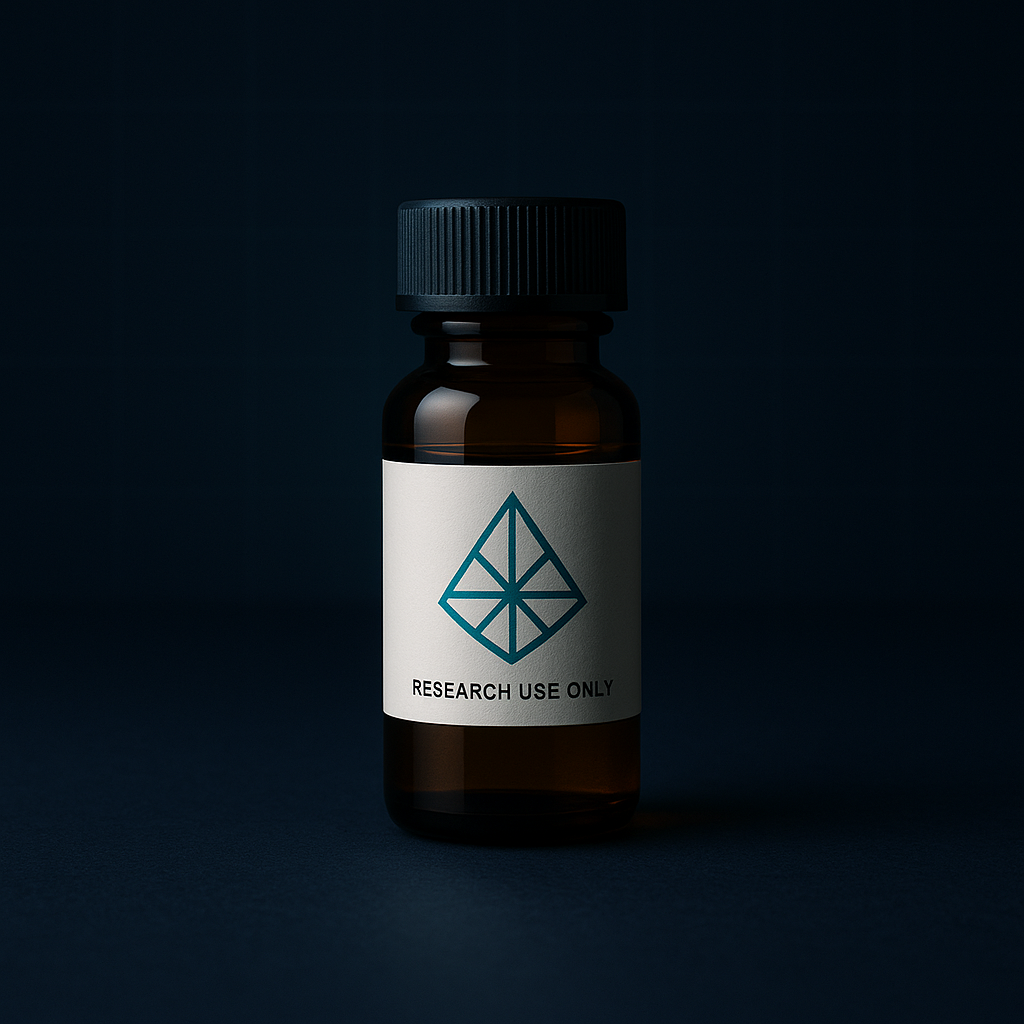
Labels must carry essential compliance elements: the ‘For Research Use Only’ disclaimer in minimum 6pt font, your clinic name and logo, compound name and net peptide content, batch/lot number linked directly to the Certificate of Analysis, and expiration date. What to Include on a Peptide Product Label to Stay Compliant covers this in full detail.
The on-demand label printing system generates correct disclaimers at the point of shipment, batch by batch. That eliminates manual compliance checks and the risk of mislabeling, freeing your team to focus on research support instead of label verification.
Certificates of Analysis: Why Batch-Level Documentation Wins Trust
In the research peptide market, documentation is the product. The vial is simply the delivery mechanism. Buyers – especially multi-location clinics and research institutions – evaluate a supplier based on the evidence behind each batch, not the label alone.
Every batch from YourPeptideBrand (YPB) carries a third-party Certificate of Analysis (COA) that includes HPLC purity data, mass spectrometry identity confirmation, and net peptide content. This is not a generic report; it is batch-specific and matches the exact product in the vial. Without batch-level COA, the product is just a label and a glass container. With it, the vial becomes a traceable reference material.
Clinics can verify each batch by scanning a QR code on the YPB label. That link leads directly to the COA for that specific batch, creating an auditable trail from synthesis through final shipment. For a clinic running in vivo studies, that documented traceability is non-negotiable.
The YPB COA Library makes all certificates for 60+ SKUs available for download at any time. This transparency is a competitive differentiator. It signals that the product has been tested before purchase, turning a compliance requirement into a trust-building asset. Clinics and research institutions do not buy vials; they buy data.
How to Launch a Private-Label Peptide Line in 7 Steps
YourPeptideBrand’s launch process follows seven defined steps and typically takes 7-14 business days from artwork submission to first shipment. For a deeper walkthrough of each stage, see How to Launch a New Product Line Under Your Peptide Brand.
Step 1: Select Compounds From the 60+ SKU Catalog
Choose research peptides that match your clinic’s research focus areas, such as tissue repair, cellular health, or immune research. Each SKU includes a Certificate of Analysis so your customers can verify batch quality.
Step 2: Submit Brand Logo and Artwork
Upload your existing brand assets, or work with YPB’s in-house design team to create a custom label from scratch. You maintain full control over the visual identity and tone.
Step 3: Approve a Digital Proof
A digital proof shows the label layout, content, and compliance disclaimers. You review and approve it before any labels are printed, which eliminates costly rework.
Step 4: Set Up a Compliant Storefront
YPB offers done-for-you storefront options that present your brand and meet RUO labeling standards. This step can be completed in parallel with label production.
Step 5: Configure Pricing and Margin Targets
Use the Profit Calculator to set wholesale/retail price points and target margins. The calculator factors in your cost per vial, packaging, and shipping so you can see profit per order.
Step 6: YPB Prints, Packages, and Ships
YPB prints your approved labels, applies them to vials of research peptide, adds your custom packaging, and ships directly to your customers under your brand name. No inventory sits in your clinic.
Step 7: Monitor Orders and Scale
Manage customer relationships through your own portal. As demand grows, you can add new SKUs from the catalog without renegotiating MOQs or launch timelines.
The entire process from artwork submission to first shipment takes 7-14 business days, letting you launch a private-label research peptide line quickly and without upfront inventory risk.
Ready to Launch Your White-Label Research Peptide Brand?
Book a free call with our team. We will walk you through pricing, setup, and your first order.
Scaling Across Multiple Clinic Locations
A multi-location clinic ordering 500 vials of research peptides faces a logistics puzzle: splitting that single order across three physical addresses, each requiring its own shipping label and delivery window. Most vendors treat a split shipment as a special request, adding delays and fees.
YourPeptideBrand handles multi-location splits as a standard operational feature. When you place an order, you specify the quantity and address for each location. YPB generates separate shipping labels and coordinates delivery windows so each site receives exactly the vials it needs, on the timeline that works for that location.
Bulk pricing follows a tiered structure where the per-vial cost decreases as volume increases. However, YPB does not require bulk minimums, meaning you can order a single SKU for a test run at one clinic while simultaneously placing a larger order for another location under the same account. The pricing tiers apply automatically across all orders, so volume across locations consolidates without separate negotiations.
This model allows clinics to scale from a single-SKU test at one site to full multi-location distribution without renegotiating terms. Each batch carries its own Certificate of Analysis, giving each location independent documentation for its inventory. For a deeper look at the logistics of ordering larger volumes across multiple addresses, see Buying Peptides in Bulk: A Practical Guide.
Calculate Your White-Label Margins
See exactly how much margin you can make at your price point.
Frequently Asked Questions About Private-Label Peptide Lines for Longevity Clinics
What is a private-label research peptide line?
A private-label research peptide line is a catalog of research-use-only (RUO) peptide compounds branded under a clinic’s own name and logo. The clinic owns the brand, sets the pricing, and manages customer relationships, while a white-label supplier like YourPeptideBrand handles sourcing, third-party testing with a Certificate of Analysis (COA), custom label printing, packaging, and direct dropship fulfillment. As noted in a 2025 review in Current Reviews in Musculoskeletal compound, research peptides such as BPC-157 have been investigated in over 544 preclinical studies (McGuire et al., 2025), supporting the scientific credibility of branded research peptide catalogs.
How does a private-label peptide line work under the Research Use Only (RUO) framework?
Under the RUO framework, research peptides are classified as chemical reagents intended solely for laboratory investigation, not for human consumption or wellness support. Every vial must display a prominent “For Research Use Only” disclaimer. The FDA’s regulatory framework for RUO products (outlined in 21 CFR 801) requires accurate labeling, batch documentation, and prohibits any claim of safety or efficacy. YourPeptideBrand applies compliant RUO labeling on every private-label shipment, ensuring each branded vial meets the required regulatory standard.
Which research peptides are most commonly studied in longevity research applications?
Research published in journals such as the International Journal of Molecular Sciences (2026) has investigated BPC-157 for tissue repair models, citing its effects on angiogenesis, collagen synthesis, and fibroblast activity. Thymosin Beta-4 (TB-500) has been studied in preclinical models for cell migration and angiogenesis (Philp et al., FASEB Journal, 1997; PMID: 9194528). Other compounds studied in longevity-related research include GHK-Cu, FOXO4-DRI for cellular senescence models, NAD+, and MOTS-c. All are available as research-use-only reagents through the YPB 60+ SKU catalog.
What quality documentation should a private-label peptide line include?
Every batch in a private-label peptide line should include a batch-specific Certificate of Analysis (COA) from a third-party laboratory showing HPLC purity data, mass spectrometry identity confirmation, and net peptide content. YPB provides a downloadable COA for every batch through the COA Library, with QR-linked labels on each vial. As noted in a 2026 research peptide procurement guide, batch-level documentation is critical for research reproducibility and regulatory compliance.
What is the minimum order quantity for starting a private-label research peptide line?
YourPeptideBrand offers private-label research peptide programs with no minimum order quantities. Unlike suppliers that require 250-500 units per SKU, YPB enables clinics to start with a single SKU and scale gradually. This eliminates inventory risk and allows multi-location clinics to test demand before committing to larger volumes. The on-demand label printing system generates custom-branded vials per order, so no minimum batch runs are required.
How quickly can a clinic launch its own private-label research peptide brand?
A clinic can launch a private-label research peptide brand through YPB in days rather than months. The process involves selecting compounds from the 60+ SKU catalog, submitting brand artwork or using YPB’s in-house design team for custom labels, and setting up a compliant storefront or ordering portal. YPB handles label printing, packaging, and fulfillment. No inventory warehousing, manufacturing equipment, or regulatory filings are required because the RUO framework allows distribution under existing labeling standards.
How does custom packaging work for a private-label peptide line?
YPB provides full custom packaging services including on-demand label printing with clinic-specific branding, custom vial colors, lot-number tracking, and tamper-evident seals. Labels include the mandatory RUO disclaimer, batch number, expiration date, and a scannable QR code linking to the batch-specific Certificate of Analysis. Packaging options include rigid amber vials, eco-friendly PET bottles, and custom cap colors. Labels are designed, printed, and applied in-house in the USA.
What are the key differentiators between YPB’s private-label program and traditional peptide suppliers?
YPB’s private-label program eliminates three barriers that suppliers with bulk minimums create: no minimum order quantities, on-demand label printing for each shipment, and direct dropship fulfillment to the clinic’s customers. Every batch includes a third-party COA from the YPB COA Library. Clinics own their brand, set their pricing, and control the customer relationship. The Profit Calculator tool helps clinics model margins without committing to inventory. Suppliers that force bulk minimums require upfront capital and create inventory risk that YPB’s model removes.
Ready to Build Your Clinic’s Private-Label Research Peptide Line?
Book a strategy call with YPB to discuss compound selection, label design, and go-to-market timeline. Zero minimums. Start with one SKU.
Last updated: July 2026