
For research use only. Not for human consumption, diagnostic, or therapeutic use.
Setting the Scene for RUO Peptide Research

Research Use Only (RUO) in the peptide world refers to any material, assay, or data set that is intended strictly for non‑clinical investigation. In practice, an RUO peptide is supplied without any claim of safety, efficacy, or potential wellness benefit for humans. The label “RUO” signals that the product is meant for in‑vitro experiments, animal studies, or exploratory chemistry, and that any downstream conclusions must remain within the confines of scientific research rather than wellness support.
Clinical Trials vs. potential wellness benefit vs. RUO Activities
Understanding the boundary lines is essential. A clinical trial involves a regulated protocol where human participants receive a peptide under an Investigational New compound (IND) application, with strict monitoring for safety and efficacy. potential wellness benefit occurs after FDA approval, allowing the peptide to be marketed and research protocol as a compound. By contrast, RUO activities never cross into research subjects administration; they are confined to laboratory benches, data modeling, or pre‑clinical animal work. This three‑tiered structure prevents accidental or intentional misuse of Research Use Only (RUO) material in a clinical setting.
Why the FDA Enforces Strict Demarcations
The FDA’s primary concern is protecting public health. When a peptide crosses from RUO to therapeutic territory without proper oversight, research subjectss may be exposed to unknown risks, dosing errors, or contaminants. Clear demarcations also uphold ethical standards by ensuring that researchers do not make unsubstantiated health claims that could mislead clinicians or consumers. Finally, maintaining a clean market separation safeguards the integrity of the peptide industry, allowing legitimate compound developers to compete on a level playing field without unfair competition from unapproved, “off‑label” products.
Typical Stakeholders Operating Under RUO Rules
- Physicians and clinic owners who order RUO peptides for internal research, formulation testing, or to generate proprietary data before pursuing an IND.
- Entrepreneurs and wellness brand builders who want to launch a white‑label peptide line but must first validate stability, purity, and assay performance in a non‑clinical environment.
- Academic researchers conducting mechanistic studies on peptide‑receptor interactions, where the end goal is publication rather than research subjects treatment.
- Contract manufacturing organizations (CMOs) that produce small‑batch RUO material for partner labs, ensuring compliance with labeling and shipping regulations.
Preview of the Regulatory Framework
In the sections that follow, we will unpack the specific FDA guidances that shape RUO peptide handling—from the 21 CFR 820 Quality System Regulation to the Guidance for Industry: Non‑Clinical Laboratory Studies. We’ll also explore how the compound Supply Chain Security Act (DSCSA) influences labeling, traceability, and record‑keeping for RUO products. By the end of the article, you’ll have a clear roadmap for staying compliant while still leveraging the flexibility that RUO status provides for innovation and brand development.
The FDA’s RUO Regulatory Flowchart Explained
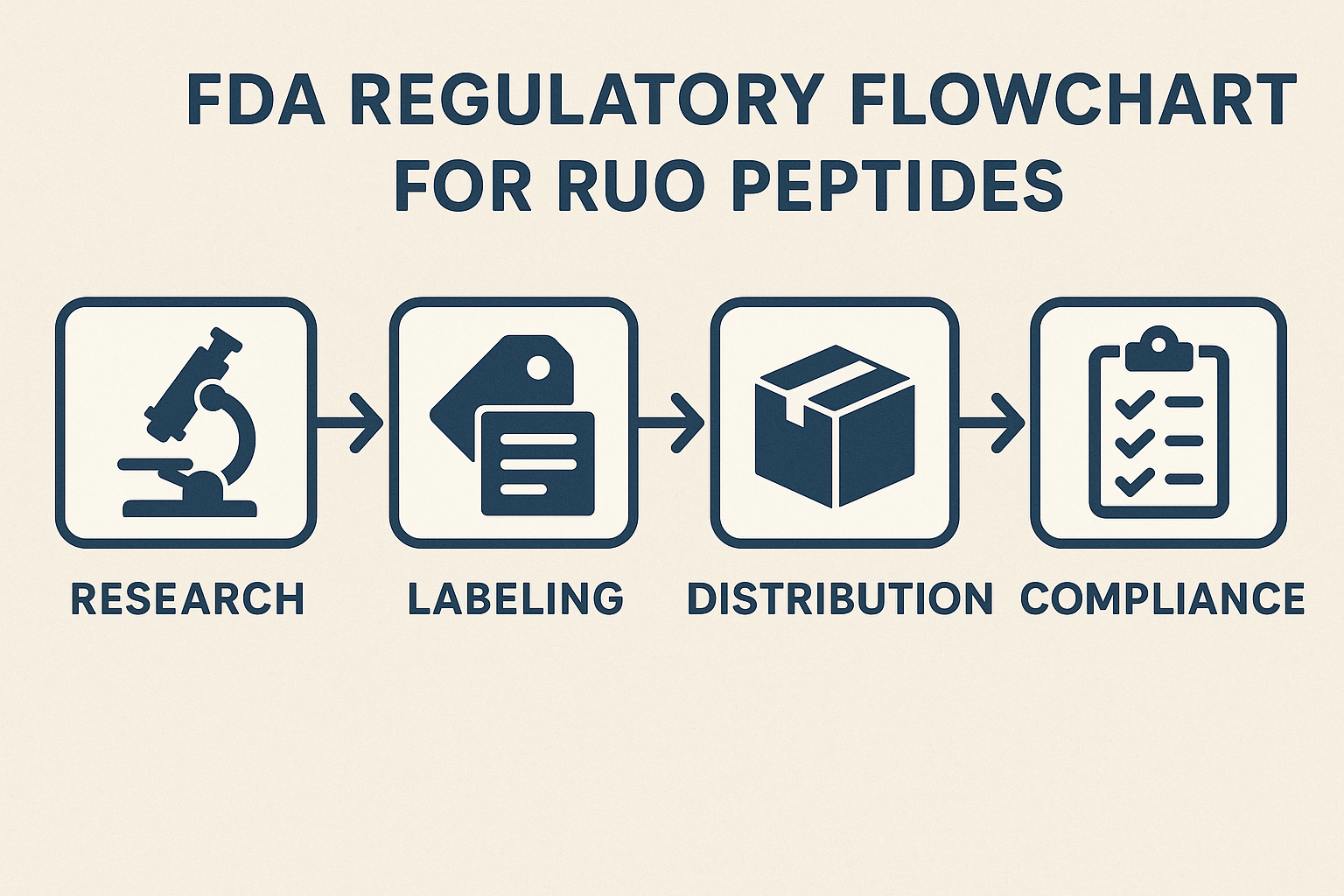
FDA Definition of RUO (21 CFR 801)
The Food and compound Administration defines “Research Use Only” (RUO) in 21 CFR 801 as a product that is intended solely for laboratory research and not for any clinical or therapeutic purpose. The regulation emphasizes that RUO items may be used to generate scientific data, but they must never be marketed, advertised, or distributed with the implication of safety or efficacy in humans. This definition creates a legal boundary that peptide labs must respect to avoid reclassification as a compound, which would trigger extensive pre‑market approval requirements.
Step‑by‑Step Flowchart Overview
The FDA’s RUO flowchart breaks the compliance journey into four core stages: research intent, labeling, internal distribution, and external sharing. First, a laboratory must clearly document that the peptide is being studied for non‑clinical purposes—such as assay development, target validation, or mechanistic exploration. Second, labeling must state “Research Use Only – Not for Human Consumption” in conspicuous, legible font, and the label cannot contain any therapeutic claim or serving size recommendation.
Third, internal distribution is limited to employees, collaborators, or contractors who are bound by confidentiality agreements and who also acknowledge the RUO status. Finally, external sharing—whether with academic partners, contract research organizations, or conference attendees—must remain within the same RUO constraints, meaning the material cannot be sold, offered for purchase, or provided to research subjectss.
Critical Compliance Checkpoints
At each juncture of the flowchart, the FDA highlights three non‑negotiable checkpoints:
- No marketing claim: Any statement that suggests the peptide can diagnose, treat, or prevent any disease is prohibited.
- No human administration: The product may not be used to humans outside of a regulated clinical trial, even for “off‑label” exploratory use.
- Restricted labeling: Labels must be limited to the RUO disclaimer, batch information, and safety warnings; they cannot include commonly studied research amount sizes, routes of administration, or efficacy data.
Failure to meet any of these checkpoints automatically reclassifies the material as a compound, exposing the laboratory to enforcement actions, product seizures, and costly remediation.
Documenting Compliance at Each Stage
Effective documentation is the backbone of a defensible RUO program. Laboratories should maintain a master compliance log that records:
- The original research protocol stating the scientific hypothesis and confirming RUO intent.
- Label drafts with version control, showing the exact wording of the RUO disclaimer.
- Distribution records, including recipient names, affiliation, and signed acknowledgments of RUO status.
- External sharing agreements that reiterate the prohibition on commercial use or human administration.
Electronic lab notebooks (ELNs) and a centralized document‑management system make it easier to retrieve these records during an FDA inspection. Additionally, routine internal audits—ideally quarterly—help identify inadvertent label deviations or unauthorized shipments before they become regulatory liabilities.
Further Reading
For a comprehensive dive into the statutory language and practical implications of RUO peptide research, consult the FDA’s detailed guidance at the following link: non‑clinical research boundaries peptide labs US. This resource expands on each flowchart node, provides sample labeling templates, and outlines best‑practice audit checklists that can be adapted to any peptide laboratory’s compliance program.
Permissible Laboratory Activities Under RUO
In‑vitro assays for binding, stability, and potency
Within the Research Use Only (RUO) framework, in‑vitro assays are the cornerstone of peptide characterization. Laboratories may conduct binding studies on cultured cell lines or freshly harvested tissue samples to assess receptor affinity, as well as stability tests that monitor degradation under various pH and temperature conditions. Potency assays—such as dose‑response curves in isolated cellular systems—are also permissible, provided the data are presented strictly as scientific observations and not extrapolated to clinical efficacy.
Mechanistic animal studies (no efficacy claims)
Animal work remains allowable when its sole purpose is to elucidate mechanism of action, pharmacokinetics, or biodistribution. Researchers can, for example, track peptide uptake in rodent models or evaluate downstream signaling pathways after administration. Crucially, the study design must avoid any language that suggests potential wellness benefit, and the results must be reported as exploratory findings. This distinction protects the work from being classified as a pre‑market clinical trial.
Synthesis and purification for internal research
Peptide synthesis and subsequent purification are fully sanctioned activities, provided the batches are earmarked for internal, non‑commercial research. Laboratories may scale up production to generate enough material for repeat assays, but each batch must be labeled clearly as “RUO – Internal Use Only.” Documentation should include the synthetic route, reagents, and any deviations from standard protocols, reinforcing the research‑only intent.
Analytical testing to confirm identity and purity
Analytical techniques such as high‑performance liquid chromatography (HPLC) and mass spectrometry (MS) are essential for verifying peptide identity, assessing purity, and detecting impurities. These tests are permissible under RUO as long as the results are used to support internal study designs rather than to substantiate marketing claims. Detailed chromatograms, mass spectra, and method validation reports should be retained in the laboratory’s quality system.
Record‑keeping practices that demonstrate RUO intent
Robust documentation is the linchpin of compliance. Every RUO activity must be captured in a research protocol that outlines objectives, methods, and the non‑clinical nature of the work. Lab notebooks—whether electronic or paper‑based—should include timestamps, reagent lot numbers, instrument settings, and observations. Maintaining a clear audit trail not only satisfies FDA expectations but also protects the organization should regulatory scrutiny arise.
Checklist: RUO‑compliant laboratory actions
- Perform in‑vitro binding, stability, and potency assays on cell lines or tissue samples.
- Conduct animal studies solely for mechanistic insight, avoiding any efficacy language.
- Synthesize and purify peptide batches designated for internal research use only.
- Run analytical tests (HPLC, MS) to confirm identity and purity, storing full data sets.
- Document all activities with detailed research protocols and lab notebooks that reflect RUO intent.
By adhering to these permissible activities and maintaining meticulous records, peptide laboratories can explore scientific questions while staying firmly within the RUO boundaries set by the FDA. This disciplined approach enables clinics and entrepreneurs to innovate responsibly, laying a solid foundation for future, fully compliant product development.
Labeling, Packaging, and Distribution Limits
Mandatory “Research Use Only – Not for Human Consumption” Label Language
Every peptide sold under the Research Use Only (RUO) designation must carry a clear, conspicuous statement that it is “Research Use Only – Not for Human Consumption.” This phrase should appear on the primary label, secondary packaging, and any accompanying documentation. The wording must be identical, without alteration or omission, to avoid any implication that the product is intended for potential wellness benefit. Including the FDA‑required disclaimer alongside the product name, lot number, and expiration date satisfies the labeling requirement and signals to regulators that the seller acknowledges the RUO status.
Prohibited Marketing Language and Claim‑Free Packaging Design
RUO peptides cannot be marketed with any language that suggests clinical efficacy, safety, or potential wellness benefit. Phrases such as “boosts recovery,” “enhances performance,” or “clinically proven” are strictly off‑limits. Packaging design must also remain neutral: avoid imagery associated with medical devices, pharmacy symbols, or clinical settings. Instead, use straightforward graphics that highlight the brand logo, product identifier, and the mandatory RUO disclaimer. By keeping the visual and textual elements claim‑free, manufacturers reduce the risk of being re‑characterized as a compound under the Federal Food, compound, and Cosmetic Act.
Internal vs. External Distribution: Qualified Recipients Only
Distribution channels are divided into two distinct pathways:
- Internal distribution – Peptides shipped to a company’s own research labs or manufacturing facilities. Even within the organization, each recipient must sign a documented RUO agreement that confirms the product will not be used in any clinical or therapeutic context.
- External distribution – Sales to third‑party researchers, academic institutions, or qualified businesses. Before shipment, the seller must obtain a written RUO agreement from the buyer, confirming that the purchaser is a qualified researcher or institution and that the product will remain strictly for laboratory investigations.
These agreements should be archived for at least three years, providing a paper trail that demonstrates compliance if the FDA conducts an audit.
Shipping Considerations: Avoiding “Clinical” or “Pharmacy” Channels
Choosing the right logistics partner is critical. Peptide shipments must be routed through carriers that handle research chemicals rather than those specialized for compound or clinical supplies. Using “clinical” or “pharmacy” distribution networks can inadvertently signal a therapeutic intent, triggering stricter regulatory scrutiny. Key shipping best practices include:
- Label the outer box with the RUO disclaimer and a “Research Use Only” sticker.
- Use non‑temperature‑controlled packaging unless the peptide’s stability data explicitly requires it; unnecessary cold‑chain handling may be interpreted as a clinical requirement.
- Provide a copy of the RUO agreement with the shipment, either as a printed insert or a secure electronic link.
- Maintain a detailed shipping log that records carrier name, tracking number, and recipient verification.
Example of a Compliant Label and Packaging Workflow
Below is an illustrative, step‑by‑step workflow that YPB and similar white‑label providers can adopt to ensure every peptide leaves the facility fully compliant:
- Label generation – Automated software pulls product data (name, lot, expiration) and appends the mandatory RUO disclaimer. The final label is printed on a durable, tamper‑evident material.
- Packaging assembly – The peptide vial is placed inside a secondary container bearing only the brand logo and the RUO statement. No health claims or clinical imagery are used.
- Documentation attachment – A printed RUO agreement, signed by the buyer, is sealed inside the package. An electronic copy is also emailed to the recipient for record‑keeping.
- Carrier selection – The order is routed through a certified research‑chemical carrier. The shipping label repeats the RUO disclaimer and includes a “Not for Human Use” sticker.
- Post‑shipment audit – After delivery, YPB logs the tracking information, verifies receipt by the qualified researcher, and archives the RUO agreement alongside the shipping record.
By following this structured approach, peptide brands can confidently navigate the fine line between legitimate research distribution and prohibited clinical marketing, protecting both their business and the integrity of the scientific community.
Ethical Considerations and Risk Management
Avoiding Therapeutic Intent
Peptide laboratories must draw an unmistakable line between research objectives and any implication of wellness support. All product labels, marketing copy, and scientific communications should explicitly state that the material is for Research Use Only (RUO) and not intended for diagnosis, treatment, or prevent any disease. By avoiding language that suggests therapeutic efficacy—such as “supports normal inflammatory response*” or “enhances recovery”—labs protect themselves from accusations of off‑label promotion, a common trigger for FDA enforcement.
Practical steps include using neutral descriptors (“modulates signaling pathways”) and providing citations to peer‑reviewed studies that focus on mechanistic insights rather than clinical outcomes. When a client requests a claim that borders on therapeutic, the lab should politely redirect the conversation toward experimental design and data generation, documenting the exchange for future reference.
Informed Consent for Animal Work and IACUC Adherence
Animal studies remain a cornerstone of peptide research, yet they carry significant ethical and regulatory weight. Before any in‑vivo experiment, labs must secure written informed consent from the institution’s Institutional Animal Care and Use Committee (IACUC). The consent should outline the study’s purpose, the number and species of animals, procedures involved, and humane endpoints.
Compliance with the IACUC’s protocol not only satisfies the Animal Welfare Act but also demonstrates a commitment to the 3Rs—Replacement, Reduction, and Refinement. Labs should maintain detailed logs of animal handling, anesthesia, and post‑procedure monitoring, making these records readily available for internal audits or external inspections.
Conflict‑of‑Interest Disclosures
When peptide research has the potential to generate commercial products, transparency becomes essential. Researchers, principal investigators, and even lab managers should disclose any financial stakes, equity interests, or royalty arrangements related to the peptide under study. Such disclosures should be captured in a written statement and filed with the lab’s compliance officer.
Embedding conflict‑of‑interest statements in research proposals, lab notebooks, and publications helps prevent allegations of bias and aligns the laboratory with the ethical standards expected by funding agencies, journals, and regulatory bodies.
Regular Internal Audits and Third‑Party Compliance Reviews
Proactive risk mitigation hinges on systematic evaluation of processes. Internal audits—conducted quarterly or semi‑annually—should review label accuracy, documentation of RUO status, consent forms, and IACUC approvals. Auditors should use a standardized checklist that flags deviations such as missing batch records or ambiguous marketing language.
In addition to internal checks, engaging an independent third‑party compliance firm provides an objective assessment of regulatory readiness. These external reviews often uncover blind spots that internal teams overlook, such as subtle cross‑contamination risks or outdated standard operating procedures (SOPs). Findings from both audit types should be compiled into a corrective‑action plan with clear timelines and responsible parties.
Consequences of Non‑Compliance
Failure to uphold ethical and regulatory standards can trigger a cascade of penalties. The FDA may issue warning letters that require immediate corrective actions, impose product seizures, or even pursue civil monetary penalties. Beyond legal repercussions, non‑compliance erodes trust with clinicians, investors, and the broader scientific community.
Reputational damage often translates into lost contracts, reduced market share, and heightened scrutiny from future regulators. For a brand like YourPeptideBrand, which positions itself as a trustworthy partner for health‑focused entrepreneurs, any hint of ethical lapse can be catastrophic. Therefore, embedding ethical considerations into daily operations is not merely a legal safeguard—it is a strategic imperative for sustainable growth.
Turning RUO Compliance into Business Opportunity
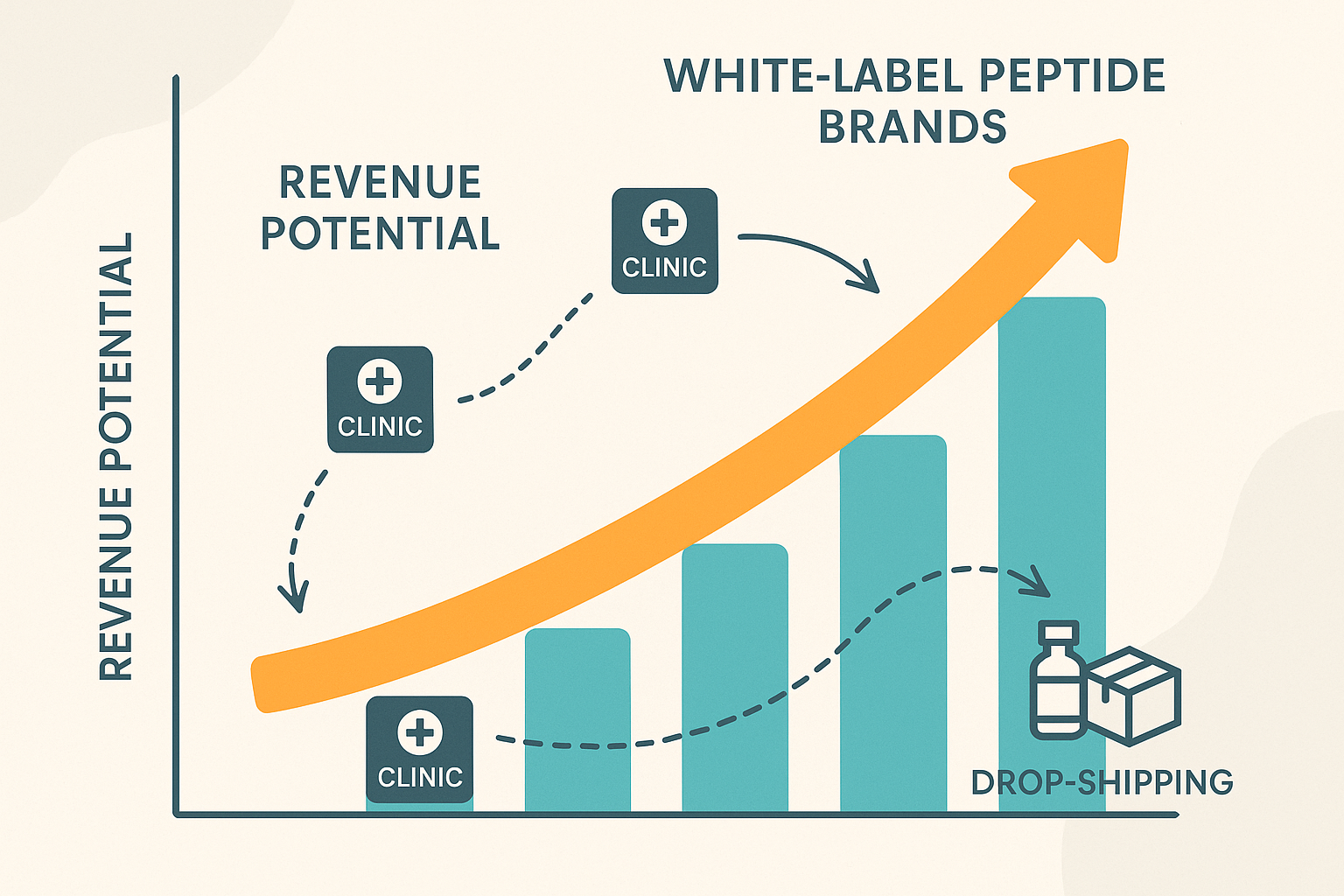
Building a Compliant RUO Foundation for White‑Label Dropshipping
When a clinic anchors its peptide program in the Research Use Only (RUO) framework, it creates a legally sound springboard for commercial expansion. The FDA’s RUO designation permits laboratories to manufacture, label, and distribute peptides without making therapeutic claims, provided every batch is clearly marked “Research Use Only.” This clarity eliminates the ambiguity that often stalls new product lines, allowing owners to focus on branding, logistics, and scientific literature indicates rather than navigating regulatory gray zones. In short, a disciplined RUO foundation converts compliance from a hurdle into a strategic asset.
Revenue Potential Backed by Market Growth Data
Industry analysts project the RUO peptide market to grow from $1.2 billion in 2023 to $2.4 billion by 2028, reflecting a compound annual growth rate (CAGR) of roughly 15 %. The surge is driven by rising demand for custom research reagents, increased adoption of peptide‑based diagnostics, and the proliferation of boutique wellness brands seeking white‑label solutions. This upward trajectory translates directly into revenue opportunities for clinics that can package RUO peptides under their own label while staying within FDA boundaries.
| Year | Market Size (USD Billion) | CAGR |
|---|---|---|
| 2023 | 1.2 | — |
| 2024 | 1.4 | 16 % |
| 2025 | 1.7 | 15 % |
| 2026 | 2.0 | 15 % |
| 2027 | 2.2 | 15 % |
| 2028 | 2.4 | 15 % |
YPB’s Turnkey Solution: From Label to Doorstep
YourPeptideBrand (YPB) removes every operational friction that typically blocks a clinic from launching a private label. First, YPB prints custom labels on demand, embedding the mandatory “Research Use Only” disclaimer alongside the clinic’s branding. Second, the platform offers bespoke packaging options—vial sizes, tamper‑evident seals, and personalized inserts—without imposing a minimum order quantity (MOQ). Finally, YPB handles direct dropshipping, delivering each order straight to the end‑user while preserving the clinic’s brand identity. The result is a seamless, cost‑effective pipeline that scales with demand rather than inventory.
Step‑by‑Step Guide for Clinic Owners
- Confirm RUO Eligibility. Verify that each peptide you intend to sell is classified as RUO and that your labeling complies with 21 CFR 820.3.
- Partner with YPB. Open a YPB account, upload your logo, and select the peptides you wish to offer. YPB’s portal automatically generates compliant labels.
- Design Custom Packaging. Choose vial type, size, and any ancillary materials (e.g., informational inserts). YPB’s design team ensures all packaging meets FDA labeling standards.
- Set Pricing & Fulfillment Rules. Define wholesale and retail prices, select shipping zones, and enable dropshipping directly to research subjectss or partner clinics.
- Launch Your Brand. Publish your product catalog on your website or marketplace. YPB handles order processing, quality checks, and compliance documentation.
- Monitor Performance. Use YPB’s analytics dashboard to track sales, inventory turnover, and regulatory audit logs, allowing you to adjust strategy in real time.
Real‑World Success: Multi‑Location Wellness Clinic Expansion
BrightHealth, a wellness network with ten locations across the Southeast, leveraged YPB’s platform to transition from internal peptide use to a full‑scale white‑label brand. Starting with a modest selection of five RUO peptides, BrightHealth used YPB’s on‑demand label printing to brand each product with its own logo and “Research Use Only” notice. Within six months, the clinic’s online storefront generated $120,000 in revenue, a 35 % increase over its previous supplement line. Because YPB eliminated MOQ requirements, BrightHealth could test new peptides without tying up capital, and the direct dropshipping model kept logistics simple for each location. The case illustrates how a disciplined RUO approach, paired with a turnkey white‑label partner, can convert regulatory compliance into a scalable profit center.
Key Takeaways for Forward‑Thinking Clinics
Adhering to RUO guidelines does not limit growth; it defines a clear, defensible pathway to market entry. By anchoring operations in a compliant foundation, clinics unlock the ability to offer branded peptide products, tap into a market projected to double in five years, and benefit from YPB’s end‑to‑end solution that eliminates inventory risk and administrative overhead. The strategic alignment of compliance and commerce turns a regulatory requirement into a competitive advantage, positioning savvy clinic owners at the forefront of the next wave of peptide‑driven wellness.
Closing Thoughts and Next Steps for Your Peptide Business
Key Takeaways
Research‑Use‑Only (RUO) activities remain strictly limited to in‑vitro studies, analytical validation, and internal quality control. Proper labeling—clear “Research Use Only” statements, batch numbers, and storage conditions—protects both the end user and your brand. Ethical safeguards, such as documented consent for any human‑derived material and rigorous data integrity protocols, are non‑negotiable pillars of a compliant operation.
Why Compliance Gives You an Edge
Operating within RUO boundaries isn’t just a legal checkbox; it’s a competitive differentiator. Clinics and entrepreneurs who demonstrate unwavering adherence to FDA guidance earn trust faster, attract higher‑value partnerships, and avoid costly enforcement actions. In a market where credibility is scarce, a clean compliance record becomes a powerful marketing asset.
Next Steps with YourPeptideBrand
- Explore our white‑label solution: Turnkey packaging, on‑demand label printing, and dropshipping without minimum orders.
- Schedule a compliance consultation: Our experts will map your product pipeline against RUO regulations and identify risk‑free growth opportunities.
- Download the free regulatory checklist: A concise, printable guide that keeps your team aligned with labeling, documentation, and ethical standards.
At YourPeptideBrand, our mission is simple—make compliant peptide launches effortless. By partnering with us, you gain a trusted ally that handles the regulatory heavy lifting while you focus on research subjects care and business expansion.
Visit YourPeptideBrand.com to start building a compliant, profitable peptide brand today.