
Overview of Institutional Peptide Procurement
Institutional procurement offices act as the gatekeepers of research integrity and research subjects safety. Before a peptide supplier can enter a university lab, hospital formulary, or multi‑site clinic network, the procurement team must verify that every molecule, label, and shipment complies with the same rigorous standards that protect both the scientific outcome and the individuals who ultimately receive the product.

Key risk factors that drive strict onboarding
- Regulatory risk: Peptides used for research must not cross the line into unapproved therapeutic claims, and institutions must ensure suppliers adhere to FDA “Research Use Only” (RUO) labeling requirements.
- Quality risk: Variability in peptide purity, sequence verification, and stability can compromise experimental reproducibility and, in clinical‑adjacent settings, research subjects safety.
- Financial risk: Unreliable delivery schedules, hidden fees, or non‑transparent pricing can jeopardize grant budgets and the financial health of a health‑system purchasing department.
High‑level onboarding workflow
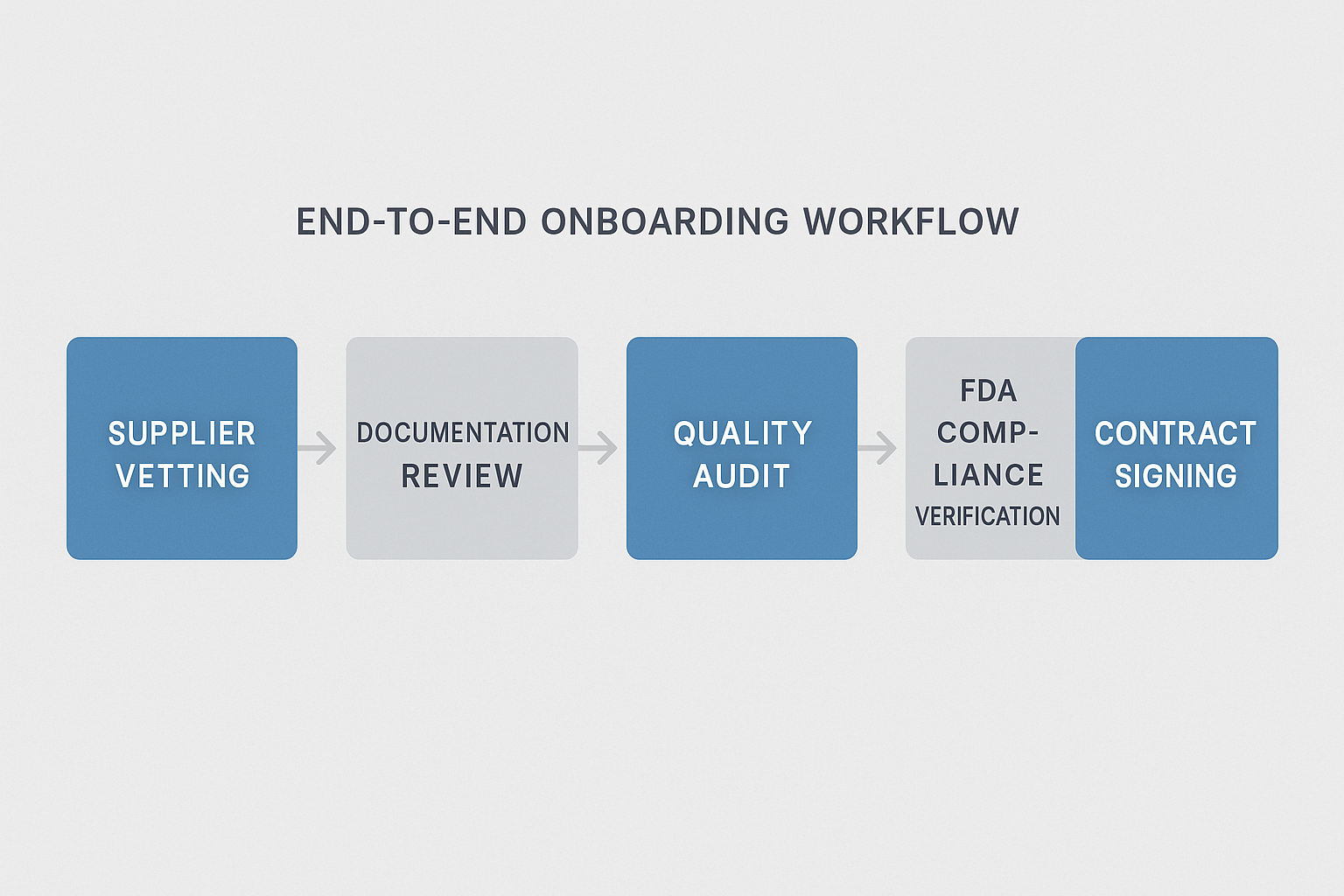
- Initial vetting: Procurement gathers basic company data, evaluates market reputation, and checks for any prior compliance violations.
- Documentation review: Suppliers submit certificates of analysis (CoA), material safety data sheets (MSDS), and proof of Good Manufacturing Practice (GMP) certification.
- Quality audit: A site‑visit or third‑party audit confirms that manufacturing controls, batch‑to‑batch consistency, and labeling practices meet institutional standards.
- FDA compliance check: The team verifies that all marketing materials, packaging, and distribution statements are strictly “Research Use Only” and that no therapeutic claims are made.
- Contract signing: After risk clearance, a legally binding agreement outlines pricing, delivery terms, confidentiality, and audit rights.
This end‑to‑end process is designed to eliminate surprises after a peptide order is placed. By front‑loading risk assessment, institutions protect their research budgets, maintain compliance with federal regulations, and safeguard the health of any participants involved in translational studies.
Industry best‑practice guidelines, such as the vendor onboarding requirements for institutional peptide purchasing, reinforce these steps and provide a checklist that most large research hospitals and academic health systems now adopt as standard operating procedure.
For vendors like YourPeptideBrand, aligning with this workflow means offering transparent CoAs, maintaining a documented GMP audit trail, and clearly labeling every product as RUO. When these expectations are met, procurement teams can move quickly from evaluation to contract, allowing clinics and research groups to focus on scientific discovery rather than administrative bottlenecks.
Mandatory Documentation for Supplier Approval
Required Certifications
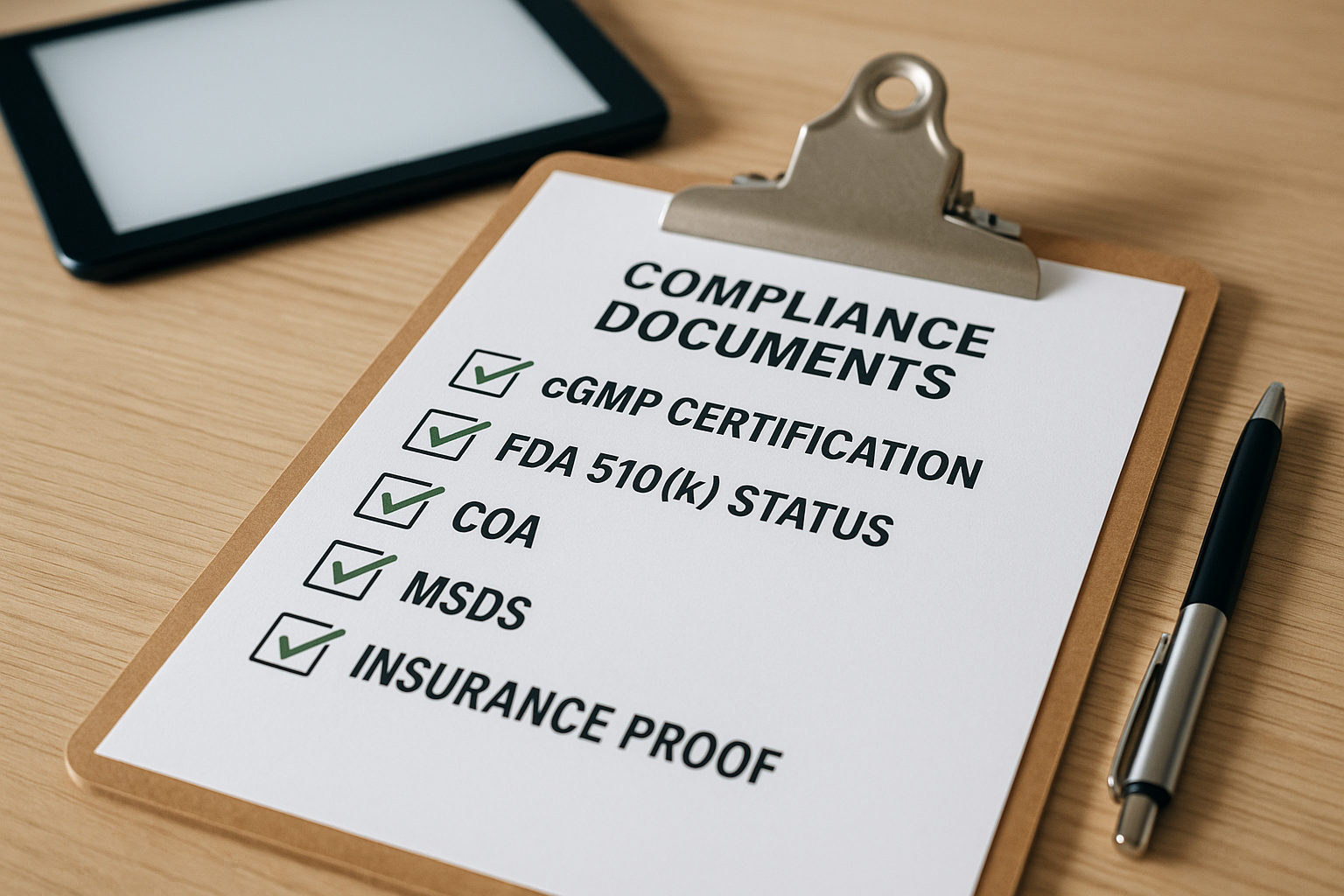
Procurement teams start their evaluation with a clear set of certifications that demonstrate a supplier’s adherence to industry‑wide quality standards. The most common mandates include:
- cGMP certification – proves that the manufacturing facility follows current Good Manufacturing Practices, a baseline for any peptide intended for research or wellness support.
- FDA 510(k) status (if applicable) – required when a peptide is marketed as a medical device accessory or when the supplier claims a regulatory pathway beyond Research Use Only.
- ISO 13485 – the international standard for medical device quality management systems, often requested by hospitals and large health networks.
- State‑specific licenses – some jurisdictions demand a state pharmacy or biotech license before a supplier can ship bulk peptide material within their borders.
Certificate of Analysis (COA) for Every Batch
A COA is the scientific proof that a peptide batch meets the specifications promised by the supplier. Procurement officers require each COA to contain three critical data blocks:
- Purity – expressed as a percentage, typically derived from HPLC or UPLC analysis. Values below 95 % generally trigger a request for re‑analysis.
- Identity – confirmation through mass spectrometry (MS) or NMR that the peptide sequence matches the label.
- Impurity profiling – a detailed list of detectable degradants, related substances, and any residual solvents, each with its own concentration limit.
Without a complete COA, the risk of batch‑to‑batch variability rises sharply, jeopardizing research reproducibility and research subjects safety.
Material Safety Data Sheet (MSDS) Requirements
Peptides, especially when supplied in bulk powder form, can pose chemical and biological hazards. An acceptable MSDS must:
- Identify all hazardous ingredients and their concentrations.
- Provide handling, storage, and disposal instructions that align with OSHA and GHS standards.
- Include first‑aid measures, fire‑fighting recommendations, and personal protective equipment (PPE) guidelines.
Clear hazard communication not only protects staff but also satisfies institutional safety audits.
Proof of Insurance and Financial Stability
Institutions want assurance that a supplier can absorb unforeseen liabilities. Required documents typically include:
- General liability insurance – minimum coverage of $1 million per occurrence, demonstrating the ability to cover third‑party bodily injury or property damage.
- Product liability insurance – specifically tied to the peptide products, often required at $2 million limits for Research Use Only (RUO) substances.
- Financial stability statements – recent audited financials or a credit rating report that confirms the supplier’s capacity to fulfill large, recurring orders.
Verification Checklist for Procurement Teams
Below is a ready‑to‑use checklist that can be attached to any supplier questionnaire. Tick each box only after the corresponding document has been reviewed and approved.
- cGMP certification – ☐
- FDA 510(k) clearance (if relevant) – ☐
- ISO 13485 registration – ☐
- State‑specific operating license – ☐
- Batch COA (purity, identity, impurity profile) – ☐
- Complete MSDS (hazard communication) – ☐
- General liability insurance (≥ $1 M) – ☐
- Product liability insurance (≥ $2 M) – ☐
- Audited financial statements or credit rating – ☐
Only when every item on this list is marked complete should a procurement team move forward with a formal supplier approval. This disciplined approach safeguards the clinic’s research integrity, protects research subjectss, and ensures regulatory compliance throughout the peptide supply chain.
Supplier Vetting and Quality Assurance Process
1. Initial Supplier Screening
Before any on‑site visit, procurement teams compile a dossier that captures the supplier’s corporate pedigree. This includes the legal entity name, year of incorporation, and ownership structure. A red‑flag check of FDA inspection history is mandatory; any Form 483 observations or Warning Letters must be documented and explained. Equally important is evidence of prior collaborations with reputable research institutions—published co‑authored studies, joint grant awards, or long‑term supply contracts demonstrate that the vendor can meet the rigorous expectations of academic and clinical partners.
2. On‑Site Quality Audit Components
A physical audit validates the claims made during the desk review. The audit team should follow a standardized checklist that covers four critical pillars:
- GMP Facility Tour: Verify that the manufacturing floor complies with Current Good Manufacturing Practice (cGMP) guidelines, including segregation of raw‑material storage, controlled‑access zones, and clean‑room classifications.
- Equipment Qualification: Review Installation Qualification (IQ), Operational Qualification (OQ), and Performance Qualification (PQ) records for HPLC systems, lyophilizers, and peptide synthesizers. Calibration certificates must be current and traceable to national standards.
- Personnel Training Records: Confirm that all operators handling peptide synthesis and purification have completed documented training modules, competency assessments, and ongoing refresher courses.
- Environmental Monitoring: Examine logs for temperature, humidity, and particulate counts in critical areas. Continuous monitoring data should show compliance with ISO 14644‑1 clean‑room specifications.
3. Sample Testing Protocol
Even a flawless audit cannot replace analytical verification of the product itself. Institutions typically require an independent third‑party laboratory to perform a full suite of tests on a representative batch:
- High‑Performance Liquid Chromatography (HPLC) to assess purity and identify any related impurities.
- Electrospray Ionization Mass Spectrometry (ESI‑MS) or MALDI‑TOF to confirm molecular weight and sequence integrity.
- Residual solvent analysis (GC‑MS) and endotoxin testing (LAL assay) when the peptide is intended for in‑vivo studies.
The resulting analytical report must be cross‑checked against the supplier’s Certificate of Analysis (COA). Any deviation beyond the pre‑agreed tolerance (e.g., purity < 95 %) triggers a conditional review.
4. Documentation Review Integration
The checklist created in Part 2 of this series serves as the backbone for the audit checklist. Each audit item maps directly to a documentation requirement: GMP compliance links to the Quality Management System (QMS) manual, equipment qualification ties to calibration logs, and personnel training connects to the human resources file. By aligning the two checklists, the audit team can instantly flag missing or outdated documents, reducing redundancy and ensuring a single source of truth for all compliance artifacts.
5. Decision Matrix
After the on‑site audit and sample testing are complete, the procurement committee applies a decision matrix that translates findings into actionable outcomes. The matrix below outlines the three possible verdicts and the thresholds that trigger each one.
| Finding Category | Criteria | Outcome |
|---|---|---|
| Full Compliance | All GMP, equipment, training, and environmental records up to date; third‑party test results meet or exceed COA specifications. | Pass – Supplier added to approved vendor list. |
| Conditional Approval | Minor gaps (e.g., missing calibration certificate for a non‑critical instrument) or a single analytical deviation within an acceptable tolerance. | Conditional – Supplier may supply pending corrective action plan and re‑verification within 30 days. |
| Rejection | Significant GMP violations, repeated FDA inspection findings, or analytical results falling below purity thresholds. | Reject – Supplier excluded until a comprehensive remediation program is completed and re‑audited. |
Putting It All Together
By progressing methodically from desk‑based screening to a hands‑on audit, and finally to independent analytical confirmation, procurement teams create a defensible trail of evidence. This layered approach not only satisfies institutional risk‑management policies but also protects the downstream research or clinical programs that rely on high‑quality peptide inputs. When the decision matrix is applied consistently, institutions can confidently differentiate between suppliers that are truly partnership‑ready and those that require further work—or should be ruled out entirely.
Financial and Strategic Implications of Onboarding Choices
Cost Breakdown: Bulk Acquisition vs. White‑Label Turnkey Solutions
When a multi‑location clinic evaluates peptide sourcing, the first line item is the purchase price. Bulk acquisition typically runs between $15–$25 per gram, depending on peptide length and purity, with discounts kicking in after the 5‑kg threshold. In contrast, a white‑label turnkey package bundles the same raw material cost with additional services: custom labeling (≈ $0.30 / unit), premium packaging ($0.45 / unit), and dropshipping logistics (≈ $0.25 / unit). Although the per‑unit expense rises to roughly $16–$22, the clinic avoids capital outlay for inventory, warehousing, and a dedicated fulfillment team.
Profitability Scenarios Illustrated
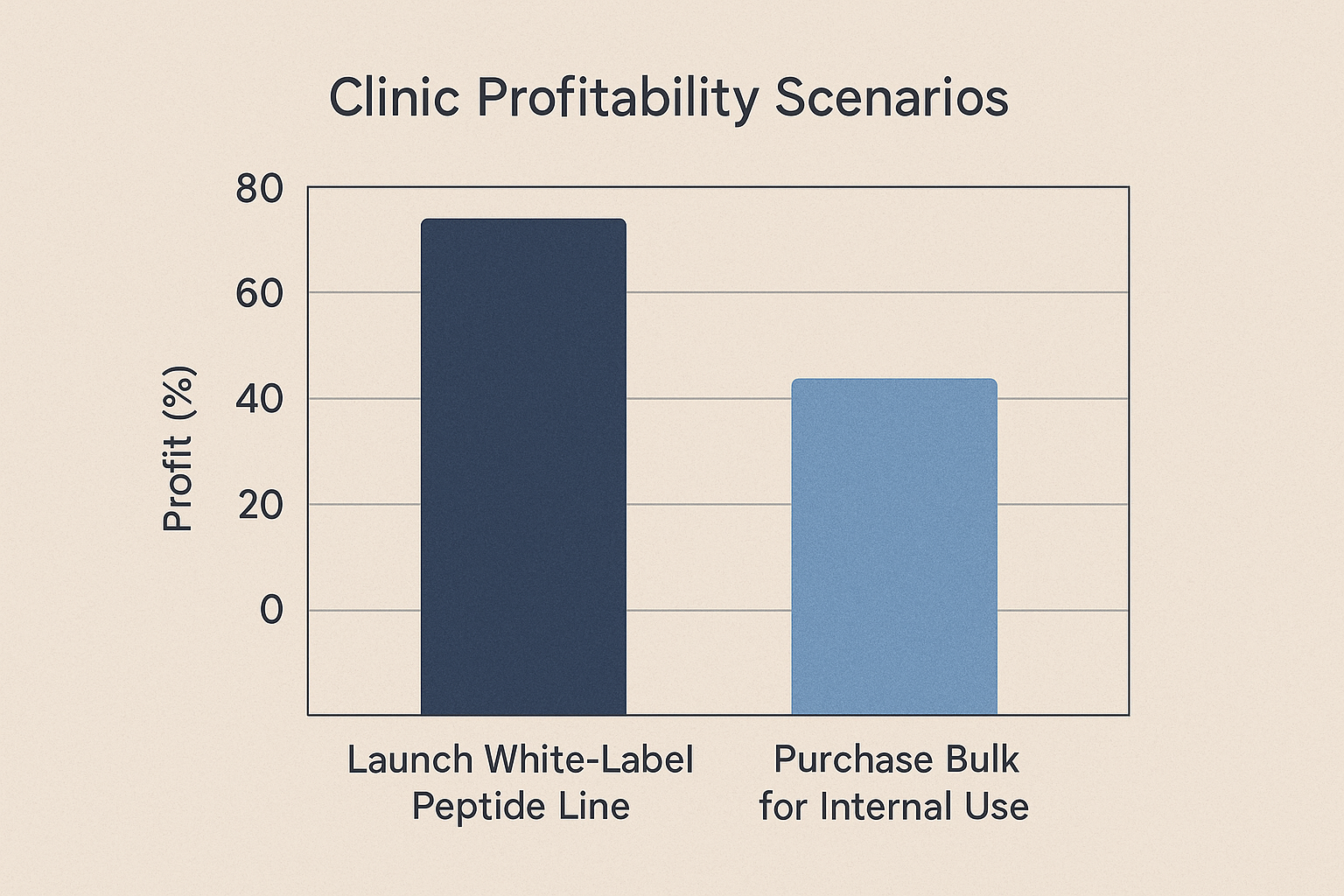
The bar chart above visualizes three common models:
- Internal Use Only: Margins hover around 12 % after accounting for storage and handling.
- White‑Label Resale: Margins climb to 28 % thanks to premium branding and direct‑to‑consumer pricing.
- Hybrid (Bulk + Select White‑Label): A balanced approach yields 20–22 % margins, leveraging bulk discounts while capturing some brand‑value upside.
Risk Assessment: Inventory, Liability, and Demand Forecasting
Choosing a strategy isn’t purely a numbers game; risk exposure can erode profitability if not managed.
- Inventory Holding Costs – Bulk stock ties up capital and incurs refrigeration, security, and insurance expenses (≈ $0.05 / gram per month). Unsold inventory also risks obsolescence if formulation standards shift.
- Regulatory Liability – Owning the product places the clinic directly under FDA R&D use guidelines. Any labeling error or adverse event can trigger costly investigations, whereas a white‑label partner assumes much of that compliance burden.
- Market Demand Forecasting – Accurate sales projections are essential. Over‑estimating demand inflates holding costs; under‑estimating leads to missed revenue opportunities, especially in fast‑moving wellness markets.
Strategic Fit for Multi‑Location Clinics
Clinics that prioritize brand differentiation—such as offering a proprietary peptide line across all locations—benefit from the white‑label route. The consistent packaging and dropshipping infrastructure reinforce a unified brand experience, even when research subjectss order online. Conversely, operations that view peptide procurement as a cost‑center, primarily supporting in‑clinic treatments, may favor bulk buying to keep unit costs low and retain full control over formulation and dosing protocols.
Aligning Purchasing Strategy with Institutional Goals and Budget Cycles
To synchronize sourcing with fiscal planning, institutions should map the chosen model onto their budgeting calendar. Bulk purchases align well with annual capital budgets, allowing for bulk discounts and predictable cash‑flow. White‑label contracts, often structured as month‑to‑month service agreements, fit better with operating‑expense budgets and enable rapid scaling during peak demand periods. A hybrid approach can be timed to leverage end‑of‑year surplus funds for bulk stock while launching a limited white‑label line to test market reception without long‑term commitment.
Ultimately, the decision hinges on whether the clinic values cost efficiency or brand equity. By quantifying margins, weighing inventory and regulatory risks, and matching the model to strategic objectives, procurement teams can present a data‑driven recommendation that aligns with both the institution’s financial targets and its long‑term growth vision.
Finalizing the Onboarding Agreement and Next Steps
Key Contract Elements
The final agreement cements the partnership and protects both parties. Core components include:
- Service Level Agreements (SLAs): Defined response times, quality thresholds, and escalation procedures.
- Pricing Tiers: Volume‑based discounts, rebate structures, and transparent cost adjustments.
- Delivery Schedules: Guaranteed lead times, shipping methods, and contingency plans for back‑orders.
- Confidentiality Clauses: Safeguards for proprietary formulations, branding assets, and research subjects‑related data.
Post‑Approval Monitoring
Approval is only the beginning. Ongoing compliance ensures that every batch meets the highest regulatory standards.
- Periodic Audit Schedule: Quarterly on‑site or remote reviews of manufacturing practices, documentation, and traceability.
- Batch Release Testing: Independent potency, purity, and sterility assays before any product leaves the facility.
- Continuous FDA Compliance Verification: Real‑time monitoring of labeling, R&D records, and adverse event reporting to stay aligned with FDA guidance for Research Use Only (RUO) peptides.
Support Resources
YPB equips partners with a dedicated ecosystem designed to reduce friction and accelerate growth.
- Dedicated Account Managers – A single point of contact who coordinates logistics, regulatory queries, and custom packaging requests.
- Regulatory Consulting – Access to FDA‑trained specialists who review labeling, SOPs, and compliance documentation.
- Education Webinars – Monthly sessions covering peptide science, market trends, and best practices for white‑label branding.
Why Partner with YourPeptideBrand
Choosing YPB means aligning with a trusted partner that simplifies onboarding while delivering a turnkey, white‑label solution. Our end‑to‑end platform handles label printing, custom packaging, and dropshipping—without minimum order quantities—so clinics and entrepreneurs can focus on research subjects care and brand building. Every step is engineered for full FDA compliance, giving you confidence that your peptide line meets the strictest quality and ethical standards.
Get Started Today
Ready to turn your vision into a compliant, revenue‑generating peptide brand? Learn more about our onboarding process and begin the partnership that lets you launch quickly, scale responsibly, and stay ahead of regulatory demands.