
For research use only. Not for human consumption, diagnostic, or therapeutic use.
Why Strategic Mergers Accelerate Peptide Brand Growth

Rapid market expansion and mounting competition
The global peptide market is projected to surpass $30 billion by 2030, driven by rising demand for research‑use‑only (RUO) compounds, personalized compound, and anti‑aging therapies. This growth creates a double‑edged sword for emerging brands: while opportunities multiply, the competitive landscape tightens as dozens of startups and established firms vie for the same niche clinics and research institutions. For companies like YourPeptideBrand (YPB), staying ahead means not only innovating faster but also securing market share before rivals saturate distribution channels.
Instant access to customers, channels, and formulations
Mergers bypass the lengthy process of building a customer base from scratch. By joining forces with a complementary partner, a peptide brand instantly inherits that partner’s existing contracts with clinics, wholesale distributors, and e‑commerce platforms. Moreover, the combined entity gains immediate rights to proprietary formulations—whether a novel peptide sequence or a patented stabilization technique—that would otherwise require years of R&D and regulatory navigation. This “plug‑and‑play” advantage shortens time‑to‑revenue dramatically.
Financial upside: economies of scale and cost efficiencies
From a balance‑sheet perspective, scale translates into lower per‑unit costs. Consolidated purchasing power reduces raw‑material expenses for amino acids, solvents, and packaging supplies. Shared manufacturing facilities enable batch‑size optimization, cutting down waste and energy consumption. R&D budgets also benefit: joint scientific teams can pool data, share pre‑clinical results, and avoid duplicate experiments, freeing capital for strategic initiatives such as market expansion or regulatory consulting.
Strategic synergies that boost credibility
Beyond pure economics, merging scientific expertise with an established clinic network creates a virtuous cycle of trust. A brand known for rigorous quality control gains instant credibility when paired with a partner that already supplies peptides to high‑profile wellness clinics. This synergy not only enhances brand perception among physicians and entrepreneurs but also strengthens negotiating leverage with suppliers, insurers, and even potential investors who look for a proven track record of both innovation and market reach.
Organic growth versus merger‑driven acceleration
Pursuing growth organically—hiring sales reps, building new labs, and launching marketing campaigns—can take 12‑24 months before measurable results appear. During that window, competitors may capture the very customers a brand hopes to attract. In contrast, a well‑executed merger compresses that timeline to weeks or months, delivering immediate scale, diversified revenue streams, and a broader product portfolio. While organic routes carry lower integration risk, they often lack the velocity required to dominate a fast‑moving peptide ecosystem.
Balancing risk and reward
Strategic mergers are not without challenges. Cultural mismatches, divergent regulatory philosophies, and integration costs can erode anticipated benefits if not managed carefully. However, when the due‑diligence process aligns on shared values—such as strict FDA compliance, ethical sourcing, and transparent labeling—the upside typically outweighs the pitfalls. For YPB and similar white‑label providers, leveraging mergers as a growth catalyst can transform a modest start‑up into a market‑leading platform capable of serving multi‑location clinics, entrepreneurs, and research institutions at scale.
The Step‑by‑Step Merger Process for Peptide Brands
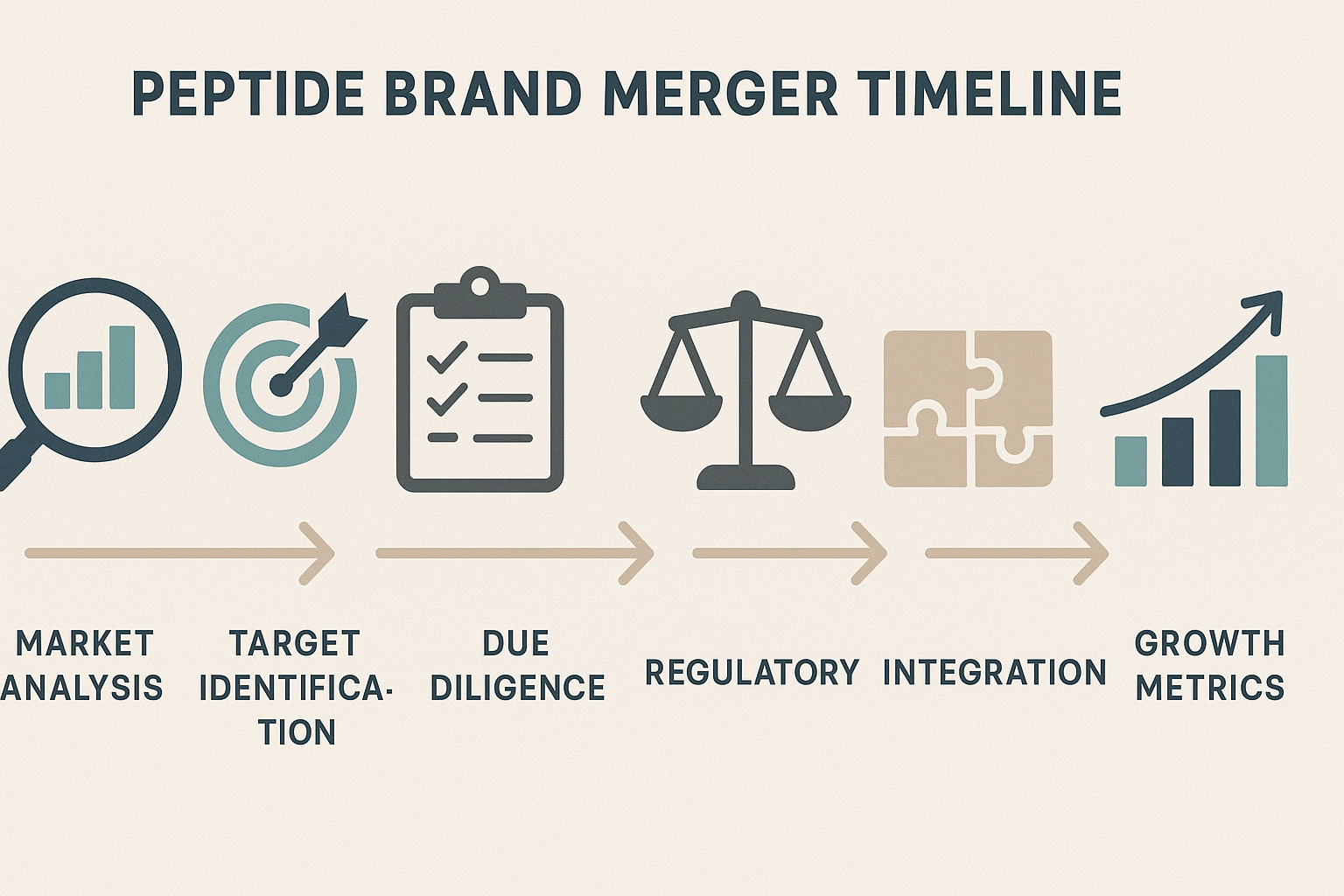
1. Market Analysis – Find the Sweet Spot
Before you even think about a partner, map the current peptide landscape. Identify market gaps where demand outpaces supply—such as emerging RU‑RU (Research Use Only) formulations or niche therapeutic areas that larger players overlook. Compare competitor positioning on price, speed of fulfillment, and compliance support. Finally, estimate a realistic target valuation based on projected revenue, existing contracts, and the premium you can command for a fully integrated white‑label solution.
2. Target Identification – Choose Complementary Allies
Not every manufacturer or clinic network will add value. Use the following criteria to shortlist candidates:
- Product Portfolio Fit: Does the prospect produce peptides that complement, rather than duplicate, your catalog?
- Geographic Reach: A partner with clinics in regions where you lack presence can accelerate market penetration.
- Operational Compatibility: Look for businesses that already use on‑demand label printing, custom packaging, or dropshipping—this reduces integration friction.
- Cultural Alignment: Shared commitment to FDA RUO compliance and ethical marketing is non‑negotiable.
3. Due Diligence Checklist – Verify the Foundations
Run a comprehensive audit to protect your brand and your investors. The checklist below covers the most critical domains:
- Financial Health: Review audited statements, cash flow trends, and debt obligations.
- Intellectual Property: Confirm ownership of peptide patents, trademarks, and any proprietary manufacturing processes.
- Regulatory Status: Verify that every product is classified as RUO, with up‑to‑date FDA notifications and no pending enforcement actions.
- Supply‑Chain Robustness: Assess raw‑material sourcing, quality‑control SOPs, and contingency plans for batch failures.
- Legal Exposure: Check for litigation history, especially related to labeling or false‑claim allegations.
4. Regulatory Alignment – Keep FDA Compliance Seamless
Both entities must speak the same regulatory language. Conduct a joint compliance workshop to reconcile label wording, safety data sheets, and RUO disclaimer placement. Create a shared repository of FDA correspondence and ensure that any future product introductions follow a unified submission protocol. This alignment not only avoids costly re‑labeling but also reinforces trust with clinic owners who rely on your compliance guarantees.
5. Integration Planning – From Brand to Logistics
Integration is where the merger becomes tangible for end users. Map the workflow across four key pillars:
- Branding & Packaging: Consolidate visual identities, decide whether to retain dual branding or adopt a single umbrella logo, and standardize label dimensions for on‑demand printing.
- Label Printing: Sync your label‑software APIs so orders from either side trigger the same high‑resolution, FDA‑compliant output.
- Dropshipping Logistics: Align warehouse management systems (WMS) to route shipments through the most efficient fulfillment center, preserving the “no‑minimum‑order” promise.
- Customer Service: Train support teams on the merged product catalog and unified return policies to deliver a consistent experience.
6. Growth Metrics – Measure Success After the Deal
Post‑merger performance should be tracked with clear, quantifiable KPIs. The table below outlines the most relevant metrics for peptide brands and suggested benchmarks for the first 12 months.
| KPI | Description | Target (12‑month horizon) |
|---|---|---|
| Revenue Lift | Incremental sales generated from combined product lines and cross‑selling opportunities. | +25 % YoY |
| Market Share Gain | Percentage increase in total RUO peptide market captured. | +5 % points |
| Cost Savings | Reduction in COGS and overhead through shared manufacturing and logistics. | 15 % reduction |
| Order Fulfillment Speed | Average time from order placement to shipment. | ≤48 hours |
| Regulatory Incident Rate | Number of FDA notices or compliance warnings. | Zero incidents |
Putting It All Together
By following this roadmap—starting with a data‑driven market analysis, moving through disciplined target selection and due diligence, aligning regulatory practices, and executing a meticulous integration plan—you set the stage for a merger that not only expands your product portfolio but also strengthens your compliance posture and operational efficiency. Track the KPIs religiously, adjust tactics as needed, and you’ll see the merger translate into measurable revenue lift, broader market reach, and sustainable cost advantages.
Real‑World Success: Clinic Acquires a Niche Peptide Manufacturer
Background of the Acquiring Clinic
VitalWell, a multi‑location wellness clinic network, operates 12 flagship centers across the United States, from the Pacific Northwest to the Southeast. The brand’s core offering includes IV therapy, hormone optimization, and a curated line of research‑use‑only (RUO) peptides sourced from third‑party distributors. With annual revenues surpassing $15 million and a research subjects base exceeding 45,000, VitalWell had already demonstrated the ability to scale services through standardized protocols and a robust digital booking platform. However, the leadership team recognized a ceiling: reliance on external peptide suppliers limited margin potential and created inventory bottlenecks during peak demand periods.
Profile of the Niche Peptide Manufacturer
PeptidePrecision is a boutique manufacturer based in Austin, Texas, specializing in high‑purity analogues of growth‑hormone‑releasing peptides and selective receptor modulators. The company’s GMP‑certified facility can produce up to 2 kg of peptide per batch, a capacity that comfortably exceeds the needs of most single‑clinic operations but falls short of larger distributors. Notably, PeptidePrecision maintains an impeccable compliance record—zero FDA Form 483 observations over the past five years—and publishes batch‑level analytical certificates that align with YPB’s stringent quality standards.
Merger Execution
The acquisition unfolded over a six‑month timeline, broken into three distinct phases:
- Due Diligence (Month 1‑2): VitalWell’s legal and regulatory teams audited PeptidePrecision’s SOPs, batch records, and FDA correspondence to confirm alignment with RUO guidelines.
- Negotiation (Month 3‑4): Key points included a earn‑out structure tied to post‑merger peptide sales, protection of proprietary peptide sequences, and a clause guaranteeing the continuation of PeptidePrecision’s quality‑control staff for at least 12 months.
- Integration (Month 5‑6): A joint integration task force migrated inventory data into VitalWell’s ERP, harmonized labeling templates using YPB’s on‑demand printing service, and launched a unified e‑commerce portal that supports white‑label dropshipping directly to research subjectss and partner clinics.
Outcomes
Within the first twelve months after the merger, VitalWell reported the following measurable gains:
- Expanded Product Catalog: The combined entity now offers 35 distinct RUO peptides, a 150 % increase over the pre‑acquisition lineup.
- Unified Branding: All peptide containers feature VitalWell’s logo and YPB‑approved compliance markings, reinforcing brand trust across all locations.
- Wholesale Revenue Growth: Gross wholesale sales rose from $2.3 million to $4.1 million, driven by bulk orders from partner clinics that leverage the new white‑label dropshipping model.
- Streamlined Logistics: By consolidating manufacturing and fulfillment under one roof, shipping lead times dropped from an average of 14 days to 5 days, and inventory carrying costs fell by roughly 22 %.
Lessons Learned
VitalWell’s experience underscores three strategic takeaways for any clinic considering a similar path:
- Cultural Fit Trumps Size: The seamless transition was largely due to shared values around scientific rigor and research subjects safety, which minimized internal friction.
- Never Compromise Quality: Retaining PeptidePrecision’s seasoned quality‑control team ensured that the heightened production volume never diluted assay purity or batch consistency.
- Leverage Turnkey Services: Partnering with YourPeptideBrand for label printing, custom packaging, and dropshipping eliminated the need for a separate logistics infrastructure, allowing VitalWell to focus on clinical service and market expansion.
Ensuring FDA RUO Compliance During Mergers
The Research Use Only (RUO) designation is more than a label—it dictates how peptide products can be manufactured, marketed, and transferred between companies. For a brand that sells RUO peptides, the FDA treats each batch as a scientific tool, not a therapeutic agent. This distinction matters because any misstep can trigger enforcement actions, jeopardize product credibility, and erode trust among clinicians who rely on strict compliance to protect research subjects safety.
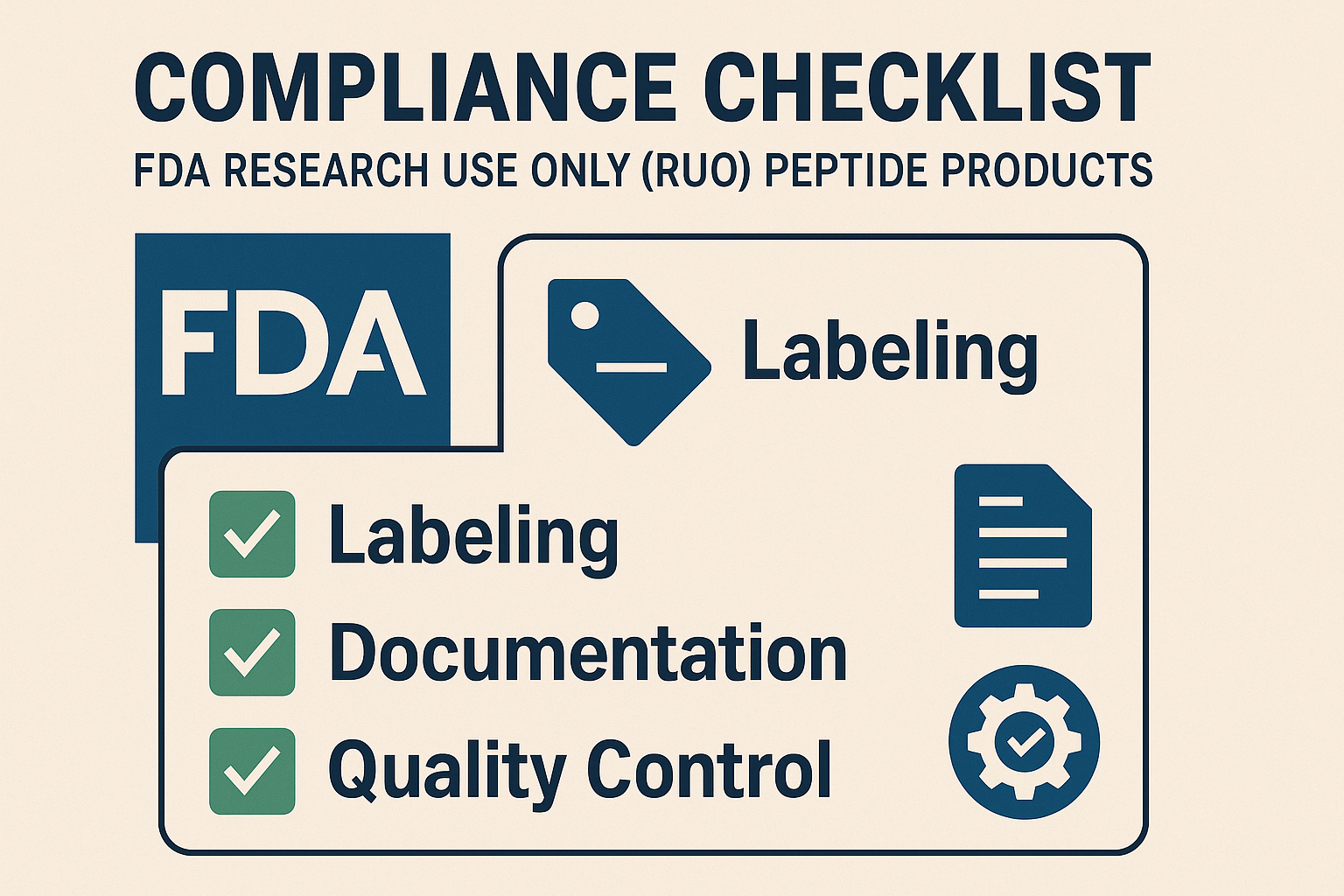
Core Compliance Checklist
During a merger, both parties must verify that every compliance element aligns with FDA expectations. The following checklist serves as a practical audit tool:
- Labeling Accuracy: Every vial, bottle, or kit must bear a clear “Research Use Only – Not for Human Consumption” statement, along with the product’s exact peptide sequence, lot number, and expiration date.
- Documentation of Research Intent: Maintain a written declaration that the product is intended solely for in‑vitro or animal studies. This declaration should be attached to each batch record and referenced in any transfer agreements.
- Quality Control Protocols: Verify that analytical methods (e.g., HPLC, mass spectrometry) meet the purity thresholds required for RUO materials (typically ≥ 95 %). Retain certificates of analysis (CoAs) for each lot.
- Batch Traceability: Implement a robust tracking system that links raw material receipts, manufacturing steps, and final product distribution back to the original lot number.
Harmonizing SOPs Across Entities
Standard Operating Procedures (SOPs) are the backbone of regulatory compliance. When an acquiring company integrates an acquired peptide line, the two SOP libraries must be reconciled. Begin by mapping each SOP to the FDA’s RUO guidance, then identify gaps or redundancies. Key actions include:
- Consolidating labeling templates to ensure uniform language and font size.
- Standardizing documentation formats for research intent statements.
- Adopting a single quality management system (QMS) that captures all QC data in a searchable database.
- Training staff on the unified SOPs, with competency assessments recorded for audit trails.
By aligning SOPs early, you avoid costly re‑work later and present a single, defensible compliance framework to regulators.
Leveraging Third‑Party Auditors and YPB’s Compliance Support
Independent auditors bring objectivity and industry expertise that internal teams often lack. A third‑party audit before the merger can uncover hidden liabilities—such as undocumented batch releases or outdated labeling files—allowing you to remediate them before they become enforcement issues.
YourPeptideBrand (YPB) offers a dedicated compliance support service that streamlines this process. YPB’s auditors conduct a “pre‑merger compliance health check,” deliver a detailed findings report, and work with both parties to implement corrective actions. The service also includes template SOPs, label libraries, and a cloud‑based document repository that satisfies FDA record‑keeping requirements.
Post‑Merger Monitoring and Ongoing Obligations
Compliance does not end with the signing of the purchase agreement. After the merger, continuous monitoring ensures that the integrated operation remains within FDA boundaries. Essential post‑merger activities include:
- Scheduled Audits: Conduct internal audits quarterly and invite external auditors annually to verify label integrity, batch traceability, and QC data accuracy.
- Adverse Event Reporting: Although RUO products are not intended for human use, any unexpected adverse findings in animal studies must be reported to the FDA under 21 CFR 312.32.
- Regulatory Filings Updates: If the merged entity expands its product portfolio or alters manufacturing sites, promptly update the FDA’s RUO listing and maintain the required export documentation.
- Training Refreshers: Provide quarterly refresher courses for staff on RUO labeling, documentation standards, and the latest FDA guidance.
By embedding these monitoring practices into the daily workflow, the merged brand can sustain compliance, protect its reputation, and focus on the core mission—delivering high‑quality research peptides that empower clinicians and scientists alike.
Scale Your Brand with YPB’s Turnkey Merger Support
Why mergers accelerate peptide‑brand growth
Mergers give peptide brands instant access to new markets, expanded product lines, and a broader customer base—benefits that would take years to achieve organically. By combining resources, you can leverage shared expertise, reduce overhead, and fast‑track regulatory compliance. In the competitive Research Use Only (RUO) space, speed to market often determines whether a brand captures a niche or fades into obscurity.
White‑label, on‑demand label printing and custom packaging
YPB removes the most common integration hurdles by handling every visual and logistical detail. Our white‑label service prints labels on demand, meaning you never face large inventory commitments or outdated branding. Custom packaging is engineered to meet both aesthetic and compliance standards, so your newly merged entity can launch with a professional look from day one.
Dropshipping without minimum order quantities
Traditional suppliers force bulk orders that tie up capital and create excess stock. YPB’s dropshipping model eliminates this barrier entirely—there are no minimum order quantities, and each product ships directly to the end‑user under your brand name. This flexibility lets a merged business scale gradually, matching supply to real‑time demand while preserving cash flow.
Next steps: free consultation
Ready to explore how a strategic merger could reshape your peptide portfolio? Schedule a complimentary, no‑obligation consultation with our compliance and operations team. We’ll evaluate potential partnership opportunities, review regulatory readiness, and outline a customized rollout plan that aligns with your growth targets.
Our mission: simple, compliant, profitable branding
At YourPeptideBrand, we believe that building a peptide brand should be straightforward, fully compliant, and financially rewarding. Our end‑to‑end solution—from on‑demand labeling to seamless dropshipping—lets health professionals focus on research subjects care while we handle the complexities of branding and fulfillment. Partner with YPB to transform merger potential into measurable revenue, without the usual operational headaches.
Take the first step toward a faster, smoother expansion. Visit our site to book your free consultation and discover how YPB can make your merger a catalyst for lasting success.