For research use only. Not for human consumption, diagnostic, or potential wellness benefit.
The Rise of Remote Labs and What It Means for Peptide Entrepreneurs
Remote labs create direct B2B opportunities for entrepreneurs building branded research peptide businesses. Each cloud lab is a potential buyer of research peptides, and the trend is accelerating fast.
In January 2024, CBS Austin toured the Emerald Cloud Lab (ECL) facility in Austin, a $30 million remote laboratory that lets researchers run experiments entirely by computer from anywhere in the world. Five months earlier, Fast Company named ECL the most innovative biotech company of 2024, citing its impact on democratizing scientific research. That same year, Carnegie Mellon University opened the first academic cloud lab, offering researchers remote access to 100+ instrument types for experiments they can design, execute, and analyze without setting foot on campus.
These facilities are part of a larger market shift. The virtual and remote laboratories market was valued at $2.75 billion in 2024 and is projected to reach $7.5 billion by 2035, growing at a compound annual rate of 10.6% (WiseGuyReports, 2026). As more labs operate remotely, their demand for reliable, third-party-tested research peptides will grow alongside it.
For entrepreneurs building a branded research peptide business, every remote lab represents a new account opportunity you can service without ever meeting the principal investigator in person. This article maps how to identify, reach, and serve that emerging buyer segment.
What Are Remote Labs and How Do Cloud Lab Services Work?
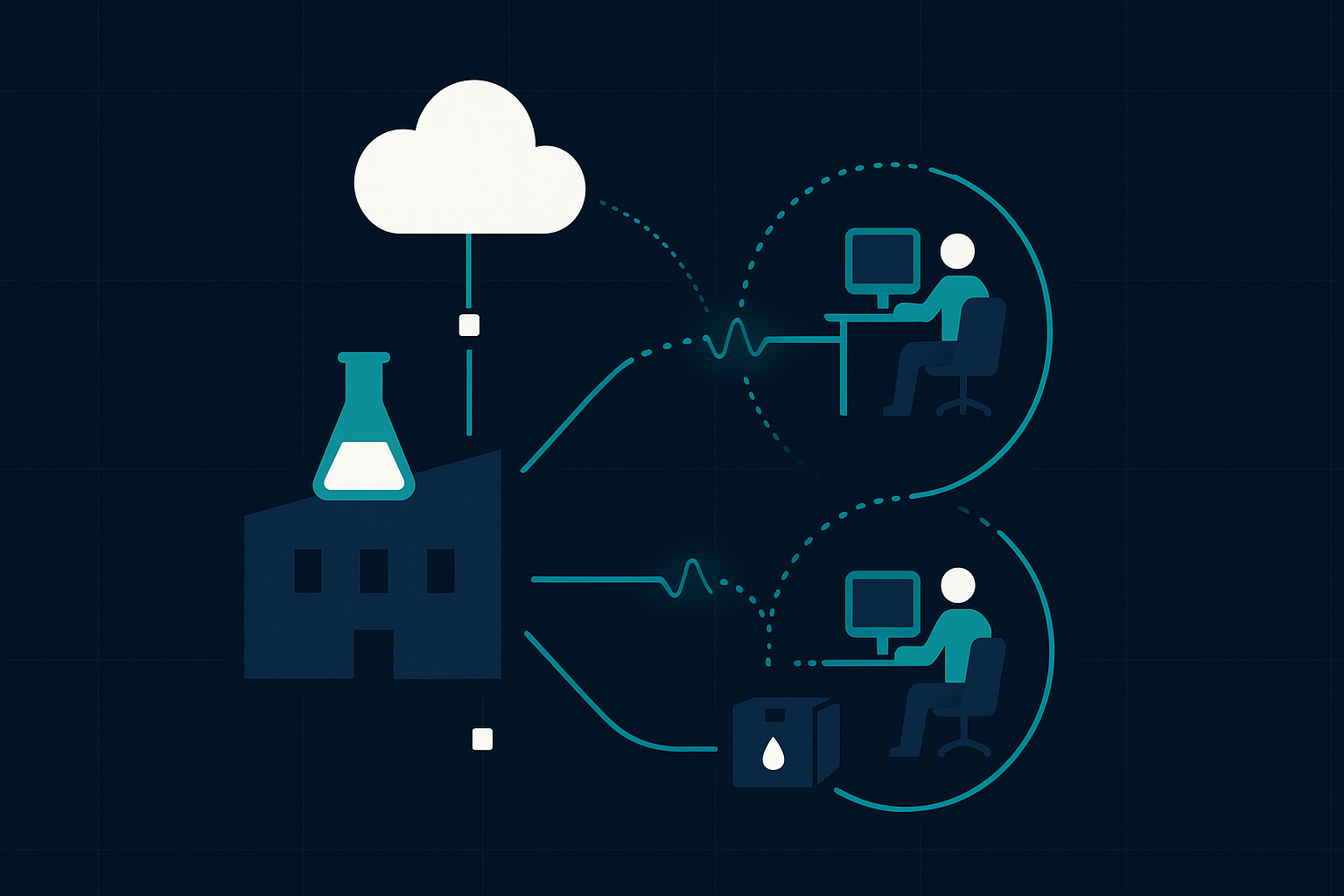
A remote lab, also called a cloud laboratory, is a fully automated research facility where scientists design, execute, and analyze wet-lab experiments through a cloud-based software interface without ever entering the physical lab. Companies like Emerald Cloud Lab and Strateos operate these facilities 24/7, handling sample logistics, instrument operation, data acquisition, and waste disposal.
The Scientist magazine reported in March 2024 that cloud labs provide laboratory services including sample preparation, bioassays, DNA and peptide synthesis, and bioimaging. ECL’s Austin facility houses over 200 different instrument models controlled by a single software interface.[1]
Researchers ship samples to the facility, program experiments using a command center, and receive data without benchwork. This model eliminates the need for on-site lab infrastructure and allows distributed teams to collaborate on complex protocols from anywhere in the world.
As data-driven approaches are reshaping research peptide procurement and experimentation, these cloud labs represent the infrastructure layer that makes distributed science possible. For clinic owners and entrepreneurs sourcing research peptides, working with a supplier that understands this shift can streamline the entire process from compound selection to third-party testing.Learn more about how analytics are changing peptide science.
The Distributed Research Market: Size, Growth, and Opportunity
The shift toward distributed and virtual research labs is creating a measurable market opportunity. Several independent reports track this space, and the numbers show a clear upward trajectory. The table below compiles the most relevant data points for clinics and entrepreneurs evaluating the research peptide supply side.
| Market Segment | 2024/2025 Value | Projected Value | CAGR | Source |
|---|---|---|---|---|
| Virtual Labs Market | $2.41B (2024) | $7.72B (2033) | 14.7% | Growth Market Reports (2025) |
| Peptide Therapeutics Market | $140.9B (2025) | Not specified | Not specified | Grand View Research (June 2026) |
| Peptide Synthesis Market | $6.18B (2025) | Not specified | Not specified | The Business Research Company (2026) |
The virtual labs segment alone is growing at a compound annual rate near 15%, driven by digitization of R&D, demand for cost-effective infrastructure, and limited physical lab access. As of 2025, 81% of labs use electronic lab notebooks (IntuitionLabs, April 2026), which signals a buyer base that prioritizes documentation, batch traceability, and automated procurement systems.
For B2B research peptide entrepreneurs, this growing buyer base means more demand for suppliers who can deliver consistent, traceable products with accompanying Certificates of Analysis. Remote labs value streamlined ordering and reliable documentation over face-to-face relationships. The infrastructure shift creates an opening for peptide brands that integrate cleanly into automated procurement workflows.
How Cloud Labs Integrate Research Peptides Into Their Workflows
Cloud labs such as Emerald Cloud Lab (ECL) are transforming how research peptides are synthesized, purified, characterized, and tested by turning experimental procedures into software function calls. A 2024 peer-reviewed article in Advanced Materials Technologies documented ECL’s interface, which includes peptide synthesis, purification, characterization, and bioassay execution as programmable modules. This integration means a researcher can design a peptide sequence, submit it through a software workflow, and receive automated synthesis and analytical results – all remotely.
compound industry adoption of cloud labs is already substantial, and academic interest is accelerating. These facilities operate under strict reproducibility standards, which places specific demands on the research peptides they use. Cloud lab operators require research peptides that meet documented purity specifications and arrive with complete analytical documentation – typically a Certificate of Analysis (COA) from a third-party lab. Without this data, automated workflows cannot validate incoming materials, and the whole experiment pipeline stalls.
The ECL platform explicitly supports peptide synthesis workflows as part of its published service catalog. For entrepreneurs building a B2B research peptide brand, this creates a recurring opportunity: cloud lab operators need a steady, documented supply of research peptides from verified suppliers. Each batch must be consistent, with batch-specific COAs that match the platform’s quality thresholds. Suppliers who can provide that documentation at no extra cost, with no minimum order quantities, become the natural choice for these virtual research facilities.
The White-Label Opportunity: Supplying Research Peptides to Remote Lab Operators
The Timmerman Report, published in December 2025, analyzed that biotech is becoming more distributed. Venture capital is flowing to non-traditional hubs as remote infrastructure reduces geographic barriers to research. This shift means that the number of smaller, independent research facilities outside major biotech clusters is growing steadily. These facilities operate differently from traditional centralized labs.
Cloud labs are a key enabler of this shift. These facilities allow researchers to conduct experiments remotely, lowering the cost of entry and expanding the geographic reach of biotech. For entrepreneurs building a B2B research peptide brand, remote labs represent an ideal early customer segment. These facilities prioritize suppliers that offer batch-specific COAs from ISO 17025-accredited labs, flexible order quantities without bulk minimums, RUO-compliant labeling, and reliable US-based fulfillment. Traditional suppliers that force bulk minimums are a poor fit for the variable-volume nature of remote lab research. A supplier that can match the distributed, on-demand nature of the lab itself becomes a strategic partner.
For an entrepreneur, serving this distributed research infrastructure means targeting a growing base of labs that value speed and compliance over brand loyalty. A white-label brand built specifically for remote labs can establish itself as the preferred supply partner in a market that traditional bulk-first suppliers often overlook. The match is structural: remote labs need a supplier that mirrors their own operational flexibility. This creates a natural competitive advantage for a white-label model that can adapt to variable order sizes and labeling requirements.
YourPeptideBrand’s turnkey white-label model aligns directly with these needs. Entrepreneurs can launch a branded research peptide catalog, set their own pricing, and have YPB handle fulfillment to remote lab clients. The model operates with no minimum order quantities, on-demand dropshipping, and a COA on every batch. This allows a new brand to serve distributed labs without holding inventory or managing logistics. For a remote lab operator, a single branded source with consistent labeling and documented quality simplifies procurement compared to managing multiple spot suppliers.
For a deeper look at structuring bulk supply agreements and understanding purchasing patterns, see the bulk procurement guide for research peptides. Entrepreneurs exploring which segments to target can reference the 12 proven brand niches for research peptide businesses for additional category ideas.
Why Remote Labs Require Third-Party Verified Certificates of Analysis
Cloud lab operators cannot risk unverified materials in automated workflows. A single impurity in a research peptide can cascade through hundreds of experiments, invalidating results and wasting costly instrument time. Automation leaves no room for manual inspection of every vial – the documentation must be reliable before the robot ever picks up a sample.
The lab automation hardware market reached approximately $9.05 billion in 2025 and is growing at 9% annually (IntuitionLabs). This investment in high-throughput systems demands equally rigorous input materials. Batch-specific purity data is no longer a nice-to-have; it is a baseline requirement for any research peptide entering a remote lab’s inventory.
YourPeptideBrand provides a Certificate of Analysis (COA) for every batch from an independent ISO 17025-accredited lab using RP-HPLC and mass spectrometry. Each COA documents the exact purity, identity, and detectable impurities for that specific production run. Browse our COA Library to verify third-party testing documentation for each batch.
For entrepreneurs building a branded research peptide business, batch-specific COAs represent a competitive advantage when courting cloud lab procurement teams. These buyers already screen vendors on documentation quality. A clear, traceable COA from every batch signals reliability that automated procurement systems can validate. Learn more about why sourcing from a US-based research peptide supplier matters for remote labs.
How to Position Your Brand as a Remote Lab Research Peptide Supplier
Entrepreneurs entering this B2B niche should consider four strategic steps to build a credible, scalable brand. Positioning your brand as a preferred supplier for remote labs requires deliberate planning.
Step 1: Validate Demand
Evaluate whether remote labs in specific sub-fields (e.g., immunology, neurology) are actively searching for your target research peptides. Use keyword research tools and analyze queries on lab-oriented forums. Focus on niches where remote labs are growing, such as computational biology labs that procure wet-lab reagents. The framework in how to validate a peptide niche before launching details how to filter by commercial intent and validate niche demand before ordering inventory.
Step 2: Review Your Software Stack
Scaling a research peptide brand requires integrated tools for CRM, order management, and fulfillment. A typical software stack includes an ecommerce platform (Shopify or BigCommerce), a shipping solution (ShipStation or Shippo), and a CRM (HubSpot or Klaviyo). For a lean startup, start with an all-in-one platform plus a shipping app, then expand as you grow. The guide on software stack recommendations for scaling a peptide brand compares these options and highlights combinations that handle RUO dropshipping requirements such as batch-number tracking and COA delivery.
Step 3: Build Inventory Management with Automation
Remote labs often place orders through cloud-based procurement systems. Your inventory management system should offer real-time syncing with platforms like LabWrench or Quartzy to reduce manual data entry. Consider using barcode scanning during receiving and fulfillment to reduce errors. The article on building an inventory management system that integrates with cloud lab ordering explains how to set up integrations using APIs or middleware like Zapier, with a focus on lot-level tracking for batch consistency.
Step 4: Configure Dropshipping for Multi-Location Shipping
Remote labs operate from various addresses, sometimes across states, requiring a flexible dropshipping setup. Validate each shipping address against commercial databases and use label templates that handle variable site names and department codes. Set up automated notifications so the lab PI or procurement manager knows when to expect delivery. The walkthrough on how to set up dropshipping for research peptides to remote lab clients covers carrier integration, address validation, and labeling. YourPeptideBrand’s on-demand label printing and direct delivery to research addresses removes the need to inventory custom packaging for every client location.
Taking these steps positions your brand as a reliable partner for remote labs.
Use the Profit Calculator to Estimate Margins.
Frequently Asked Questions About Remote Labs and B2B Peptide Niches
What is a remote lab in the context of research peptides?
A remote lab is a distributed research facility that conducts in vitro or in vivo studies without a central physical location. Researchers may work from multiple sites, sourcing research peptides from suppliers that maintain consistent quality across batches. RUO compliance remains a core requirement for all materials used.
How do remote labs ensure the quality of research peptides they purchase?
Remote labs rely on third-party testing and a Certificate of Analysis (COA) provided by suppliers. Each batch of research peptide should have documented purity and identity. Suppliers with transparent quality control processes help remote labs maintain research integrity across distributed operations.
What types of research peptides are commonly used in remote lab studies?
Remote labs may study a variety of research peptides depending on their focus, including those for cellular signaling, receptor binding, or in vitro assays. A catalog of 60+ SKUs allows selection of specific peptides for different research protocols, catering to diverse study designs.
Can remote labs order research peptides in small quantities for pilot studies?
Yes, many suppliers offer no-minimum-order-quantity (MOQ) options, allowing remote labs to order small amounts for initial pilot experiments. This flexibility supports iterative research without large upfront commitments, enabling labs to test multiple peptides efficiently.
How do remote labs handle regulatory compliance for research peptide use?
Compliance begins with labeling: all research peptides must be clearly marked “For research use only” and not intended for human consumption. Remote labs should only purchase from vendors that provide proper labeling and documentation, ensuring adherence to RUO standards and avoiding supply chain issues.
What are the advantages of a white-label supplier like YourPeptideBrand for remote labs?
A white-label supplier allows clinics or entrepreneurs to brand their own research peptide line without manufacturing. Features like on-demand dropshipping, custom packaging, and a 60+ SKU catalog enable remote labs to offer a full product lineup with no MOQ, owning the customer relationship. The Profit Calculator can help estimate potential margins for your specific product mix.
How does dropshipping work for remote lab supply partnerships?
With dropshipping, the supplier stocks and ships research peptide orders directly to the end customer under the buyer’s brand. Remote labs or clinic owners can focus on research and client relationships while the supplier handles fulfillment, all without holding inventory. This model pairs well with a no-MOQ catalog and third-party tested batches.
What is the typical time to launch a branded research peptide product with a white-label partner?
Launch time depends on label approval, but many B2B partners can have a branded product line ready within weeks. The key steps include choosing a brand name, customizing labels, and integrating with the supplier’s ordering system. Suppliers like YourPeptideBrand streamline the process with no MOQ and on-demand dropship capabilities for fast market entry.
Book a Call to Discuss Remote Lab Supply Partnerships
Last updated: July 2026