
For research use only. Not for human consumption, diagnostic, or therapeutic use.
What Is Dropshipped Research Peptide QA?
Research Use Only (RUO) peptides are synthetic amino‑acid chains sold exclusively for laboratory investigations, method development, or pre‑clinical studies. They are not intended for human consumption, diagnosis, or treatment, and every vial must be clearly labeled as “RUO.” In a dropshipping fulfillment model, a third‑party provider stores the peptides, prints custom labels on demand, and ships directly to the end‑user—often a clinic or an entrepreneur’s storefront—without the brand ever handling the product physically.
Why Quality Assurance Matters in a Distributed System
When a peptide travels through multiple nodes—manufacturer, testing lab, packaging house, and finally the dropshipper—each hand‑off introduces a risk point. QA in this context is the systematic process that guarantees the peptide’s identity, purity, and stability from the moment it leaves the synthesis line until it arrives at the clinic’s door.
- Multiple hand‑offs: Every transfer creates opportunities for mislabeling, cross‑contamination, or temperature excursions.
- Storage conditions: Peptides are temperature‑sensitive; improper refrigeration or exposure to humidity can degrade potency.
- Labeling consistency: Uniform “RUO” labeling, batch numbers, and expiration dates are essential for traceability and regulatory compliance.
Stakeholder Chain Overview
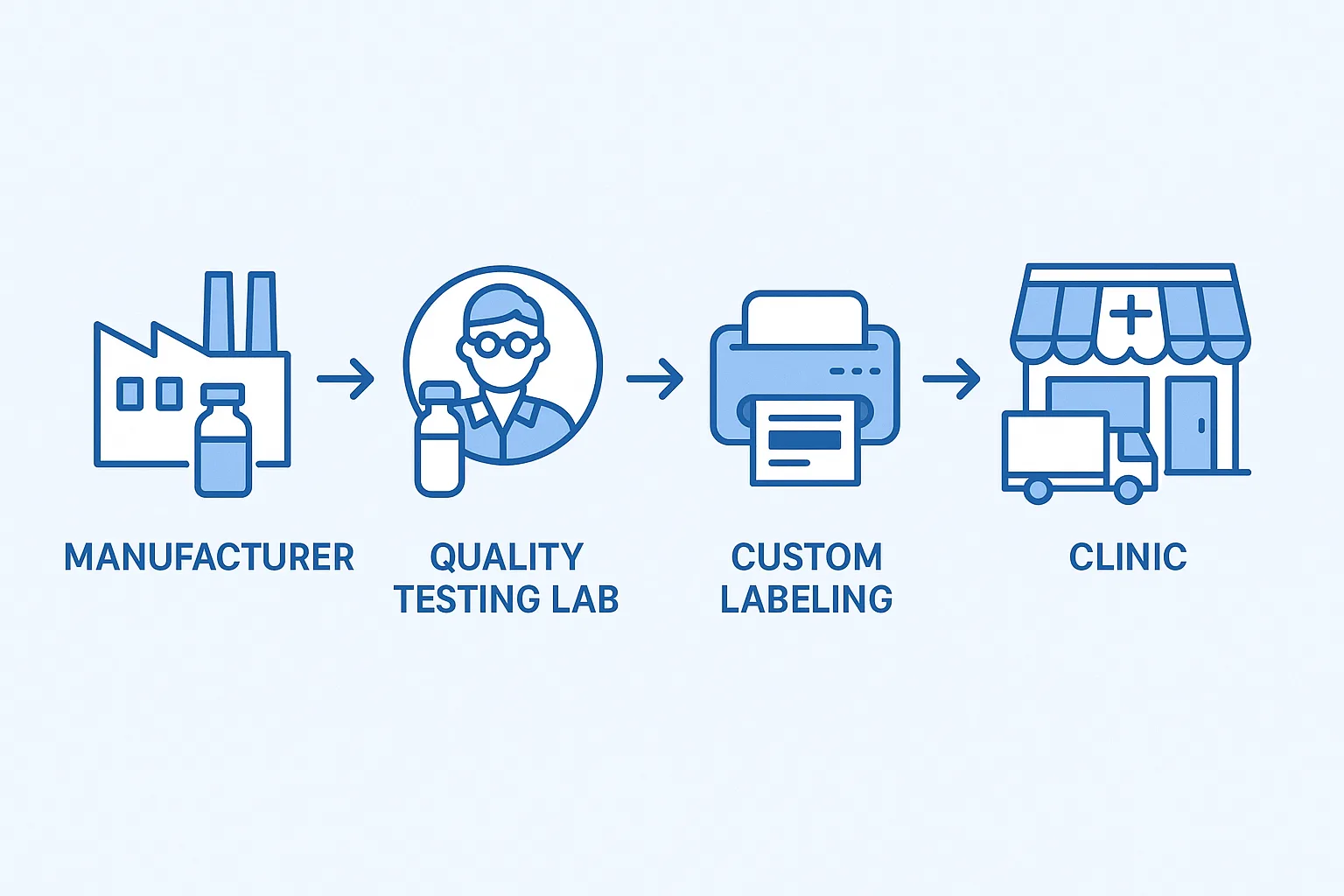
The quality chain can be visualized as a linear flow:
| Stage | Primary Actor | Core QA Tasks |
|---|---|---|
| 1. Synthesis | Peptide Manufacturer | Batch validation, purity testing, certificate of analysis (CoA) issuance. |
| 2. Verification | Independent Quality Testing Lab | Third‑party HPLC/LC‑MS confirmation, sterility checks, stability studies. |
| 3. Packaging & Labeling | White‑label Fulfillment Partner | On‑demand label printing, batch traceability, controlled‑environment storage. |
| 4. Distribution | Dropshipper (e.g., YourPeptideBrand) | Order verification, temperature‑monitored shipping, delivery documentation. |
| 5. End‑User | Clinic or Entrepreneur | Receipt inspection, storage compliance, record‑keeping for audits. |
Regulatory Backdrop
Although RUO peptides are exempt from FDA approval for potential wellness benefit, they remain subject to strict FDA 510(k) guidance regarding labeling, marketing claims, and distribution practices. Laboratories that generate the CoA must operate under ISO‑9001 or equivalent quality‑management standards to ensure data integrity. Non‑compliance can erode brand reputation, trigger enforcement actions, and jeopardize future partnerships.
Setting the Stage for Deeper Dives
Having outlined the definition, the unique QA challenges, the stakeholder chain, and the regulatory framework, the next sections will examine each checkpoint in detail—starting with raw material verification, moving through stability monitoring, and culminating in final‑stage packaging audits. By mastering these steps, clinics and entrepreneurs can confidently market their own RUO peptide lines while preserving scientific integrity and consumer trust.
The End‑to‑End Dropshipping Workflow and QA Touchpoints
When a clinic orders a research peptide from YourPeptideBrand, the product travels through a tightly controlled sequence that begins in a GMP‑certified manufacturing plant and ends at the research subjects’s bedside. Each hand‑off is documented, each temperature is monitored, and every batch is cross‑checked against its digital record. This end‑to‑end workflow not only safeguards peptide integrity but also creates a transparent audit trail that clinicians can trust.
Step‑by‑Step Workflow
- Manufacturing: The peptide is synthesized in a GMP‑compliant facility. Batch records are generated in real time, capturing raw material lot numbers, synthesis parameters, and in‑process controls.
- Third‑Party Testing Lab: Completed batches are shipped to an accredited analytical laboratory. Independent verification of identity, potency, and purity (>98 % by HPLC) is performed before release.
- Custom Labeling Station: Approved vials move to a on‑demand printing hub. Labels include a barcode/QR‑code that links directly to the batch’s full data set, and each vial receives a tamper‑evident seal.
- Temperature‑Controlled Shipping: Packaged vials are placed in insulated containers with phase‑change material to maintain 2‑8 °C. Real‑time GPS tracking and chain‑of‑custody paperwork accompany every shipment.
- Clinic Reception: Upon arrival, the clinic scans the barcode, confirming that the batch matches the ordered product and that temperature logs remained within specifications.
Quality Assurance Touchpoints
- Manufacturer – Batch Record Generation & GMP Compliance: Every synthesis step is logged, and initial purity testing is performed on‑site. Deviations trigger an automatic hold until corrective action is documented.
- Testing Lab – Independent Verification: The lab conducts identity confirmation (mass spectrometry), potency assessment, and high‑performance liquid chromatography (HPLC) to verify >98 % purity. Results are uploaded to a secure cloud portal (view sample report).
- Labeling Station – On‑Demand Printing & Tamper‑Evident Seals: Each label carries a unique QR‑code that, when scanned, displays the full batch record, testing results, and expiration date. Seals are designed to break irreversibly if the vial is opened.
- Shipping – Temperature‑Controlled Packaging & Real‑Time Tracking: Data loggers record temperature every 5 minutes. If a breach occurs, the shipment is automatically flagged and rerouted for investigation.
The Quality Loop in Action
These checkpoints form a continuous “quality loop.” If a batch fails purity testing, the manufacturer receives an immediate hold notification and must re‑process or discard the material before it ever reaches the labeling station. Similarly, a temperature excursion detected during transit triggers an automated alert to both YourPeptideBrand and the receiving clinic, preventing compromised product from being used. By catching deviations early, the loop ensures that only fully verified, stable peptides are ever used.
Benefits for Clinic Owners
- Reduced Liability: Documented QA steps provide legal protection and demonstrate compliance with FDA RUA guidelines.
- Consistent Product Performance: Uniform potency and purity translate to reproducible research results and research subjects outcomes.
- Brand Credibility: Transparent batch data and tamper‑evident packaging reinforce trust in the clinic’s own white‑label brand.
Laboratory Testing Standards That Safeguard Purity
Gold‑standard analytical techniques
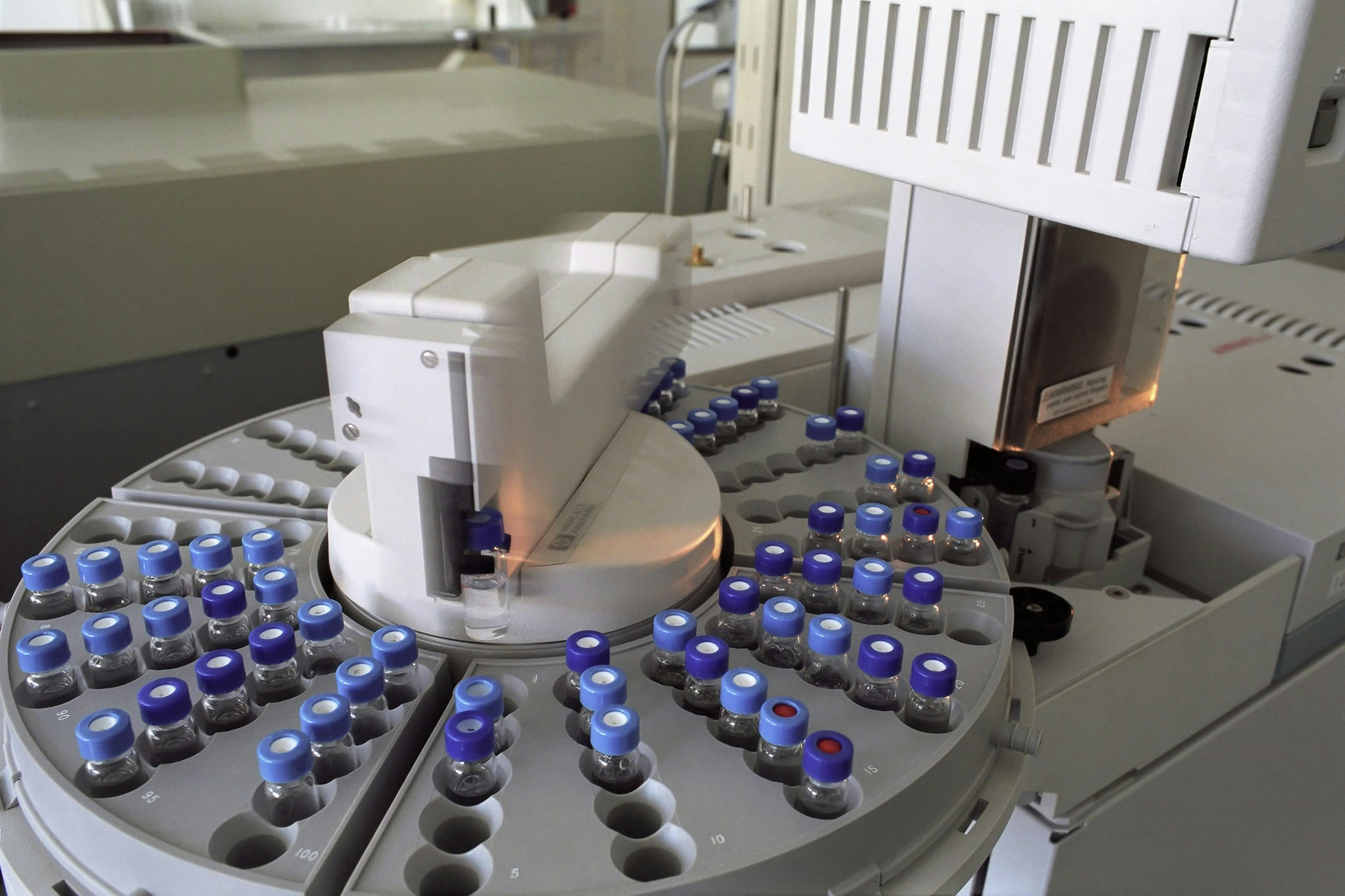
Research Use Only (RUO) peptides are subjected to a triad of analytical methods that together confirm identity, purity, and safety. High‑Performance Liquid Chromatography (HPLC) separates peptide fragments on a column, producing a chromatogram that reveals the percentage of the target compound versus impurities. Mass spectrometry (MS) then measures the exact molecular weight, ensuring the peptide’s amino‑acid sequence matches the declared product. Finally, amino‑acid analysis quantifies each residue, catching synthesis errors that might escape HPLC or MS detection.
Acceptance criteria for research peptides
Regulatory guidance and industry consensus converge on three core thresholds that any reputable supplier must meet:
- Purity of ≥ 98 % as determined by HPLC peak integration.
- Observed molecular weight within ±0.5 % of the theoretical value, verified by MS.
- Absence of detectable contaminants such as residual solvents, endotoxins, or truncated sequences.
When a batch fails any of these criteria, it is rejected, re‑synthesized, or sent for additional purification before release.
ISO‑9001 certification and third‑party accreditation
ISO‑9001‑certified laboratories operate under a documented quality‑management system that mandates consistent procedures, calibrated equipment, and regular internal audits. This framework eliminates operator bias and ensures traceability from raw material receipt to final release. Independent accreditation bodies—such as the United States Pharmacopeia (USP) or the European Union’s EN‑ISO standards—provide an extra layer of confidence by verifying that the lab’s methods meet internationally recognized performance specifications.
In‑the‑lab: an HPLC run from start to finish
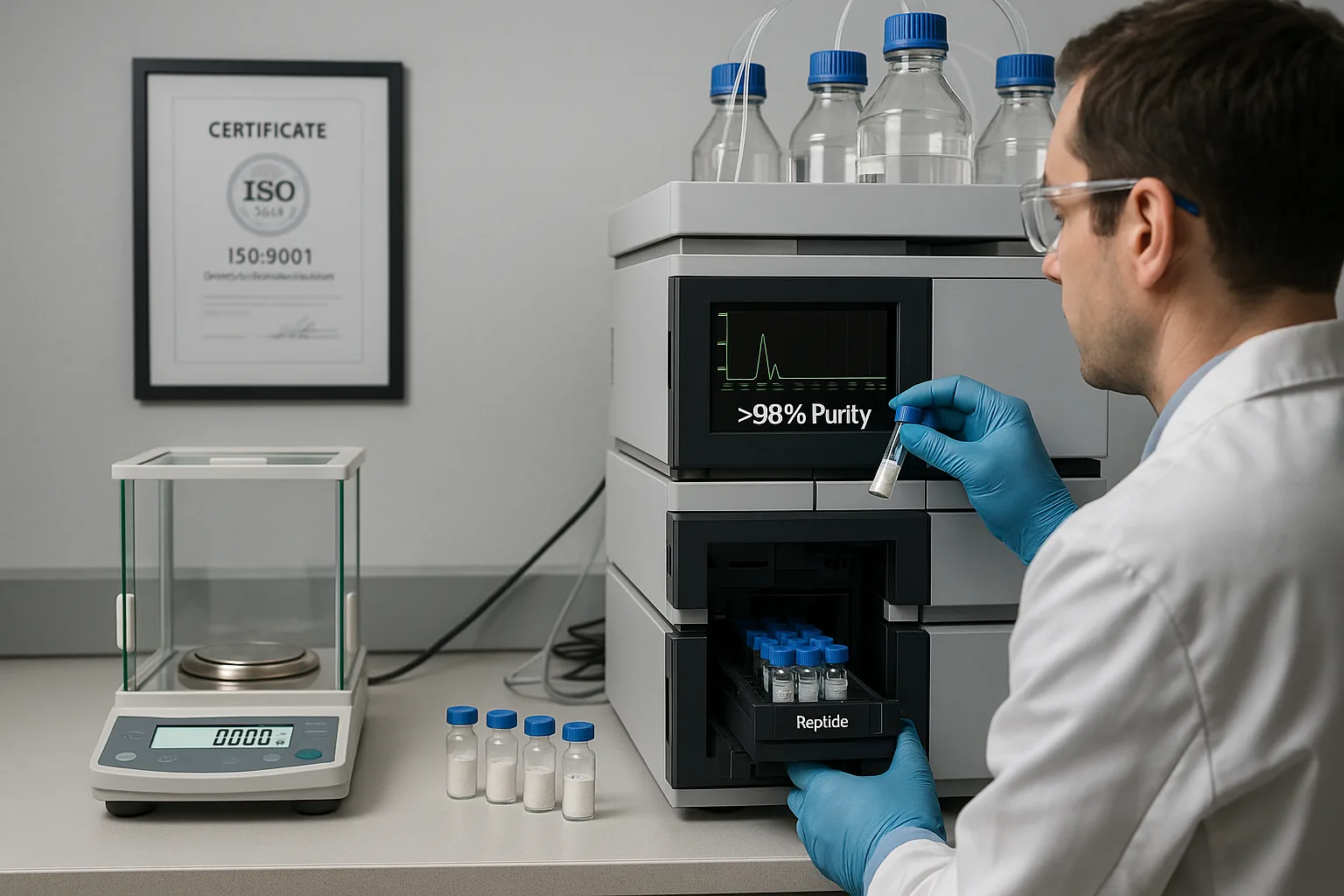
Imagine a chemist in a controlled environment loading a 10 µL sample of a newly synthesized peptide onto an HPLC system. The instrument injects the sample, and the mobile phase sweeps it through a C18 column. As the peptide elutes, a UV detector records absorbance at 214 nm, generating a sharp, single peak that integrates to 99.2 % of the total area—well above the 98 % acceptance threshold. The chemist reviews the chromatogram on a calibrated monitor, notes the retention time, and cross‑checks it against the reference standard. All observations—instrument settings, peak data, and any deviations—are entered into the lab’s electronic notebook, creating a permanent, searchable record.
Digital batch records and QR‑code verification
Each production lot receives a unique identifier that links to a cloud‑based batch record. The record houses raw HPLC files, MS spectra, amino‑acid tables, and the final Certificate of Analysis (CoA). By embedding a QR‑code on the product label, end users can scan the code with a smartphone and instantly retrieve the full dossier—no phone calls or email threads required. This transparency not only streamlines compliance checks for clinics but also builds trust in a dropshipping model where the final consumer never meets the manufacturer face‑to‑face.
Certificates of Analysis: the final safeguard
Every shipment from YourPeptideBrand is accompanied by a detailed CoA that mirrors the digital batch record. The CoA lists the peptide’s name, batch number, expiration date, HPLC purity, observed mass, and any detected impurities. It also includes the lab’s ISO‑9001 certification number and the signature of the responsible analytical chemist. By providing this documentation upfront, YPB empowers doctors and entrepreneurs to verify product integrity before it even leaves the warehouse.
In sum, rigorous laboratory testing—anchored by HPLC, mass spectrometry, and amino‑acid analysis—combined with ISO‑9001 certification, third‑party accreditation, and real‑time digital verification, creates a robust quality‑assurance ecosystem. For clinics and brands that rely on dropshipped research peptides, these standards are the invisible shield that preserves purity, protects research subjectss, and upholds the reputation of every partner in the supply chain.
Documentation, Compliance, and Transparency
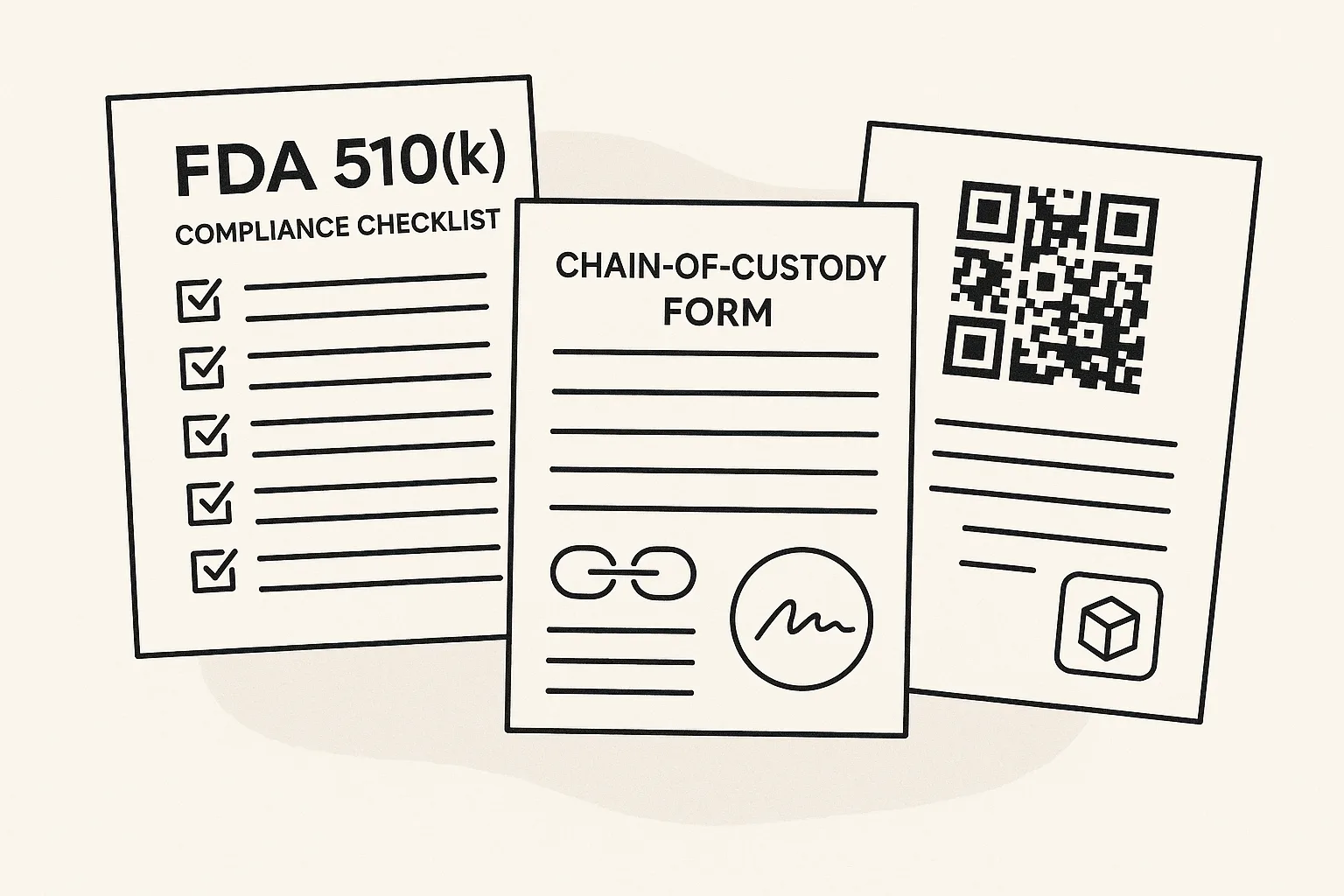
When a research‑use‑only (RUO) peptide is shipped directly to a clinic, the paperwork that travels with it becomes the primary proof of compliance. Unlike a therapeutic product that must pass a full FDA 510(k) review, RUO peptides are subject to a “510(k)‑type” framework: no therapeutic claims, strict labeling, and a clear audit trail. This lightweight yet rigorous approach lets manufacturers stay within the law while giving clinic owners confidence that every vial is legitimate.
Key regulatory documents
The core document set for dropshipped RUO peptides includes four items that together form a compliance backbone:
- FDA compliance checklist – a step‑by‑step verification that labeling, packaging, and shipping meet 21 CFR 820 requirements.
- Signed chain‑of‑custody form – records every hand‑off from the manufacturing floor to the end clinic, complete with timestamps and signatures.
- Batch record – details the peptide’s synthesis, purification, and QC results, linked to a unique lot number.
- QR‑code access portal – a scannable code on each label that instantly pulls the checklist, chain‑of‑custody, and batch data into a secure cloud viewer.
How the illustrated compliance set works in practice
When a clinic orders a custom‑branded peptide, the fulfillment team prints the QR‑code directly onto the label. The code points to a read‑only page that displays the FDA checklist, the signed chain‑of‑custody PDF, and the full batch record. Clinic staff can verify the information on the spot with a smartphone, and the same digital snapshot is archived for future reference. This visual transparency eliminates guesswork and builds trust before the product even leaves the warehouse.
Procedures for audit readiness
Audit readiness is baked into the workflow. First, internal reviews are scheduled quarterly; during each review, the compliance officer cross‑checks the checklist against the most recent FDA guidance. Second, a third‑party audit firm is invited twice a year to validate the chain‑of‑custody signatures and confirm that batch records are complete and unaltered. Finally, real‑time access is granted to clinic owners through role‑based login credentials, allowing them to pull any document on demand during an inspection.
Traceability and recall protection
Should a safety issue arise, traceability becomes the brand’s safety net. Because every vial carries a lot‑specific QR‑code linked to a full audit trail, a recall can be executed at the batch level rather than the entire product line. This precision protects the brand’s reputation, limits financial exposure, and, most importantly, safeguards the end‑user by ensuring only affected units are withdrawn.
External guidance and best‑practice references
For a deeper dive into the regulatory nuances, consult the FDA
Ensuring Ongoing QA Success – Call to Action
Full‑cycle QA at a glance
From raw‑material sourcing through final packaging, our QA framework enforces eight critical checkpoints: supplier verification, certificate of analysis review, inbound purity testing, batch‑level identity confirmation, sterility assurance, label accuracy audit, cold‑chain monitoring, and post‑shipment stability verification. Each step is documented in a digital ledger that can be audited instantly, guaranteeing that every vial reaching a clinic matches the declared peptide sequence, concentration, and expiration date. The cumulative effect is a dramatic reduction in out‑of‑specification incidents, protecting both research subjects safety and the clinic’s reputation.
Clinics that adopt the full QA protocol see a ≈ 40 % drop in product‑return rates and a measurable lift in research subjects‑trust scores, because every shipment is backed by a traceable certificate and tamper‑evident packaging.
Why YourPeptideBrand is the compliant dropshipping partner
YourPeptideBrand (YPB) folds every checkpoint into a single white‑label service. We handle ISO‑17025‑certified testing, on‑demand label generation, custom packaging, and direct dropshipping—all without minimum order quantities. Our turnkey portal lets you configure label designs, select batch numbers, and schedule shipments with a few clicks. The system automatically cross‑checks each order against the latest ISO‑certified test results, ensuring no out‑of‑spec product ever leaves the warehouse.
Business advantages for clinic owners
- Accelerated time‑to‑market: No need to set up an in‑house lab; products are ready for sale the instant you launch.
- Reduced regulatory risk: All testing, documentation, and labeling meet FDA R‑U‑O guidelines, lowering audit exposure.
- Scalable profitability: Pay‑per‑order pricing and zero inventory burden let you grow the catalog as demand expands.
Because inventory is held in a regulated fulfillment center, you avoid capital tied up in bulk purchases while still offering a broad peptide portfolio. The on‑demand model also supports rapid expansion into new therapeutic areas without renegotiating supplier contracts.
Explore the turnkey solution
Ready to add a compliant peptide line to your practice? Visit the YPB platform to browse the catalog, request a personalized demo, or download our free Compliance Toolkit, which outlines every regulatory requirement and how YPB satisfies it. Our specialists are on standby to walk you through the onboarding workflow and answer any technical questions.
Visit YourPeptideBrand.com to start building your brand with confidence.