
Understanding the Regulated Peptide Research Landscape

In the United States, peptide manufacturers that market products as “Research Use Only” (RUO) operate within a tightly defined regulatory niche. RUO peptides are expressly intended for in‑vitro or in‑vivo research, not for diagnosis, treatment, or any wellness support. This distinction removes the product from the therapeutic pipeline, but it does not exempt the brand from compliance. Any implication that a RUO peptide can be used in research subjects instantly triggers the FDA’s therapeutic‑product rules, exposing the company to severe penalties.
Key U.S. regulatory bodies and applicable statutes
The Food and compound Administration (FDA) is the primary gatekeeper for peptide labeling. Under the Federal Food, compound, and Cosmetic (FD&C) Act, sections § 502 (misbranding) and § 510(k) (premarket notification) are invoked when a product is presented as having therapeutic intent. The FDA’s “Guidance for Industry: Labeling of Research Use Only (RUO) Products” clarifies that RUO status must be unmistakably stated on every label, packaging, and promotional material.
The Federal Trade Commission (FTC) polices advertising claims. The FTC’s “Truth‑in‑Advertising” standards require that any health‑related claim be substantiated by competent scientific evidence. For RUO peptides, this means avoiding any language that suggests efficacy, safety, or dosing for research use only.
Mandatory compliance checkpoints
- Labeling requirements: Every container must display “Research Use Only – Not for Human Consumption” in a prominent location, accompanied by the product’s chemical name, batch number, and expiration date.
- Safety Data Sheets (SDS): An up‑to‑date SDS must be accessible to purchasers, detailing hazards, handling procedures, and emergency measures in accordance with OSHA’s Hazard Communication Standard.
- Peer‑reviewed citations: Marketing copy may reference scientific literature, but the cited studies must be peer‑reviewed, publicly available, and clearly linked to the peptide’s research context—not to therapeutic outcomes.
- Prohibited therapeutic claims: Phrases such as “boosts metabolism,” “supports normal inflammatory response* in research subjects,” or “supports overall wellness” are disallowed. Acceptable language focuses on “investigated in pre‑clinical models” or “used in cellular assays.”
Risks of non‑compliance
When a brand blurs the line between research and therapy, the FDA can issue Warning Letters, seize inventory, or pursue civil injunctions. The FTC may file lawsuits for deceptive advertising, resulting in monetary penalties and mandatory corrective advertising. Beyond legal repercussions, a compliance breach erodes trust among clinicians and researchers—key audiences for YourPeptideBrand. Reputation damage can be long‑lasting, making it far more costly to rebuild credibility than to invest in rigorous labeling from day one.
Industry benchmarks and further reading
Companies such as PeptideSciences.com exemplify a “science‑first” approach. Their product pages pair detailed assay data with clear RUO notices, and every claim is anchored to a peer‑reviewed source. Modeling your brand’s content after this benchmark helps ensure both regulatory safety and scientific integrity.
For an in‑depth exploration of how branding strategies must adapt to these regulations, see the source article: how_branding_is_evolving_in_a_regulated_research_market.
The Tension Between Brand Differentiation and Compliance
Branding instincts that work in consumer markets
In the world of cosmetics, supplements, and lifestyle products, marketers lean on emotional storytelling, bold taglines, and eye‑catching design to cut through the noise. Vibrant colors, aspirational imagery, and promise‑driven copy create an instant connection that convinces shoppers to choose one brand over another.
Regulatory red lines for peptide branding
Research Use Only (RUO) peptides sit under a very different set of rules. The FDA prohibits any language that implies potential wellness benefit, disease‑specific claims, or “cure‑all” promises. Even subtle hints—such as “boosts recovery” or “targets joint pain”—cross a compliance boundary and can trigger enforcement action.
Real‑world missteps that led to FDA warnings
- Case A: A startup used the phrase “research suggests it may enhance muscle growth” on its label. The FDA issued a warning letter for making an unsubstantiated efficacy claim on an RUO product.
- Case B: Another brand featured a stylized DNA helix alongside the tagline “engineered for faster healing.” The visual cue combined with the wording was deemed a disease‑specific implication, resulting in a compliance audit.
- Case C: A distributor printed “ideal for arthritis relief” on packaging. The statement directly referenced a medical condition, prompting a cease‑and‑desist order.
Psychological impact of a “clean” compliant look
When a peptide label adopts a minimalist, sterile aesthetic—white space, muted fonts, and regulatory symbols—it signals safety and legitimacy to clinic owners. However, the same visual restraint can feel bland to end‑users, who may interpret the product as generic or lacking personality.
The pull of a “creative” brand identity
Conversely, a vibrant, story‑driven design sparks curiosity and brand loyalty among wellness entrepreneurs. Bright palettes, dynamic photography, and compelling narratives make the brand memorable, but they also risk crossing the line into implied efficacy if not carefully vetted.
Introducing the “dual‑canvas” strategy
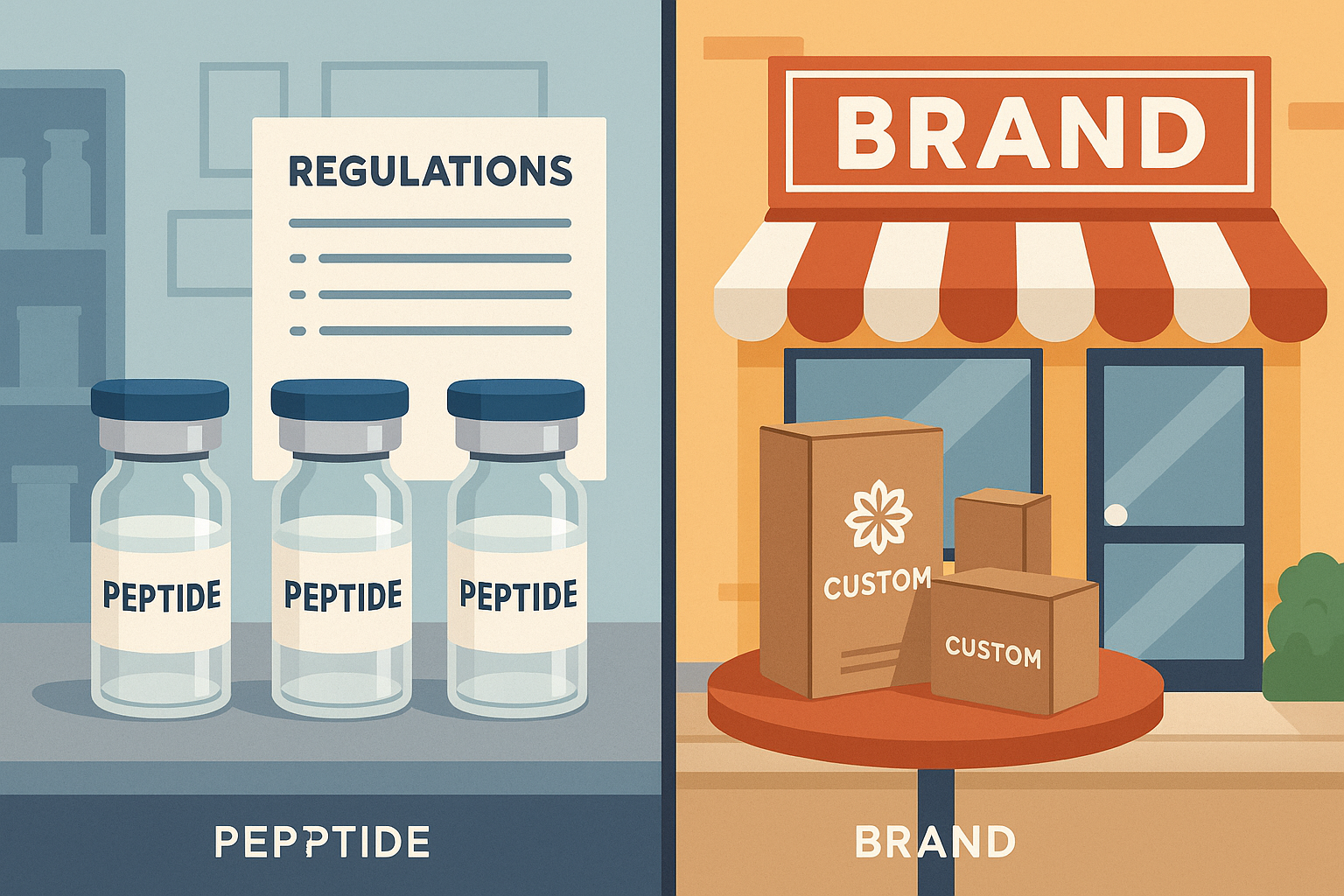
The solution lies in treating compliance and creativity as two complementary canvases rather than opposing forces. One side of the brand— the “lab‑compliant canvas”—features the required regulatory language, QR codes linking to scientific references, and a clean visual hierarchy. The opposite side—the “commercial canvas”—leverages storytelling, lifestyle imagery, and brand colors to engage the audience.
How the split‑screen illustration visualizes balance
Imagine a split‑screen graphic where the left half displays a white label with FDA disclaimer text, while the right half showcases a vibrant marketing mock‑up with a tagline like “Empower Your Practice.” The juxtaposition demonstrates that a brand can simultaneously meet strict RUO standards and maintain a distinct market presence.
Why the dual‑canvas matters for clinic owners
Clinic owners need confidence that their suppliers are compliant, yet they also desire a brand that differentiates their services from competitors. By separating the compliance narrative (lab side) from the brand narrative (commercial side), they can market the product internally with confidence while presenting a compelling story to research subjects.
Key takeaways for building a balanced peptide brand
- Keep efficacy language out of all RUO labeling and marketing copy.
- Use the compliant canvas to showcase scientific rigor, batch numbers, and safety certifications.
- Reserve the creative canvas for brand personality, educational content, and lifestyle positioning.
- Employ a split‑screen visual or similar tool to train internal teams on where each message belongs.
Building an Integrated Compliance‑Brand Framework
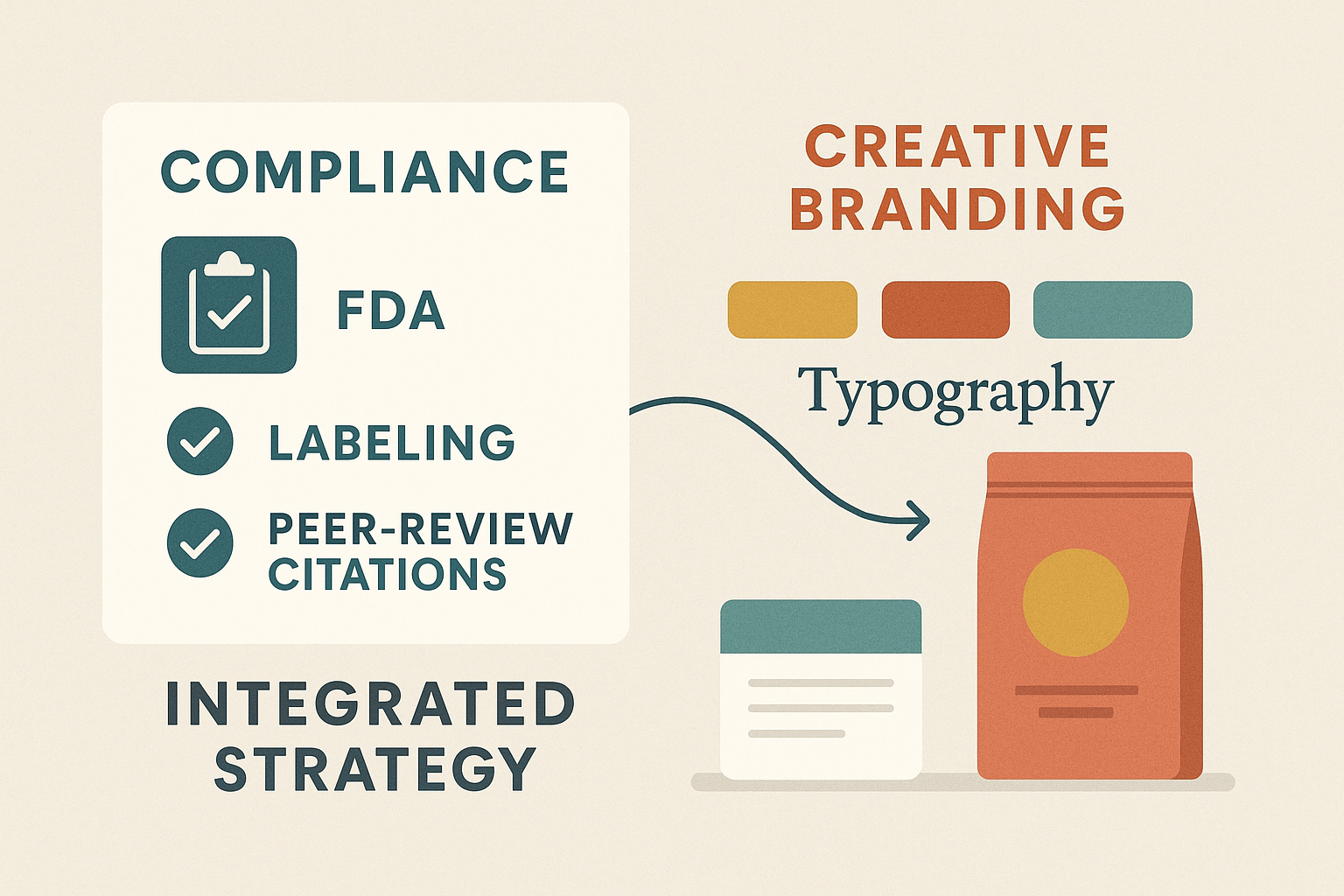
Launching a Research Use Only (RUO) peptide under your own label requires more than a striking logo and a sleek bottle. Every visual decision must sit beside a regulatory requirement, or the product risks a costly recall or a warning letter from the FDA. The Compliance‑Brand Matrix is a practical tool that lets you plot each mandatory disclosure next to the corresponding branding asset, so you can see at a glance where the two worlds intersect and where trade‑offs are needed. By treating compliance items as design constraints rather than after‑thoughts, you turn a potential bottleneck into a strategic advantage.
The Compliance‑Brand Matrix Explained
Think of the matrix as a two‑column spreadsheet that lives on your launch checklist. The left column lists every regulatory element that must appear on the label, packaging, or digital touchpoint. The right column captures the brand‑specific element that will convey your unique story—color palette, typography, logo treatment, or packaging style. When you fill in the cells, you immediately spot conflicts (for example, a bold brand color that makes required disclaimer text hard to read) and can adjust before any design is finalized.
| Regulatory Item | Branding Element |
|---|---|
| FDA‑approved RUO disclaimer | Placement, font size, and color contrast on primary label |
| Batch number & lot tracking code | Typography style and location on secondary packaging |
| Peer‑reviewed study citations | Micro‑type on product page sidebar or QR‑linked footnote |
| Safety data sheet reference | Iconography and colour accent on the outer box |
| Required warning statements | Contrast ratio against brand background colour |
Step‑by‑Step Checklist for a Seamless Merge
- FDA‑approved RUO disclaimer placement: Position the disclaimer on the front label at a minimum 6 pt font, using a neutral colour (e.g., charcoal) that meets the 4.5:1 contrast ratio against the background.
- Required batch numbers and lot tracking: Embed a scannable barcode on the secondary packaging; accompany it with a legible alphanumeric string in the same typeface as your product name, but reduced to 8 pt.
- Peer‑reviewed study citations on product pages: List the DOI or journal title in a dedicated “Science Hub” section, using the brand’s secondary font and a muted colour that does not compete with the call‑to‑action button.
- Custom logo sizing and placement rules: Keep the logo no larger than 15 % of the label’s surface area and avoid positioning it directly above any required disclaimer to prevent claim‑like prominence.
- Safety data and warning statements: Use a bordered callout box that mirrors your brand’s accent colour, ensuring the text remains readable while reinforcing visual consistency.
Aligning Visual Hierarchy Without Sacrificing Legibility
Regulatory text must be unmistakably legible, yet it should not eclipse the brand’s visual story. Start by establishing a clear hierarchy: primary brand identifiers (logo, product name) occupy the top‑most visual tier; secondary brand cues (color blocks, texture) form the middle tier; and compliance copy sits at the base tier. Use size, weight, and colour contrast to differentiate these layers. For example, a bold sans‑serif logo can share the same hue as your brand’s signature teal, while the disclaimer adopts a high‑contrast black on a white background. This approach preserves brand personality while guaranteeing that the FDA‑mandated information remains unmistakable.
QR Codes: Dual‑Purpose Gateways to Science and Style
QR codes are perfect for marrying education with aesthetics. Generate a code that links directly to a hosted PDF of the peer‑reviewed study supporting the peptide’s mechanism of action. Place the code on the back of the label or inside the packaging insert, sized at 12 mm × 12 mm to ensure scannability. To keep the code from looking out‑of‑place, embed it within a subtle brand pattern or frame it with a thin line that matches your secondary colour. This not only satisfies the FDA’s demand for transparent scientific backing but also reinforces your brand’s commitment to evidence‑based practice.
White‑Label Success: Custom Packaging and QR‑Enabled Education
Description of a Fully Branded Peptide Kit
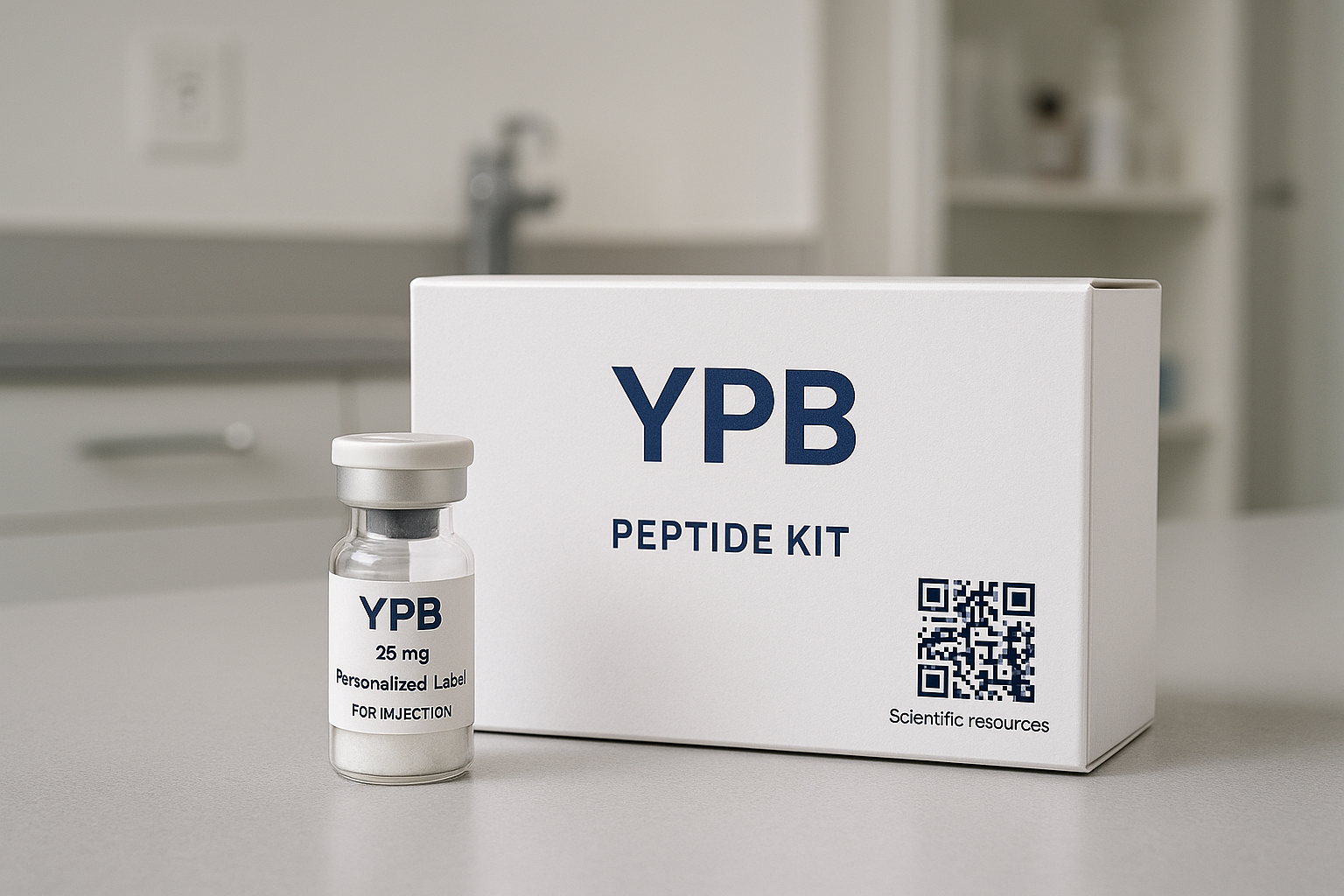
Imagine a sleek, matte‑finished box that arrives at a clinic’s front desk with the YourPeptideBrand (YPB) logo embossed on the lid, a personalized label bearing the clinic’s name, and a discreet QR code printed on the side. Inside, each vial is sealed in a custom‑printed insert that matches the clinic’s color palette, creating a cohesive visual identity from the moment the package is opened. This turnkey kit transforms a standard research‑use‑only peptide into a premium, clinic‑specific product without compromising regulatory boundaries.
QR Code Directs Clinicians to an FDA‑Compliant Research Library
The QR code is more than a decorative element; it is a gateway to an FDA‑compliant research library hosted on YPB’s secure server. When scanned, clinicians are taken to a curated collection of peer‑reviewed studies, safety data sheets, and usage guidelines—all clearly labeled as “research use only.” Because the content stays strictly informational and avoids therapeutic claims, the QR link satisfies FDA expectations while reinforcing the clinic’s credibility with evidence‑based resources.
Packaging Design Meets FDA Labeling Requirements
FDA regulations dictate minimum font sizes, required statements, and specific placement of lot numbers and expiration dates. YPB’s design team integrates these mandates into the packaging layout, using a compact yet readable typeface that fits within the mandated label dimensions. At the same time, brand personality shines through subtle color accents, a matte finish that feels premium to the touch, and a spot‑UV logo that catches the eye without overwhelming the required text. The result is a package that is both compliant and instantly recognizable.
Benefits for Multi‑Location Clinics
For clinics operating across several sites, consistency is king. YPB’s white‑label solution ensures every location receives an identical kit, preserving a unified brand experience for research subjects and staff alike. Because the service is on‑demand with zero minimum order quantities (MOQ), clinics can replenish inventory as needed, avoiding excess stock and reducing waste. Direct dropshipping from YPB to each clinic streamlines logistics, eliminates the need for a central warehouse, and accelerates order fulfillment.
Real‑World Testimonials
“Since switching to YPB’s custom kit, our research subjects comment on the professional look of the packaging. The QR‑linked research library has become a conversation starter, and we’ve seen a 22% rise in repeat peptide orders across our three locations.” — Dr. Maya Patel, Founder of Harmony Wellness Clinics
“The zero‑MOQ model lets us order exactly what we need for each clinic’s schedule. No more overstock, no more scrambling for supplies. The branding consistency has also helped our staff feel more confident presenting the peptides to research subjects.” — James Liu, Operations Manager, Vitality Health Group
Visual Recap of the Branded Kit
Returning to the image above, the premium box, personalized label, and QR code together illustrate how YPB translates a regulatory framework into a market‑ready, differentiated product. The visual cue reinforces the narrative: compliance does not have to be bland. With thoughtful design, strategic QR integration, and a flexible fulfillment model, clinics can confidently launch their own peptide brand while maintaining the highest standards of FDA compliance.
Tactical Steps to Balance Compliance and Brand Identity
1. Conduct a pre‑launch compliance audit
Before any design work begins, run a quick audit against the compliance matrix introduced in Part 3. Map each label element—product name, lot number, expiration date, and the mandatory “Research Use Only (RUO)” disclaimer—to its regulatory requirement. Flag any wording that could be interpreted as a therapeutic claim and verify font size, contrast, and placement meet FDA guidelines. Document the findings in a simple spreadsheet so the design team can see, at a glance, which sections are locked and which have wiggle room for branding.
2. Draft label copy that satisfies FDA RUO language and then layer brand elements
Start with a “core” label that contains only the required information: peptide name, concentration, RUO statement, and batch identifiers. Use the exact phrasing recommended by the FDA to avoid inadvertent claims. Once this baseline is approved, add a secondary “marketing” panel—often the back or side of the label—where you can place your logo, brand colors, and a tagline. Because the marketing panel is physically separate, it does not interfere with the compliance block, yet it still reinforces visual identity every time a clinician handles the vial.
3. Leverage modular packaging
Invest in interchangeable sleeves or wrap‑around stickers that sit over a static compliance label. The inner label remains untouched, preserving the FDA‑approved text, while the outer sleeve can be swapped each season, for a new product line, or for a limited‑edition color scheme. This modular approach reduces re‑printing costs, speeds up time‑to‑market, and lets you keep the brand fresh without risking a compliance breach.
4. Use data‑driven design
Small visual tweaks—such as border thickness, font weight, or subtle hue shifts—can have a measurable impact on clinician perception. Set up A/B tests that compare two versions of the same label, varying only one design attribute at a time. Track metrics like click‑through on QR codes, repeat orders, or survey responses. Because the tests stay within the regulatory envelope (the core copy never changes), you gain actionable insights while staying fully compliant.
5. Establish a content calendar that pairs scientific blog posts with brand‑centric social snippets
Map out a quarterly calendar where every peer‑reviewed study you reference on your blog is paired with a short, brand‑focused social post. The blog entry satisfies the scientific credibility requirement, while the accompanying tweet, LinkedIn update, or Instagram story showcases your logo, color palette, and voice. By synchronizing the two channels, you reinforce brand recall without compromising the educational tone demanded by regulators.
6. Partner with a white‑label provider like YourPeptideBrand
Outsource the heavy lifting to a trusted white‑label partner. YPB handles on‑demand label printing, custom packaging, dropshipping, and, crucially, a final compliance verification step before any product leaves the warehouse. This partnership frees you to focus on strategy, marketing, and customer service while knowing that each batch meets FDA RUO standards. The result is a seamless, turnkey operation that scales with your clinic network.
Quick‑Start Checklist
- Run the Part 3 compliance matrix audit for every new peptide.
- Separate core regulatory copy from brand‑only panels on the label.
- Adopt interchangeable sleeves or stickers for seasonal branding.
- Set up A/B tests on minor visual elements; record clinician feedback.
- Synchronize scientific blog posts with brand‑focused social snippets in a quarterly calendar.
- Engage a white‑label partner (e.g., YourPeptideBrand) for printing, dropshipping, and compliance sign‑off.
Conclusion and Next Steps for Your Brand
Compliance isn’t a hurdle; it’s the bedrock that protects your reputation and keeps your RU‑only peptide line on the right side of FDA guidance. At the same time, branding is the lever that lifts you above the sea of generic suppliers, turning a compliant product into a recognizable, trusted choice for research subjects and practitioners alike.
The integrated compliance‑branding framework we’ve outlined transforms regulatory constraints into a competitive edge. By mapping every label requirement, packaging rule, and marketing claim to a distinct brand touchpoint, you convert what once felt like a checklist into a series of strategic differentiators. The result is a seamless scientific literature indicates that feels both safe and compelling—exactly the combination that drives loyalty in a tightly regulated market.
YPB’s turnkey white‑label solution gives you the tools to execute that strategy without the usual friction:
- On‑demand label printing that automatically incorporates the latest FDA labeling standards.
- Custom packaging options—bottles, vials, and blister packs—designed to reinforce your visual identity.
- Direct dropshipping to clinics and end‑users, eliminating inventory risk.
- No minimum order quantities, so you can scale at the pace that fits your business.
- Built‑in compliance checks that flag potential regulatory gaps before a product leaves the warehouse.
Ready to put the plan into action? Explore the full suite of services on YourPeptideBrand, download our free Compliance‑Branding Checklist to audit your current setup, or schedule a strategy call with one of our specialists. These low‑commitment steps let you see how a balanced approach can accelerate market entry while safeguarding your brand.
When you partner with YPB, you gain a trusted ally that handles the heavy lifting of compliance, production, and fulfillment, freeing you to focus on what matters most—building a reputable, profitable RUO peptide line that research subjects and clinicians can rely on.