

For research use only. Not for human consumption, diagnostic, or potential wellness benefit.
For research use only. Not for human consumption, diagnostic, or potential wellness benefit. Evaluate ROI by comparing the net profit from marketing campaigns against the total cost of those campaigns using a standard formula: (Revenue – Cost) / Cost x 100 = ROI percentage. Every dollar spent on marketing should be traceable to a return. Yet many business owners fail to track this metric systematically. According to a 2024 study by Nielsen (Marketing ROI Blueprint 2025), companies that measure marketing ROI systematically achieve 25% higher efficiency in ad spend. Nielsen Marketing ROI Blueprint 2025
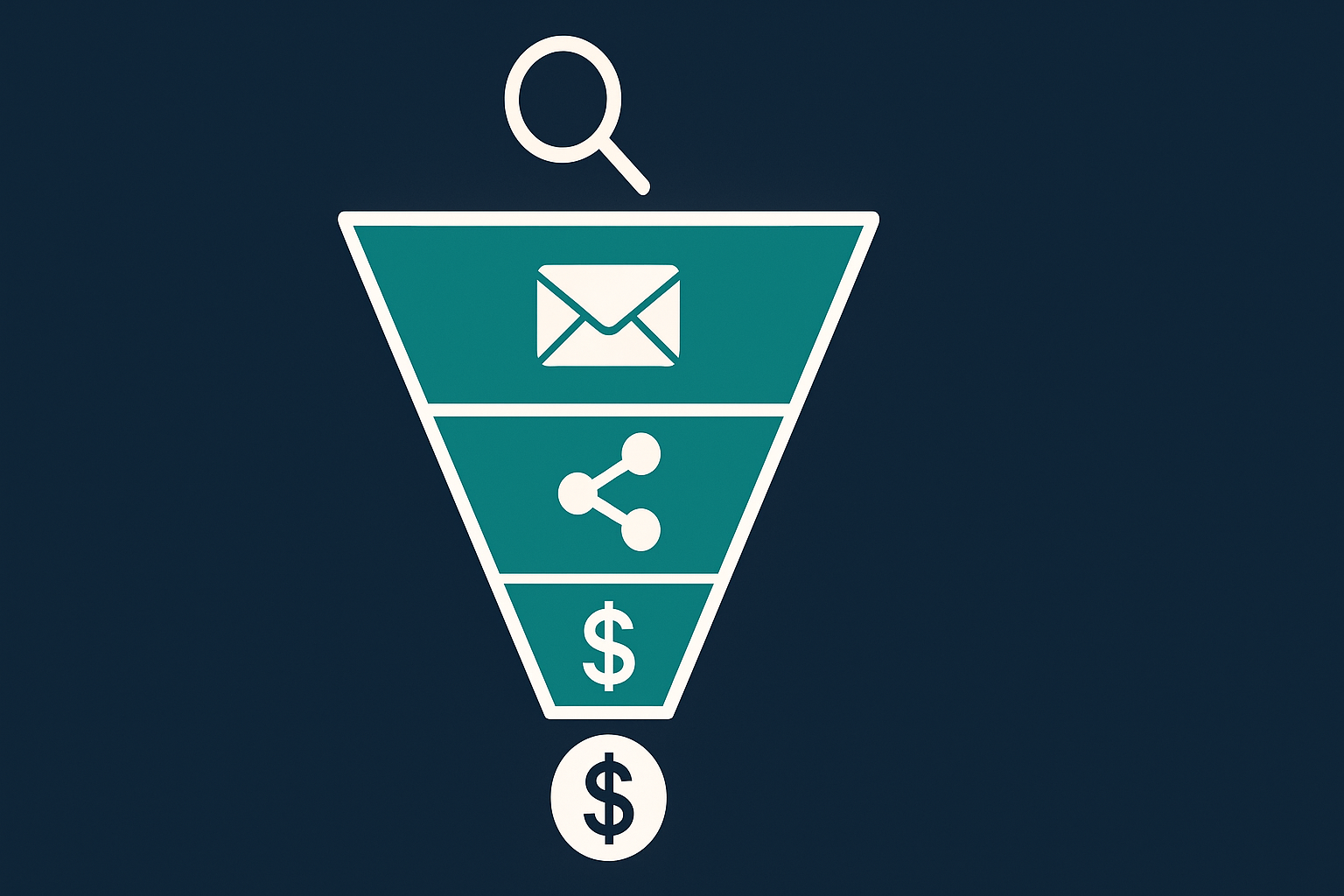
This article covers defining ROI, key formulas, channel-specific measurement, and how to apply these principles to a white-label research peptide business. Each section builds from the core formula outward, giving you a repeatable system to judge every dollar spent. Whether you’re running search ads, email campaigns, or social promotions, the same math applies. The difference is knowing which numbers to plug in. Marketing ROI is not a luxury. It is a decision-making tool that separates campaigns that earn from campaigns that drain cash. Without it, you are guessing. With it, you have a direction. The following sections break down the formula components, show how to isolate channel performance, and provide a framework tailored to the research peptide market. You own the brand. You own the customer relationship. You should also own the data that tells you where your next marketing dollar will work hardest.
What Is Marketing ROI and Why Does It Matter?
Marketing ROI (Return on Investment) is a performance metric that calculates the net profit generated from marketing activities relative to their cost. It is expressed as a percentage: (Revenue – Cost) / Cost x 100. A positive ROI means the campaign earned more than it cost; a negative ROI indicates a loss.
Tracking ROI helps identify which channels drive the highest returns, avoid wasteful spending, and justify future budgets. According to Investopedia, calculating ROI allows businesses to compare the effectiveness of different marketing investments on a level playing field. Without it, allocating budget becomes guesswork.
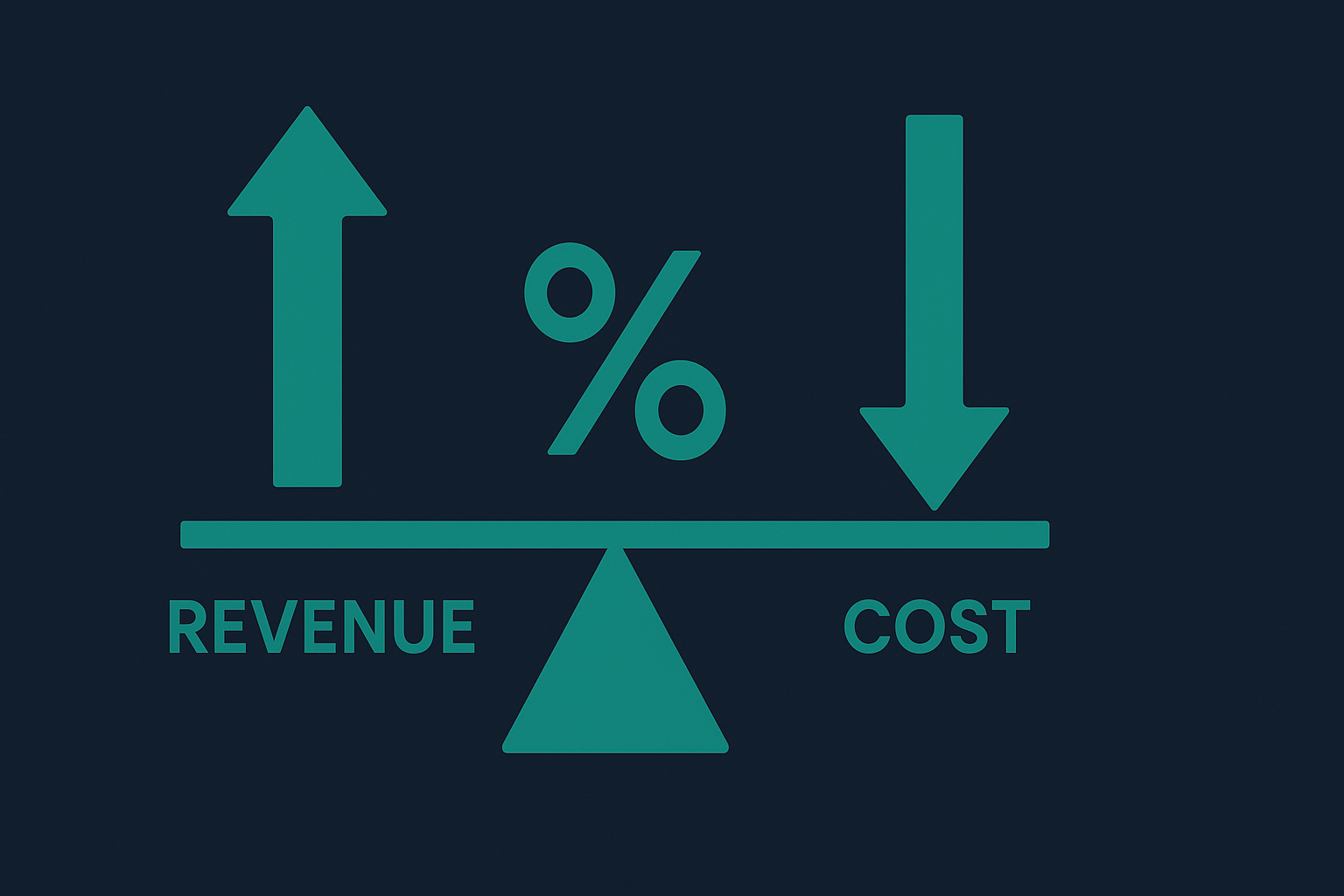
The same principle applies to any business, including a white-label research peptide supplier like YourPeptideBrand. Whether you are spending on ads for your branded RUO research peptide line or on content to attract clinic-owner clients, Marketing ROI tells you which activity generates the highest profit per dollar spent. It turns marketing from a cost center into a measurable investment.
Key Formulas and Metrics for Calculating ROI
Start with the standard return on investment (ROI) formula:
ROI = (Revenue – Cost) / Cost x 100
A worked example: if a campaign costs $1,000 and generates $3,000 in revenue, the ROI is (3,000 – 1,000) / 1,000 x 100 = 200%. That means for every dollar spent, the campaign returns two dollars of profit above cost. This single number gives a fast snapshot of overall campaign efficiency. For a deeper walkthrough of the formula, see the Shopify guide to marketing ROI.
ROI alone doesn’t tell the full story. Three related metrics provide different angles on performance: Customer Acquisition Cost (CAC), Return on Ad Spend (ROAS), and Cost per Acquisition (CPA).
- CAC = total marketing cost / number of new customers. It answers: how much does it cost to acquire one paying customer? If you spend $5,000 on marketing and gain 100 new customers, your CAC is $50. Lower is better, but context matters – a high CAC may be acceptable if customer lifetime value is proportionally higher.
- ROAS = revenue from ads / cost of ads. This focuses purely on ad spend. A ROAS of 4 means every dollar in ads brings in $4 in revenue. Unlike ROI, ROAS doesn’t subtract the cost of goods or other expenses – it isolates the effectiveness of the ad platform.
- CPA = total campaign cost / number of conversions. “Conversion” can be any desired action (a form submission, a catalog download, a purchase). CPA tells you the cost to get that single action, regardless of whether the person becomes a customer.
The table below compares these four metrics at a glance:
| Metric | Formula | Purpose |
|---|---|---|
| ROI | (Revenue – Cost) / Cost x 100 | Overall campaign efficiency |
| ROAS | Revenue from ads / Cost of ads | Ad-specific performance |
| CAC | Total marketing cost / New customers | Customer acquisition efficiency |
| CPA | Total campaign cost / Number of conversions | Conversion cost per action |
Each metric zooms in on a different layer. ROI shows total profit. ROAS evaluates ad spend efficiency. CAC tells you how much you pay to acquire a buyer. CPA reveals the cost of getting a specific action, even if that action doesn’t directly lead to a sale.
Choosing the right metric depends on your campaign goal. If you’re testing a new audience, ROAS gives quick feedback on ad performance. If you’re evaluating your entire marketing system across multiple channels, ROI is the ultimate benchmark. For scaling customer base, track CAC. For lead generation campaigns, use CPA.
One more layer: attribution. The formula values (revenue from ads, conversions by channel) are only as accurate as the attribution model behind them. Common models include first-click (credit to the first touchpoint) and last-click (credit to the last touchpoint). Without consistent attribution, you can’t assign revenue to the right campaign. A detailed guide on marketing attribution calculation explains how to set up attribution logic for each channel.
Measuring ROI by Marketing Channel
Each marketing channel has its own cost structure and requires separate attribution. Without channel-level tracking, you cannot know which spend delivers positive returns. The formula stays the same: (Revenue Attributed to Channel – Channel Cost) / Channel Cost x 100 = Channel ROI. But how you gather revenue data differs by medium.
Email Marketing
Email costs include your email service provider subscription (e.g., Mailchimp, Klaviyo) and the time spent on copywriting or design. Track revenue with UTM parameters appended to every link in your campaigns. Most email platforms integrate with Google Analytics to show attributed sales. If you spend $200 monthly on email tools and generate $1,200 in attributed sales, your email ROI is 500%. A guide from Growth Engines walks through setting up UTM tracking step by step.
Social Media
Social media ROI splits into organic and paid. For organic posts, your only cost is labor hours. Paid social requires ad spend plus creative development. Calculate ROAS (return on ad spend) first: ad revenue divided by ad cost. If a Facebook campaign generates $3,500 from $1,000 in ads, ROAS is 3.5x. But ROAS is not total ROI because it excludes labor overhead. To get full ROI, add content creation time to the cost side. Benchmarks from Martal’s B2B digital marketing benchmarks show average social media ROAS of 3-4x for B2B brands, though your results will vary by audience and offer.
Paid Search (PPC)
PPC is the easiest channel to measure because every cost and conversion lives inside your ad platform. Google Ads conversion tracking automatically ties clicks to purchases or lead form submissions. Set up a conversion action for website sales or contact requests. Then pull cost-per-click, conversion rate, and revenue. The Demandbase guide on marketing ROI notes that PPC often provides the most direct ROI data because the path from click to sale is short and platform-reported.
Content Marketing
Content marketing has a longer sales cycle. A blog post or video might generate leads weeks after publication. Instead of direct revenue, measure marketing qualified leads (MQLs) and assign a monetary value based on lifetime value (LTV). For example, if a content piece produces 10 MQLs and your average client LTV is $2,000, the attributed potential revenue is $20,000. Compare that to the cost of producing and promoting the content. Attribution models like first-touch or multi-touch can credit the content that started the buyer journey. This approach is standard for B2B brands selling high-ticket research products.
Applying These Methods to a White-Label Research Peptide Brand
A clinic owner selling their own branded research peptides can use these same formulas. For example, track how much is spent on Google Ads for terms like “research peptide suppliers” and compare that to the cash inflow from new wholesale accounts. Set up UTM parameters on every link in your email newsletters and social posts. Use the YourPeptideBrand profit calculator to model your margins and assign realistic revenue numbers to each channel.
Ready to see the numbers for your own brand? Book a call with the YourPeptideBrand team to discuss how white-label research peptides can fit your business model.
Download the full product catalog – 60+ third-party tested research peptides, all with COAs, no minimum order quantities. Get the catalog.
Frequently Asked Questions About Marketing ROI
What is the simplest formula for marketing ROI?
The simplest formula is (Revenue – Cost) / Cost x 100. This gives a percentage that shows the return on every dollar spent. A positive ROI means the campaign generated profit.
How do I attribute revenue to specific campaigns?
Use UTM parameters on links and set up conversion tracking in your analytics platform. Multi-touch attribution models (linear, time-decay) can distribute credit across touchpoints.
What is a good marketing ROI percentage?
Benchmarks vary by industry. For B2B, a 5:1 ratio (500% ROI) is considered strong, while a 2:1 ratio (200%) is average. Refer to industry benchmarks from sources like Gartner or Nielsen.
Should I include labor costs in ROI calculations?
Yes, include all costs: ad spend, software subscriptions, freelance fees, and internal labor hours. Excluding labor inflates ROI and gives a misleading picture.
How often should I calculate ROI?
At least monthly for active campaigns, and always at the end of a campaign. Regular calculations allow you to shift budget to higher-performing channels quickly.
How can a white-label peptide brand owner calculate ROI on marketing?
Track the costs of ads, website, and content against sales generated through the brand’s own storefront. Use the YourPeptideBrand Profit Calculator to model margins and map them to marketing spend. No minimum order quantities mean you can test campaigns without large inventory risk.
What tools can help me measure ROI for a dropshipping peptide business?
Use Google Analytics for traffic, platform dashboards for ad spend, and a CRM for customer lifetime value. YPB’s on-demand dropship model allows you to attribute revenue directly to campaigns without holding inventory. Download the full 60+ SKU catalog at yourpeptidebrand.com/download-our-catalog to see margins.
How do I compare ROI across different peptide product lines?
Calculate ROI for each product category (e.g., anti-aging research peptides vs. muscle recovery research peptides) by segmenting campaign costs and sales. YPB provides third-party COAs on every batch, which can be used as a content asset to build trust and increase conversion rates.
Build a Data-Driven Marketing Strategy with Profitability in Mind
Measuring marketing ROI is the only way to know if your spend is working. HubSpot reports that 68% of businesses with a documented marketing ROI strategy exceed their revenue goals. Use the formulas and channel-specific methods outlined above to track, compare, and optimize.
For clinic owners and entrepreneurs building a branded line of research peptides through YourPeptideBrand, knowing your ROI helps you allocate the right budget to the right channels from day one. The same discipline applies whether you are marketing a general product or a white-label research peptide brand.
Calculate your potential profit. Try the YPB Profit Calculator to see how your marketing spend translates into returns with our zero-MOQ dropship model.
Start by running the numbers on your current campaigns. Then, if you are considering launching your own RUO research peptide brand, book a call with YPB to discuss setup, zero-MOQ dropshipping, and custom packaging. You own the brand; YPB handles manufacturing and fulfillment.
Ready to start? Book a call with YPB to discuss your white-label research peptide brand.
Last updated: June 2026