For research use only. Not for human consumption, diagnostic, or therapeutic use.
The global dropshipping market is projected to reach $583.5 billion by 2026 (Grand View Research). Simultaneously, artificial intelligence in logistics is forecast to hit $20.8 billion in 2025, growing at a 45.6% compound annual rate (DocShipper, May 2026). These two trends intersect to create a new operational model for research peptide brands.
AI-powered fulfillment cuts logistics costs and makes no-inventory business models viable. For an entrepreneur, this means launching a white-label RUO (research use only) brand without holding stock. The AI handles order routing from the customer directly to the fulfillment partner, generates custom labels automatically, and coordinates shipping. The brand owner never touches the product.
YourPeptideBrand provides the turnkey platform that makes this workflow seamless. New entrants can start selling immediately, sidestepping the top challenges to creating a research peptide brand such as minimum order quantities and packaging logistics.
What Is AI Fulfillment for Research Peptide Logistics?
AI fulfillment for research peptide logistics uses machine learning, automated order routing, API-driven label generation, and predictive inventory to handle order-to-delivery under a white-label brand. The system replaces manual picking, label printing, and carrier selection with real-time software decisions.
The process has three layers that remove human error and speed up turnaround.
Order automation. When a customer places an order, the system automatically verifies stock, routes the order to the correct fulfillment node, and kicks off the packaging workflow without any staff touching a keyboard.
Label and packaging automation. Custom labels with the clinic’s brand name are generated on-demand from a template. The AI matches the correct label size, lot number, and COA to each vial without manual lookup.
Shipping carrier optimization. The system compares cost, delivery time, and zone data across carriers, then selects the fastest/cheapest option automatically.

YourPeptideBrand (YPB) embeds all three layers into its turnkey platform, enabling, for example, a multi-location clinic to launch a branded research peptide line without hiring logistics staff.
How AI Fulfillment Reduces Logistics Costs
Logistics costs eat into margins for any research peptide operation. Research cited by Locus.sh from McKinsey shows that embedding AI across the logistics function can reduce total logistics costs by 5 – 20%, with inventory-related costs coming down up to 30%. These are not theoretical gains: automated systems already deliver measurable savings in fulfillment, warehousing, and last-mile delivery.
An Oliver Wyman analysis from November 2025 adds more detail. It found that logistics operators using AI can target 10 – 25% cost reductions across operational pools – picking, packing, sorting, and transportation. The key is that AI doesn’t just automate tasks; it optimizes decisions in real time, from route selection to inventory placement.
Specific to research peptide logistics, AI-driven fulfillment delivers three concrete savings. First, automated label printing tied to order data eliminates artwork errors that cause reprints and delays. Second, real-time inventory sync prevents overselling – a costly mistake that forces rush reorders and expedited shipping. Third, automated carrier selection compares rates across providers to pick the cheapest reliable option, which typically cuts shipping costs by 15 – 20%.
These software tools form the backbone of a scalable operation. A software stack for scaling a peptide business includes order management, inventory, and carrier APIs. The real power comes from connecting multiple sales channels into one system, so every order from your clinic website or partner portal syncs to the same fulfillment engine. That eliminates manual data entry and the errors that come with it.
The Business Case for Automated Peptide Fulfillment
Switching from manual to automated fulfillment changes the cost structure for a research peptide brand. The difference is not incremental; it is structural. A direct comparison makes the case clear. Manual processes consume hours of staff time per week on tasks like label design, COA retrieval, and carrier selection. Automation reduces that overhead to near zero, turning a fixed cost into a variable one. This frees up capacity for activities that actually grow the business, such as sourcing new research peptides or building relationships with researchers.

The table below contrasts the traditional manual model with an AI-automated approach across six key operational metrics that directly affect profitability and scalability. Each row represents a cost or risk that shifts from labor-intensive to software-defined.
| Metric | Traditional Manual Fulfillment | AI-Automated Fulfillment |
|---|---|---|
| Inventory holding | Bulk inventory stored | Zero inventory (on-demand) |
| Label generation | Manual label design/print | API-triggered label print |
| COA attachment | Manual COA lookup/attach | Digital COA auto-attach |
| Carrier selection | Manual carrier compare | AI-optimized carrier routing |
| Labor hours per 50 orders | 15-20 hours/week | <2 hours/week |
| Minimum order quantity | MOQ required | No MOQ |
The labor hour reduction alone justifies the transition. A manual operator spends 15-20 hours per week sorting labels, attaching COAs, and comparing carrier rates for every 50 orders. With automation, the same 50 orders require less than 2 hours of oversight for exceptions. That reclamation of staff time allows clinic owners to invest in areas like research analysis or business development instead of repetitive logistics work. It shifts the employee role from order taker to knowledge worker.
Integration is the engine behind those savings. Flex Logistik notes that AI fulfillment platforms connect directly with major ecommerce platforms via API, syncing inventory, orders, and data in real time (Flex Logistik, April 2026). This means when a research peptide order is placed, the system automatically triggers label generation, attaches the corresponding COA from the digital library, and selects the optimal carrier based on cost and transit time. No manual intervention is needed. The result is fewer errors and faster turnaround.
The no-MOQ row is equally important for business model flexibility. Traditional manual fulfillment has high fixed costs per batch, forcing suppliers to enforce bulk minimums. Automation eliminates that constraint. You can stock zero inventory and fulfill a single vial order without penalty. This makes it feasible to offer a wide catalog of research peptides, even those with low but steady demand, without tying up capital in unsold stock.
Shopify data from 2026 supports the logic: 71% of AI-attributed orders come from niche long-tail categories (Shopify, 2026). Research peptides fit this pattern precisely. They are specialized compounds with distinct research applications, often ordered in small quantities. An automated fulfillment model turns that low-volume variety from a logistical burden into a profitable, scalable operation. The economics work because fixed handling costs drop to near zero per unit.
For a deeper look at using AI tools to manage the brand side of this model, see AI assistants for peptide brand management.
Download the Full 60+ SKU Research Peptide Catalog
Get the Complete Catalog
Browse 60+ third-party tested research peptides with COAs. Launch your brand with no minimums.
White-Label Opportunity: The Automation-Ready Business Model
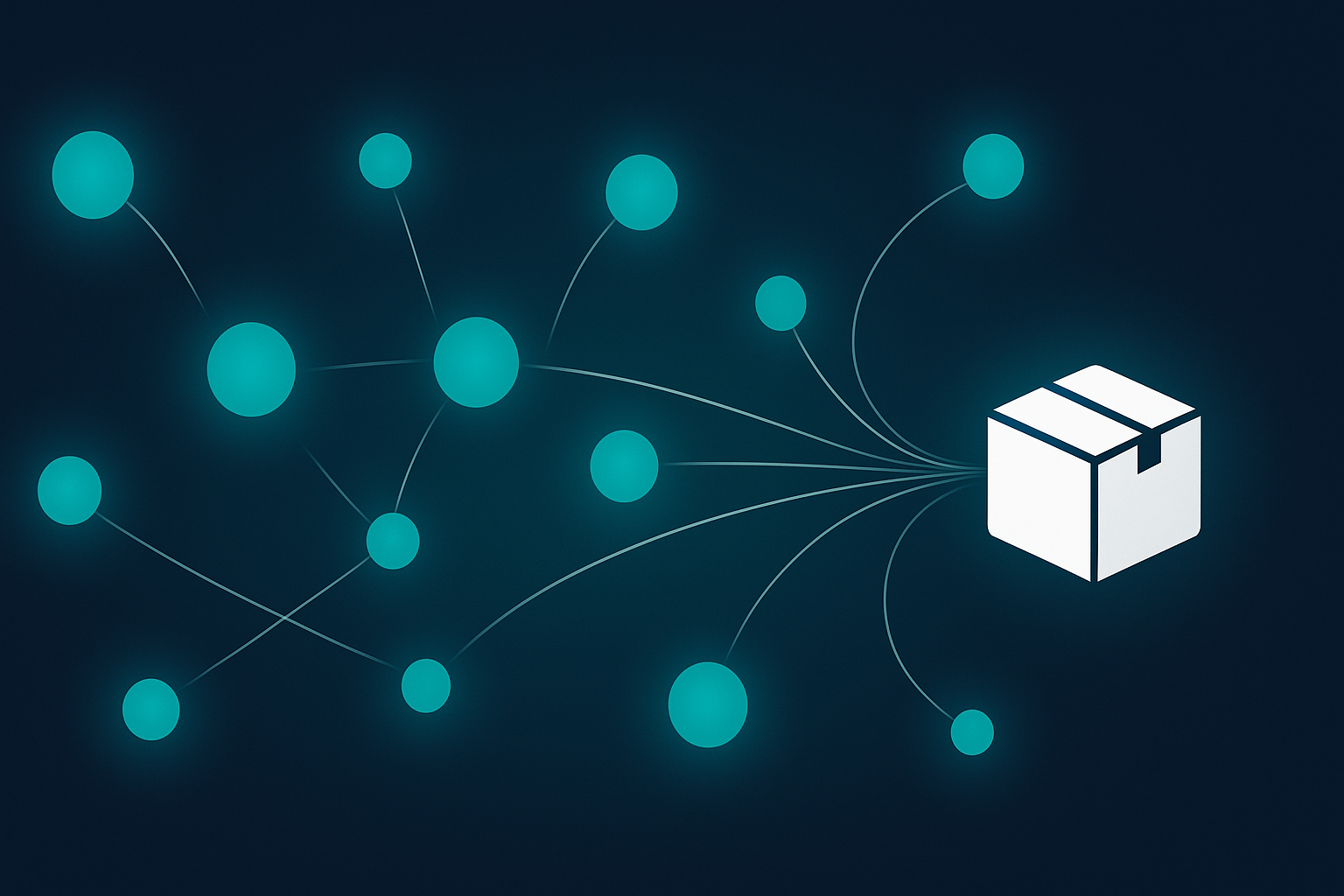
The automated white-label model for research peptides follows a straightforward pipeline. A brand owner lists products on their storefront. When a customer places an order, YourPeptideBrand’s system receives the order data via API. The system prints custom labels that include the required RUO language, selects the specified packaging, and dropships directly to the researcher. The brand owner never touches inventory or manages fulfillment logistics.
A key differentiator in this model is the absence of minimum order quantities. Many suppliers that force bulk minimums require an upfront risk of $5,000 to $20,000 in inventory before a single order ships. YPB eliminates that barrier entirely. A clinic owner or entrepreneur can test one research peptide formulation or launch a full catalog without tying up capital in stock that may not move quickly.
Automation in fulfillment correlates with higher revenue. A 2025 Shopify survey of 500 merchants found that businesses earning over $100,000 annually were significantly more likely to use automated systems for operations such as order processing and shipping (Shopify automated dropshipping guide). Applying that principle to research peptide logistics means faster turnaround and lower per-order labor costs for private-label brands.
For those evaluating which research peptides to offer or how to structure their launch, two resources provide further context. The article on best brand niches for a peptide brand reviews research categories with existing demand. The companion guide how to launch your peptide brand in 30 days outlines the steps from supplier selection to storefront activation.
AI in Inventory and Demand Forecasting
Stockouts lose sales. Overstock ties up cash in perishable inventory. For RUO research peptide brands, the margin for error is thin because batch sizes are small and lead times vary. AI-powered demand forecasting solves both sides of that equation by analyzing historical order patterns, seasonal fluctuations, and real-time sales velocity to predict what quantity of each research peptide will be needed and when.
A McKinsey analysis from 2025 on AI in logistics found that distribution operations using AI can reduce inventory levels by 20-30% while maintaining service levels (McKinsey analysis on AI in logistics). That range is significant for a private-label peptide business: fewer dollars tied up in stored product means lower carrying costs and more working capital for marketing or new product launches.
YourPeptideBrand’s platform embeds this logic into its order engine. Historical order data from your branded store feeds a prediction model that triggers on-demand production runs before stock runs out. At the same time, live inventory queries prevent overselling by checking real-time availability against every incoming order. The system behaves like a just-in-time fulfillment network that adapts to your actual demand curve rather than forcing you to guess batch sizes weeks in advance.
For a deeper look at structuring your own stock tracking around these principles, see the guide on inventory management system for peptide brands. To understand how to apply AI specifically to demand-side data, read about AI for product demand forecasting.
Ready to Launch Your Automated Peptide Brand?
Start Your Peptide Brand Today
Eliminate inventory risk and operational overhead. With YourPeptideBrand’s automated dropship system, you can launch a compliant, white-label research peptide brand in days. No minimum orders, no warehouse headaches.
COA / Quality: Automated Compliance Documentation
Every batch shipped through YPB’s automated fulfillment carries a batch-specific Certificate of Analysis tied directly to the lot number printed on the label. This creates a digital chain of custody that links each research peptide to its third-party test data without any manual paperwork.
YPB’s COA Library stores all batch records in one searchable location. Researchers can retrieve documentation for any order by lot number, making audit-ready records available on demand. This eliminates the common problem of lost or misfiled certificates.
Automation removes manual data-entry errors and ensures every shipment meets research integrity standards. For a deeper look at how fulfillment systems protect compliance, see third-party fulfillment and compliance protection. You can also verify batch-specific Certificates of Analysis directly through the online library.
Implementing AI Fulfillment: A Research-Backed Guide
Setting up an AI-driven dropshipping operation for RUO research peptides follows a clear, repeatable sequence. Each step builds on the last, reducing manual workload and human error.
Step 1: Choose a Niche and Select RUO Peptides
Select a research focus area that matches your audience’s needs. Browse YourPeptideBrand’s catalog of 60+ third-party tested research peptides and pick the compounds that align with that niche. The catalog download provides full specifications for each.
Step 2: Build a Storefront on Shopify or WooCommerce
Create an ecommerce store using either platform. Both offer dropshipping-friendly themes and plugins that integrate with third-party fulfillment systems. The Shopify automated dropshipping guide (2026) notes that modern automation tools reduce the research phase from hours to minutes and auto-route orders once configured.
Step 3: Connect to YPB’s API for Real-Time Inventory Sync
YourPeptideBrand provides an API endpoint that syncs stock levels, pricing, and product data in real time. This eliminates the need to manually update inventory when a SKU sells out or a new batch arrives. The feed updates automatically on your storefront.
Step 4: Configure Label Templates with Brand and RUO Disclaimers
Set up custom label templates that include your brand name, product details, and the required research-use-only disclaimers. YPB handles on-demand label printing and packaging, so the correct labels print at fulfillment time without extra handling steps.
Step 5: Set Up Automated Order Routing
Map your store’s order system to push new orders directly to YPB’s fulfillment engine. The system routes each order to the nearest warehouse, selects the correct vial size, and queues it for label printing and packing. A DocShipper analysis (May 2026) found that AI-enabled distribution cuts fulfillment costs by up to 20% and improves forecast accuracy to 95%.
Step 6: Launch and Monitor via Dashboard
Go live and track performance through YPB’s partner dashboard. You can view order status, shipping confirmations, and COA availability in one place. For ongoing optimization, explore building repeatable sales systems for peptide growth that layer reordering automation on top of fulfillment.
Each step removes a manual bottleneck. The result is a store that operates with minimal hands-on time, letting you focus on branding and research community engagement.
Calculate Your Automated Fulfillment Margins
See How Low MOQ Dropship Affects Your Bottom Line
Enter your target volume and retail price to see real margin projections with no‑MOQ, on-demand fulfillment. No sign‑up required.
Frequently Asked Questions About AI Fulfillment for Research Peptide Logistics
How does AI fulfillment improve accuracy in research peptide order processing?
AI fulfillment uses machine learning algorithms and automated sorting systems to reduce human error. A McKinsey report via Locus.sh notes that automated order processing can cut picking errors by over 80% compared to manual methods. For research peptides, this means fewer mislabeled batches and improved chain-of-custody documentation for bulk orders.
Can AI fulfillment support custom labeling and packaging for private-label research peptide brands?
Yes. AI-driven systems handle variable data printing and on-demand packaging without minimum runs. YourPeptideBrand integrates this approach, allowing brands to order labels and packaging per shipment. This eliminates the need to pre-purchase thousands of labels, keeping inventory costs low while meeting RUO compliance standards.
What are the scalability advantages of AI fulfillment for research peptide dropshipping?
AI fulfillment platforms automatically adjust to order volume spikes without manual rescaling. According to the Shopify blog on fulfillment automation, businesses using AI logistics can handle up to 10x seasonal volume without adding labor. For research peptide dropshippers, this means one order or one thousand orders use the same infrastructure.
Does AI fulfillment reduce shipping times for research peptide orders?
AI systems optimize warehouse layout and carrier selection in real time. A McKinsey study found that automated fulfillment can reduce average order-to-ship time by 30-50%. For research peptides, this translates to faster delivery of temperature-sensitive materials when combined with proper cold-chain logistics.
How can researchers verify quality when ordering research peptides through AI fulfillment?
AI systems can tag each batch with a unique identifier linked to the Certificate of Analysis (COA). YourPeptideBrand provides a COA Library where every research peptide batch is documented with third-party testing results. Researchers can match the batch number on their shipment to the COA online, ensuring lot-level traceability.
What is the typical initial investment to start an AI-fulfilled research peptide brand?
Because AI fulfillment handles warehousing, labeling, and dropshipping on demand, the upfront capital is lower than traditional distribution models. Grand View Research reports that automation reduces fulfillment startup costs by 40-60% versus manual operations. No minimum order quantities from YourPeptideBrand further eliminate bulk inventory expenses. Businesses can use the Profit Calculator on YourPeptideBrand.com to estimate margins based on their niche.
How quickly can a new research peptide brand go live with AI fulfillment?
Integration typically takes days, not months. YourPeptideBrand offers a turnkey system where clinic owners and entrepreneurs select products, upload their branding, and begin dropshipping within one business day. AI fulfillment removes the need to lease warehouse space or hire logistics staff. The process requires only a business license and an approved account.
What profit margins can a research peptide brand expect using AI fulfillment?
Profit margins vary by niche and pricing strategy, but AI fulfillment reduces per-order costs for picking, packing, and shipping. YourPeptideBrands no-MOQ model and direct dropshipping mean overhead is variable, not fixed. Businesses can run margin scenarios using the Profit Calculator on YourPeptideBrand.com to compare fulfillment costs across different order volumes.
Start Your White-Label Peptide Brand Today
AI-driven fulfillment has eliminated the traditional barriers to entry in the RUO research peptide market. You can now own a branded product line with zero inventory, no minimum order quantities, and logistics that run on autopilot. The infrastructure is already in place from label printing to on-demand dropshipping.
The next step is a short conversation to map out your brand’s product selection, packaging design, and go-to-market timeline.
Last updated: July 2026