
For research use only. Not for human consumption, diagnostic, or potential wellness benefit.
How to Build a Video Ad Funnel for Research Peptides That Converts Safely
According to research cited by Levitate Media (2025), 70% of B2B buyers and researchers watch video content during their purchasing journey. For research peptide brands operating under Research Use Only (RUO) compliance rules, video advertising presents both an opportunity and a challenge: video drives engagement across the buying cycle, but every frame, caption, and call-to-action must stay within strict regulatory boundaries.
This guide explains how to plan, produce, and sequence educational video ads across a three-stage funnel that converts clinic owners and wellness entrepreneurs while keeping your brand compliant with platform policies and RUO labeling requirements.
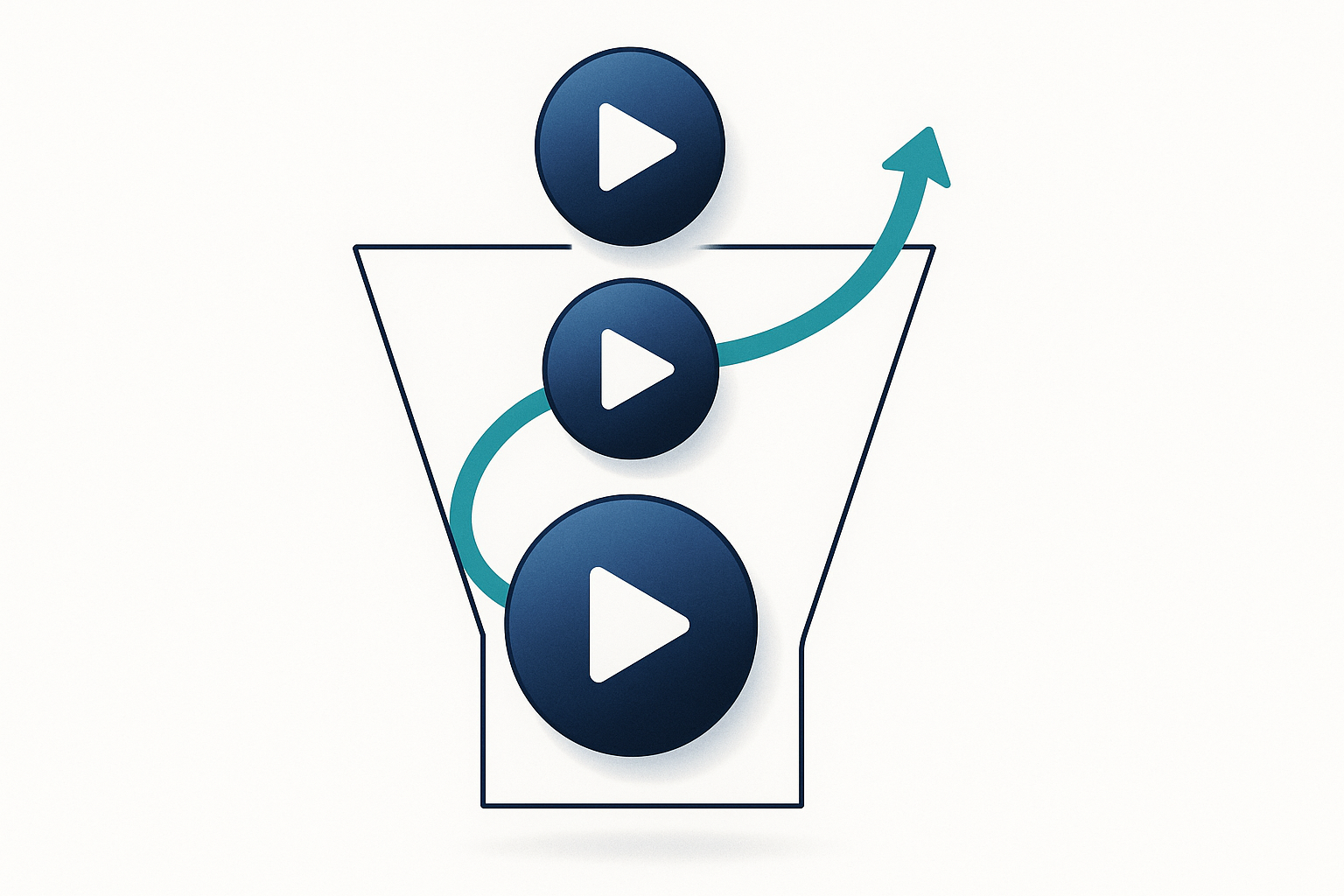
The three-stage funnel architecture works like this:
- Top-of-funnel awareness – 15- to 30-second clips that introduce your research peptide brand and build initial interest.
- Middle-of-funnel education – 60- to 90-second explainers that dive into how your research peptides are tested and what compliance documentation matters.
- Bottom-of-funnel conversion – 30- to 60-second trust and documentation videos that showcase certificates of analysis and your no-minimum-order-quantity dropship model.
When you structure video ads this way, each viewer receives the right information at the right stage of their research, and your brand stays within RUO guidelines. The rest of this guide walks through the production process, script templates, and compliance checks for each stage.
What Is a Video Ad Funnel for Research Peptides?
A video ad funnel for research peptides is a structured advertising sequence that moves research buyers from initial awareness through consideration to conversion using short-form video content. Every piece of creative is built around Research Use Only (RUO) compliance rules to ensure messaging stays within regulatory boundaries. The model adapts proven B2B video-funnel best practices for the research-peptide industry.
YourPeptideBrand provides white-label entrepreneurs the compliant product infrastructure needed to support these campaigns, including batch-tested inventory and custom packaging that aligns with the same compliance framework.
The Three Stages of a Research Peptide Video Funnel
Top-of-funnel (TOFU) focuses on broad brand recall and general education about peptide science. These short videos introduce the research category without product-specific claims, building an audience of lab professionals and clinic owners who may later consider a white-label partner.
Middle-of-funnel (MOFU) nurtures engaged leads with deeper content about supply chain reliability, quality control processes, and the operational mechanics of the white-label model. These videos answer the practical questions a buyer asks before vetting a supplier.
Bottom-of-funnel (BOFU) converts prospects by emphasizing trust signals: Certificate of Analysis access, compliance documentation, and the steps YPB takes to maintain RUO labeling. Wistia notes that 70% of B2B buyers watch video during their purchase path, making this sequence a natural fit for the research-peptide buyer’s journey.
The Compliance Foundation for RUO Video Ads
Every video ad for research peptides must start from the principle that these products are sold strictly for laboratory investigation, not for human use. That single boundary determines what you can show, say, and write on screen.
YourPeptideBrand’s Google Ads Compliance Checklist for Peptide Brands (2026) states that RUO peptides are permissible only when ad language is strictly scientific, avoids health-related terminology, and includes a mandatory disclaimer. Four non-negotiable rules follow from that baseline:
- No therapeutic claims in any video frame, caption, or voice-over. Words implying human benefit are prohibited.
- RUO disclaimer must appear on-screen or in the video description. A static overlay during the ad ensures visibility.
- Landing pages must mirror ad compliance with no hidden health claims. If your video says “for research use only,” the page it links to must say the same.
- Avoid triggering platform policy filters for health and fitness categories. Review the guide on how to safely advertise research peptides for specific filter triggers.
According to YPB’s compliance analysis (2026), brands that embed RUO disclaimers across all ad touchpoints face significantly lower compliance risk. For a deeper look at structural compliance, see Red Flags the FDA Looks For in Peptide Websites.
Research Summary: Why Video Dominates B2B Buyer Decisions
| Statistic | Source | Year |
|---|---|---|
| 70% of B2B buyers watch video during purchase journey | Google / Levitate Media | 2025 |
| 91% of businesses use video as a marketing tool | Wyzowl / Vidico | 2026 |
| 58% of B2B marketers rank video as most effective content strategy | Content Marketing Institute / Genesys Growth | 2024 |
| 70% of video marketers use LinkedIn for video | Wyzowl | 2025 |
| 96% of B2B scientific literature indicates video is important for vendor decisions | Brightcove / Levitate Media | 2024 |
These figures make one point clear: video is no longer optional for B2B brands, including those in the research peptide supply space. The buying committee for clinic-grade research supplies often includes multiple stakeholders – a lead researcher, a procurement manager, and a compliance officer – each needing different information. A single text page can struggle to serve all of them. Video, on the other hand, can layer a product overview, a third-party COA walkthrough, and a quick FAQ into one 90-second clip that each viewer interprets through their own lens. That efficiency explains why 96% of B2B buyers consider video important when evaluating vendors (Levitate Media, 2024).
Ready to start building your own research peptide brand? Download the YourPeptideBrand catalog to explore 60+ third-party tested research peptides available with no minimum order quantities.
Stage 1: Top-of-Funnel Awareness Videos (15-30 Seconds)

The goal of the top-of-funnel (TOFU) stage is pure introduction. It builds brand recall among clinic owners and entrepreneurs who may not yet know that white-label RUO peptide supply exists as a business model. A bold hook works best, such as: “What if your clinic could offer a lab-grade research peptide without a manufacturing plant?”
Creative guidelines for TOFU videos should keep visuals clean and laboratory-focused. Show molecular graphics, vial packaging, or sterile lab equipment. Never show a person used or researchers reconstitute this compound. The ad copy must clearly state the product category: “Research Use Only peptides for laboratory investigation” or “RUO peptide supply for qualified researchers.”
The call-to-action is straightforward: “Learn More.” This click sends viewers to a compliant landing page that contains the full RUO disclaimer and further educational content. A good budget rule of thumb is to allocate 40-50% of total video ad spend to this TOFU stage. This investment builds the retargeting pool needed for later funnel stages.
As a 2025 guide from Directive Consulting notes, sequencing matters in B2B video because different decision-makers need specific information at different points in the research process. For deeper guidance on platform-specific execution, read the Beginner's Guide to Facebook Ads for Peptide Stores and the Advanced TikTok Ad Strategies for Peptide Brands.
Stage 2: Middle-of-Funnel Educational Videos (60-90 Seconds)
Once a clinic owner or entrepreneur knows your brand exists, the next step is to prove you know your category. MOFU educational videos do exactly that: they deliver genuine insight about research peptide quality, testing, and supply chain logistics without sounding like a product pitch.
The goal here is to nurture prospects who are already aware of your white-label brand. They have clicked an ad or visited your site, but they are not ready to buy. What they need is evidence that you understand the technical side of peptide sourcing. A 60-90 second video that teaches them something actionable builds that authority.
StackAdapt’s 2024 B2B video marketing guide notes that educational video content generates high engagement from research-mode buyers and strengthens brand credibility (see StackAdapt B2B video guide). The same principle applies in the RUO peptide space: a buyer who watches your explanation of a Certificate of Analysis is a buyer who trusts your sourcing more than a competitor’s.
Example topics for these videos:
- “How to Read a Peptide Certificate of Analysis” – walk viewers through the key fields: purity percentage, mass spec data, storage conditions.
- “What Third-Party Testing Means for Research Peptide Quality” – explain the difference between in-house and independent lab verification.
- “The White-Label Peptide Supply Chain Explained” – show how on-demand manufacturing and dropshipping let a brand control its own customer relationships.
Creative guidelines: Teach something genuinely useful. Do not pitch your brand or products during the educational segment. The video should stand alone as a resource someone would want to share with colleagues. Use simple visuals, on-screen text for key terms, and a calm, authoritative voiceover.
Call-to-action: Drive viewers to a gated asset that continues the education. Examples: “Download the Compliance Checklist” or “Get the COA Guide.” The landing page should collect an email in exchange for a PDF or checklist that reinforces the video’s key points.
Retargeting strategy: Build a custom audience from users who watch 50% or more of any MOFU video. Do not retarget everyone who clicks – partial views show interest is real. Move that audience to Stage 3 ads (bottom-of-funnel offers, testimonials, or direct calls to book a call) because they have already received the education needed to evaluate your solution.
For a deeper look at scaling this approach, see How to Use Paid Ads to Scale a Peptide Brand. For guidance on structuring the landing pages that these videos lead to, read How to Build an FDA-Compliant Product Page for Peptides.
Stage 3: Bottom-of-Funnel Conversion Videos (30-60 Seconds)
The final stage targets viewers who have watched earlier education and testimonial content. The goal is to convert warm leads by reinforcing trust signals that matter most at the decision point: COA documentation, batch-testing transparency, the no-MOQ selling point, and the turnkey white-label model.
Creative guidelines for a 30-60 second conversion video are specific. Show the actual Certificate of Analysis document on screen while narrating the third-party testing process. Then demonstrate the on-demand label printing and custom packaging workflow. A 2024 B2B video marketing guide from Atlassian reports that customer testimonials and detailed product demos drive the strongest response at the decision stage (Atlassian B2B video marketing guide). Your conversion video should follow that pattern: let the COA and the packaging process act as your demo.
The call-to-action must be direct and specific. Use “Book a Strategy Call” or “Start Your Brand Today” as the button text. Do not bury the ask behind vague language.
Every landing page tied to this campaign must include three elements: a full RUO disclaimer, product specifications, and a clear opt-in form. Before launching the ad, run a compliance checklist. Ensure the landing page meets both Google Ads and Meta Ads policy review standards for research-use-only products. Review their prohibited practices, especially around health claims and human consumption language.
Link directly to the COA Library so prospects can verify batch results themselves. A compliant, transparent landing page paired with a focused conversion video gives warm research peptide buyers a clear path to start their own brand.
Platform-Specific Video Strategies for Research Peptide Ads
Each platform serves a different stage in the research peptide video funnel. The table below summarizes the best format, audience, and compliance notes for YouTube, LinkedIn, Facebook/Meta, and TikTok.
| Platform | Best For | Video Format | Compliance Notes |
|---|---|---|---|
| YouTube | Deeper education + retargeting | Skippable in-stream (15-30s), in-feed (2-5 min) | Avoid health/medical categories; use scientific keywords and phrases like “research peptide” |
| B2B decision-maker targeting | Thought leadership (30-60s) | Target by job title: clinic director, lab manager; avoid therapeutic claims in headlines | |
| Facebook/Meta | Brand awareness + retargeting | Feed video (15-30s), Stories (15s) | Manual placements only; exclude health/fitness interest categories; restrict geography to US/CAN/EU |
| TikTok | Organic reach + brand building | Short vertical (15-30s) | Link in bio funnel; avoid any language that sounds medical or human-focused; monitor policy changes |
YouTube works for B2B because decision-makers use it for vendor research, according to a 2026 analysis by 12AM Agency. Skippable in-stream ads build awareness with a 15-30 second hook, while longer in-feed videos (2-5 minutes) serve the consideration stage with scientific explanations of research peptides and their applications in studies.
LinkedIn video ads let advertisers measure who watched and who took action, linking video exposure directly to site visits and lead generation, per Marketing Brew. Target lab managers and clinic directors with 30-60 second thought-leadership clips that discuss purity standards or third-party testing protocols.
For Facebook/Meta, manual placements are critical. Avoid health-related interest buckets and instead target by profession. Custom audiences built from video viewers allow retargeting with deeper content on the Certificate of Analysis process. Prioritize mobile feed placements and restrict geography to the United States, Canada, and the European Union.
TikTok requires a short-form hook (15-30 seconds) that educates without sounding medical. The link-in-bio directs viewers to a compliant landing page. Given frequent policy shifts, check the platform’s advertising guidelines monthly to ensure continued compliance with research-use-only language.

Measuring Video Ad Funnel Performance
Without tracking the right metrics, a video ad funnel is just expensive guesswork. Different stages require different signals, and one number never tells the full story. The table below maps each funnel stage to its primary and secondary metrics, plus a compliance check specific to research peptide advertising.
| Funnel Stage | Primary Metric | Secondary Metric | Compliance Check |
|---|---|---|---|
| TOFU | Impressions, Reach | Cost per 1,000 impressions | Claim frequency in ad copy |
| MOFU | View-through rate (50%+) | Cost per engaged view | Landing page disclaimer presence |
| BOFU | Click-through rate | Cost per lead | Conversion path disclaimer audit |
The compliance column is not optional. As digital marketing is adapting to peptide industry changes (YPB, 2026), claim-frequency monitoring has become a critical tool for staying within RUO labeling standards. Run that check on every new ad set before it goes live.
Attribution matters. Last-click attribution consistently undercounts video’s contribution because viewers often convert later via a different channel. Use view-through attribution with a 7-day window instead. It captures the influence of an impression or partial view without overvaluing accidental views.
Review your KPI dashboard weekly. Layer a compliance check over every row: verify ad copy, landing page disclaimers, and conversion path language all comply with RUO requirements. A single flagged term can pull an entire campaign offside. Weekly reviews keep the funnel profitable and the brand protected.
COA / Quality: The Trust Signal in Every Video
A Certificate of Analysis per batch is the single most powerful trust signal in RUO research peptide video ads. Buyers of research peptides need batch-specific documentation to verify identity and purity before purchase. Including a COA reference in your ad funnel directly supports informed buying decisions and reduces friction for educated buyers.
YourPeptideBrand makes this straightforward. Each batch of every research peptide comes with its own third-party tested Certificate of Analysis. Brands can direct prospects to the COA Library for batch-specific documentation. This transparency sets YPB apart from suppliers that force bulk minimums and cannot provide batch-level documentation for each order. With no minimum order quantities, every shipment, regardless of size, includes a COA that matches the specific batch in transit.
The White-Label Video Ad Advantage
Entrepreneurs building a branded RUO research peptide business can use video ads to reach clinic and research audiences directly. A short, educational video that explains the compound’s mechanism and third-party testing gives the brand credibility before a prospect ever visits the website.
Most research peptide suppliers require large minimum order quantities. That forces a brand owner to invest thousands upfront in bulk inventory just to stock a single SKU. Video ad campaigns become risky because the ad spend and the inventory cost are both high and tied to a product that might not convert.
YourPeptideBrand removes that bottleneck. No minimum order quantities mean you can run a video ad for any research peptide SKU and fulfill each order on demand through dropshipping. Custom labels and packaging let you keep a consistent brand look across every video, and third-party tested COAs on every batch support the educational claims in your ad copy. The fast launch timeline lets you go live in days, not weeks.
The Profit Calculator helps you model cost-per-vial versus ad spend so you can test multiple SKUs without inventory risk. You own the brand and the customer relationship; YPB handles the fulfillment.
Frequently Asked Questions About Building a Video Ad Funnel for Research Peptides
What types of video content work best for research peptide brands?
Educational explainer videos and lab-process walkthroughs perform well because they show quality control without making medical claims. According to Wyzowl, 96% of people have watched an explainer video to learn more about a product. For RUO brands, third-party testing footage, certificate-of-analysis visuals, and format comparisons (e.g., lyophilized vs. solution) keep compliance intact while building trust with clinic buyers.
How long should a video ad be for research peptide products?
Wistia data shows retention drops sharply after 60 seconds, so keep core ads under one minute. For longer-format content (e.g., full catalog overview or testing protocol), two to three minutes is acceptable for retargeting audiences who already clicked a shorter ad. Always front-load the key differentiator – no-MOQ, on-demand dropship, or batch-level COA – within the first five seconds.
What metrics should I track for research peptide video ads?
AdSpyder research on B2B ad performance highlights that completion rate and click-through rate (CTR) matter more than view count. For a video funnel, monitor the percentage of viewers who watch the full call to action. Also track direct visits to your product catalog page or the Profit Calculator (https://yourpeptidebrand.com/profit-calculator/) to see which video topics actually drive business inquiries.
How can I ensure my video ads comply with RUO regulations?
Content Marketing Institute (CMI) advises that regulated industries should avoid any language implying human use or results. For research peptide ads, never show administration, dosing, or “results” from human subjects. Stick to in vitro or in vivo contexts, reference scientific literature without claiming outcomes, and always include the phrase “for research use only.” A compliance checklist from 12AM Agency can help review scripts before recording.
Why is a pre-roll or educational video effective for research peptides?
Short pre-roll ads (six to fifteen seconds) that state a single benefit – like “no minimums” or “COA on every batch” – warm up cold audiences. Educational videos then explain the testing process or catalog depth. According to Wyzowl, 69% of viewers prefer to learn about a product through video. This two-step approach qualifies buyers without requiring a hard sell upfront.
How can I scale a video ad funnel for a new research peptide brand?
Start by testing two to three ad concepts with a small budget, using UTM parameters to track which video leads to catalog downloads. Once a winner emerges, scale that ad to lookalike audiences. YourPeptideBrand supplies the foundational assets – a 60+ SKU catalog, ready-made product images, and COA library – so you can focus on video production instead of sourcing logistics. No MOQ or on-demand dropship means you can test ads without inventory risk.
What support does YourPeptideBrand offer for creating video ads?
YourPeptideBrand provides white-label product assets including high-resolution images, batch-specific COA graphics, and format details for each of the 60+ research peptides. These elements can be edited directly into video ads without needing original lab footage. The on-demand dropship and no-MOQ model let you run ads to test demand before committing to bulk purchases. For margin estimates, use the Profit Calculator (https://yourpeptidebrand.com/profit-calculator/).
How do I estimate potential profit from a video ad funnel?
Calculate your ad cost per conversion (CPC or CPM) and multiply by the average order value from your branded store. Because YourPeptideBrand handles fulfillment via on-demand dropship and offers a 60+ SKU catalog with COA on every batch, your overhead remains low. No minimum order quantity means you pay only for what you sell. Input your specific ad spend and retail price into the Profit Calculator (https://yourpeptidebrand.com/profit-calculator/) for a personalized margin projection.
Last updated: July 2026
Building a video ad funnel for research peptides requires compliant creative, strategic platform selection, and a supply chain that supports transparent documentation. YourPeptideBrand provides the infrastructure to execute this with zero minimums and batch-level COAs, so you can focus on growing your brand with confidence.
Book a call with YourPeptideBrand to start building your research peptide video ad funnel today.