
The Rise of Research Peptides and Influencer Partnerships
Research‑use‑only (RUO) peptides are biologically active chains of amino acids supplied strictly for laboratory investigation, assay development, and pre‑clinical studies. Unlike FDA‑approved therapeutics, RUO peptides carry no claims for diagnosing, treating, or supports healthy function. Labels, packaging, and marketing materials must explicitly state that the product is intended for research purposes only, and any suggestion of human consumption crosses a regulatory line.
Why RUO Peptides Have Captured Market Attention
Over the past few years, the RUO peptide market has exploded, driven by three intersecting forces. First, boutique clinics and wellness entrepreneurs are eager to differentiate their services with cutting‑edge bio‑hacking protocols. Second, the cost barrier has lowered as manufacturers adopt on‑demand label printing and drop‑shipping models, allowing even single‑unit orders. Third, the bio‑hacking community—spanning from amateur athletes to longevity‑focused individuals—shares protocols on forums and social media, creating a viral demand loop.
According to industry estimates, global sales of research peptides have grown at double‑digit annual rates, outpacing many traditional supplement categories. Clinics leverage these compounds to offer “custom peptide stacks,” while entrepreneurs launch private‑label brands that promise tailored results without the overhead of compound development.
Influencers: The Amplifiers of Peptide Hype
Social media influencers have become the most effective conduit for turning niche peptide science into mainstream buzz. By posting before‑and‑after photos, short video testimonials, or “day‑in‑the‑life” reels, they showcase perceived peptide outcomes—enhanced recovery, leaner physique, sharper cognition. Their audiences often trust the visual proof more than scientific nuance, leading to rapid spikes in product inquiries and sales.
These creators typically operate under the umbrella of “wellness” or “fitness” niches, where regulatory oversight is lighter than in medical advertising. When an influencer tags a RUU peptide brand or uses a discount code, the line between research material and consumer product blurs, especially if the caption hints at personal benefits or improvement in health metrics.
Setting the Stage for Compliance Risks
The convergence of RUO peptides and influencer promotion creates a perfect storm for compliance challenges. Federal regulations—particularly the FDA’s labeling rules and the FTC’s endorsement guidelines—require clear demarcation between research claims and consumer promises. When an influencer’s post implies potential wellness benefit, the peptide can be re‑characterized as an unapproved compound, exposing both the brand and the promoter to enforcement actions, fines, or product seizures.
Moreover, the digital footprint of influencer content persists across platforms, making it difficult to retract or amend misleading statements. Brands that provide white‑label solutions must therefore implement rigorous vetting processes, enforce strict marketing language, and educate partners on the legal ramifications of crossing the research‑to‑consumer boundary.

Regulatory Framework Governing RUO Peptides
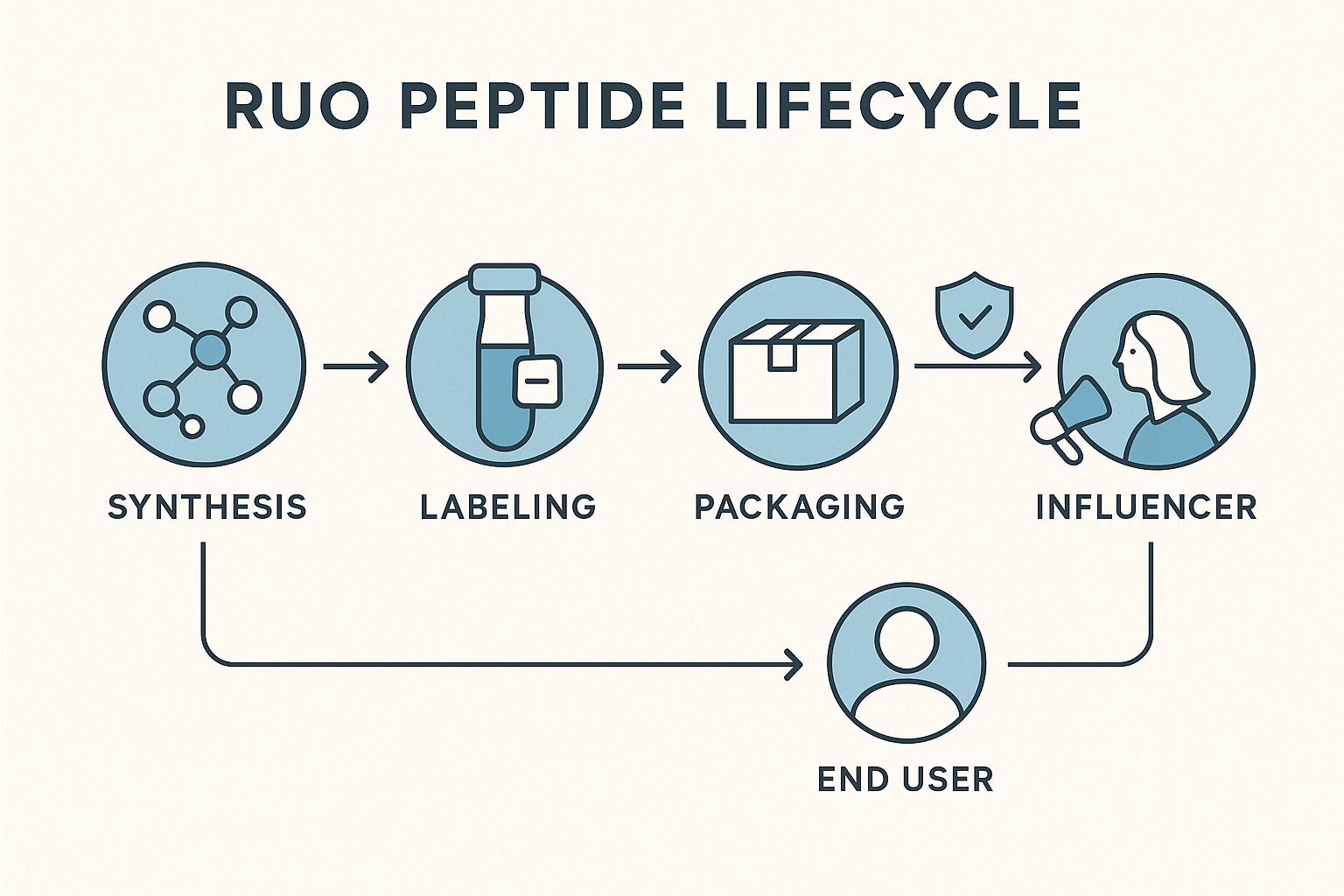
FDA’s Definition of “Research Use Only”
The U.S. Food and compound Administration (FDA) classifies “Research Use Only” (RUO) products as substances intended solely for non‑clinical laboratory investigations. The agency explicitly prohibits any marketing that suggests the product is safe or effective for research use only, diagnosis, or treatment. In practice, this means a peptide labeled RUO cannot be sold with claims that it will improve performance, aid recovery, or supports overall wellness, even if the seller believes the product is “pure” or “high‑quality.” Violating this definition can trigger warning letters, product seizures, or civil penalties.
Labeling Requirements for RUO Peptides
To stay within FDA boundaries, brands must embed several mandatory elements on every container and accompanying documentation:
- RUO Statement: A clear, prominent declaration such as “For Research Use Only – Not for research use only.”
- Batch/Lot Numbers: Unique identifiers that enable traceability throughout the supply chain.
- Safety Warnings: Instructions on proper handling, storage conditions, and personal protective equipment (PPE) required during use.
- No Therapeutic Claims: Absolute prohibition of language that implies efficacy, serving size, or health benefits.
Failure to include any of these items can be interpreted as an attempt to market the peptide as a therapeutic agent, exposing the company to FDA enforcement actions.
FTC Advertising Guidelines for Influencer Promotion
The Federal Trade Commission (FTC) polices commercial speech, and its “Truth‑in‑Advertising” rules apply equally to peptide brands and the influencers they engage. Key obligations include:
- Truthful Messaging: All statements must be substantiated by reliable scientific evidence. Unverified health benefits are considered deceptive.
- Mandatory Disclosures: Paid endorsements, free product samples, or any material connection between the influencer and the brand must be disclosed clearly and conspicuously (e.g., “#ad” or “Sponsored”).
- Prohibition of Deceptive Health Claims: Even indirect suggestions—such as “I feel stronger after using X peptide”—must be avoided unless backed by FDA‑approved data.
Influencers who neglect these disclosures risk FTC enforcement, which can result in monetary penalties and mandatory corrective advertising.
When FDA and FTC Enforcement Overlap
Regulatory lines blur when a promotional claim simultaneously touches on product safety (FDA) and consumer deception (FTC). For example, an influencer stating, “This peptide helps you build muscle faster,” touches FDA’s prohibition on therapeutic claims and FTC’s ban on unsubstantiated health benefits. In such cases, both agencies may coordinate investigations, share evidence, and pursue joint actions. Brands that adopt a “dual‑compliance” mindset—ensuring both labeling and advertising meet the strictest standards—significantly reduce the risk of simultaneous enforcement.
Authoritative Guidance and Further Reading
Both agencies publish detailed guidance documents that serve as the benchmark for compliance:
- FDA: “Guidance for Industry: Dietary Supplements” clarifies the distinction between supplement labeling and RUO declarations, emphasizing that RUO products must not be presented as dietary supplements.
- FTC: The “Endorsement Guides” outline the mechanics of proper disclosure, the definition of a material connection, and the standards for substantiating health‑related claims.
For a comprehensive deep‑dive, consult the external source linked below. It walks readers through real‑world case studies, enforcement histories, and practical checklists for both brands and influencers.
Read the full compliance guide here.
Influencer Marketing Risks and Liability
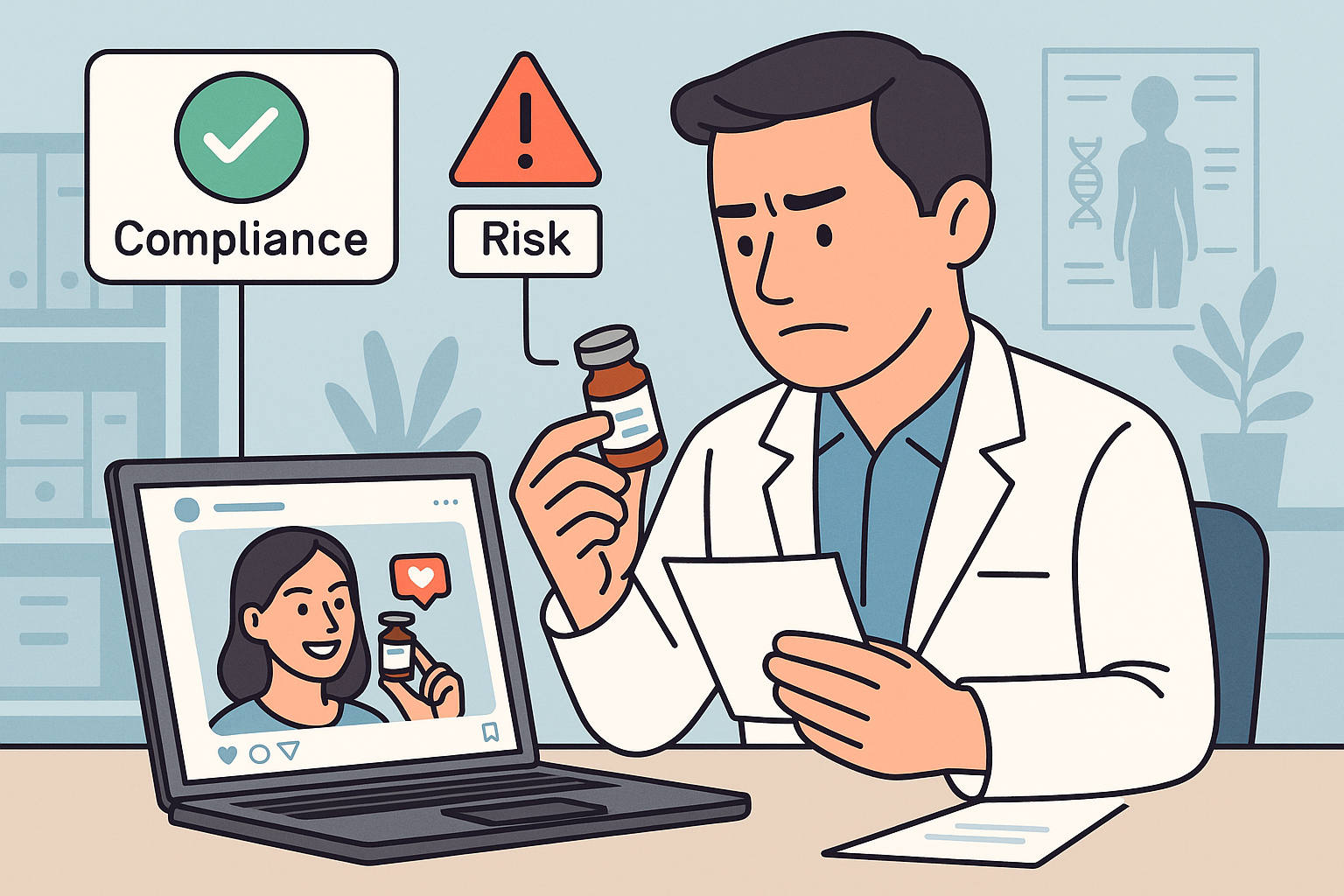
FTC Disclosure Requirements for Sponsored Posts
The Federal Trade Commission mandates that any material connection between an influencer and a peptide brand be disclosed clearly and conspicuously. The disclosure must appear in the same medium as the claim—if the claim is made in an Instagram Reel, the disclaimer must be in the Reel’s caption, not buried in a separate story highlight. Phrases such as “#ad,” “paid partnership,” or “sponsored” are acceptable, but they must be legible and placed where the average consumer will see them before reading the promotional content.
FDA Enforcement Actions Against Misbranded Peptide Claims
When a brand or influencer markets a Research Use Only (RUO) peptide as a therapeutic agent, the FDA treats the product as misbranded. In 2023, the agency issued warning letters to two companies that advertised a “muscle‑building” peptide and an “anti‑aging” peptide as cure‑alls. The letters cited specific posts that claimed measurable health outcomes without any clinical data, demanding immediate removal of the content and a corrective action plan. The FDA’s stance is unequivocal: RUO peptides may be discussed in scientific contexts, but they cannot be presented as approved treatments or serving size recommendations for research use only.
Liability Scenarios: Who Is on the Hook?
Liability can flow in several directions. If an influencer makes an unsubstantiated health claim, the brand that supplied the peptide may be held responsible under the “vicarious liability” doctrine because it benefitted from the promotion. Conversely, the influencer can face direct lawsuits from consumers who suffer adverse effects after following serving size instructions that were never vetted by a medical professional. Courts have increasingly recognized that both parties share a duty to ensure that any health‑related statement is supported by peer‑reviewed evidence.
Financial Penalties and Criminal Exposure
Non‑compliance can trigger civil fines ranging from $10,000 to $100,000 per violation, product seizures, and mandatory recalls. In extreme cases where the agency determines that a brand knowingly misbranded a peptide with false therapeutic claims, criminal charges for fraud may be pursued, potentially resulting in imprisonment for up to five years. These penalties underscore why proactive compliance is more cost‑effective than reacting to enforcement actions.
Real‑World Case Studies
- Case A – Influencer Sanctioned by the FTC (2022): A fitness influencer posted a carousel promoting a “fat‑burning” peptide, using the hashtag #ad without a visible disclaimer. The FTC issued a cease‑and‑desist order and imposed a $25,000 civil penalty for deceptive advertising.
- Case B – Brand Receives FDA Warning Letter (2023): A white‑label peptide supplier allowed its affiliates to claim that its RUO peptide could “reverse aging.” The FDA demanded removal of all claims, a public corrective notice, and a $50,000 fine for each infringing product listing.
- Case C – Consumer Lawsuit Against Influencer (2024): An influencer recommended a specific serving size of a “muscle‑recovery” peptide without medical oversight. A scientific literature indicatesd severe side effects and sued for negligence, resulting in a $120,000 settlement and a permanent ban from promoting regulated health products on the platform.
Compliance Strategies for Influencers
- Begin every peptide‑related post with a clear disclosure such as “Sponsored – I am not a medical professional.”
- Reference only peer‑reviewed studies and include direct links to the original research.
- Avoid any language that suggests a potential wellness benefit, serving size, or guaranteed outcome.
- Use neutral phrasing (“research‑grade peptide”) and steer clear of superlatives like “miracle” or “best ever.”
- When discussing potential benefits, qualify statements with “preliminary data suggest” and cite the source.
- Consider adding a brief disclaimer that readers should consult a qualified healthcare provider before use.
Mitigating Compliance Risks – Best Practices for Clinics and Brands
Navigating influencer‑driven promotion of research‑use‑only (RUO) peptides demands a disciplined compliance framework. Clinics, entrepreneurs, and white‑label partners can protect themselves by following a concrete, step‑by‑step checklist that translates FDA and FTC guidance into daily operations. Below is a practical roadmap that can be rolled out immediately, regardless of the size of your practice or the complexity of your marketing funnel.
Step‑by‑Step Compliance Checklist
- Conduct influencer due‑diligence. Review the influencer’s audience demographics, engagement rates, and content history. Verify that past posts contain no therapeutic claims, unsubstantiated efficacy statements, or previous FTC warnings. Document findings in a compliance spreadsheet and assign a risk rating. Influencers with a clean record and an audience that matches your target research subjects profile receive a green light for collaboration.
- Draft written agreements. Create a contract that spells out permissible language, mandatory FTC disclosures, and a clear prohibition on medical claims. Include audit rights that allow you to request screenshots of posted content and a clause obligating the influencer to correct any non‑compliant material within 24 hours. Both parties should sign electronically to ensure enforceability and traceability.
- Label every peptide package with RUO language. Each container must display “Research Use Only – Not for research use only,” the batch number, expiration date, and the manufacturer’s contact information. Use a bold, legible font on the primary label and a secondary disclaimer on any secondary packaging. This labeling not only satisfies FDA requirements but also creates a visible barrier against inadvertent therapeutic positioning.
- Implement a monitoring system. Set up automated keyword alerts (e.g., “cure,” “treat,” “heal”) across Instagram, TikTok, YouTube, and other platforms where your influencers post. Pair alerts with a simple dashboard that flags non‑compliant language for rapid review. Manual spot‑checks should complement automation, especially for nuanced phrasing that algorithms might miss.
- Train internal staff on FDA/FTC rules. Conduct a quarterly workshop that covers the latest guidance on health‑related advertising, disclosure requirements, and the distinction between RUO and FDA‑approved products. Provide a one‑page quick‑reference guide that marketing teams can consult when drafting copy, captions, or email newsletters. Reinforce learning with short quizzes and a certification badge for compliant staff members.
- Establish a rapid‑response protocol. Design a SOP that outlines who is responsible for content takedowns, how to draft correction statements, and the timeline for each action step. The protocol should include pre‑approved template language for removal notices and a communication plan to inform the influencer, your legal team, and any affected customers within 48 hours of detection.
- Leverage YourPeptideBrand’s turnkey compliance service. YPB’s solution bundles compliant labeling, on‑demand packaging, and a dedicated compliance‑review service. By routing every marketing asset through YPB’s review portal, you gain an extra layer of protection that reduces brand exposure to regulatory scrutiny while freeing internal resources for growth‑focused activities.
| Step | Action Required | Owner | Frequency |
|---|---|---|---|
| 1 | Influencer due‑diligence and risk rating | Marketing Manager | Before each engagement |
| 2 | Signed compliance agreement | Legal/Compliance Team | Before content goes live |
| 3 | RUO labeling on all shipments | Operations Lead | Every batch |
| 4 | Automated keyword monitoring | Digital Marketing Analyst | Continuous |
| 5 | Staff training & quick‑reference guide | HR & Compliance | Quarterly |
| 6 | Rapid‑response content correction | Compliance Officer | Within 24‑48 hrs of flag |
| 7 | Utilize YPB compliance‑review service | Brand Owner | Per campaign |
By embedding these practices into your standard operating procedures, you create a defensible shield against FDA and FTC enforcement actions. The checklist is designed to be actionable today, scalable tomorrow, and fully compatible with YourPeptideBrand’s white‑label ecosystem, allowing you to focus on research subjects care and business growth while staying firmly on the right side of the law.
Secure Your Peptide Business with YPB – Final Thoughts & CTA
Navigating the research‑peptide landscape demands a disciplined compliance framework. The three pillars that keep your brand on the right side of the law are:
- Accurate RUO labeling: Every vial, bottle, or kit must carry a clear “Research Use Only” disclaimer, precise ingredient listings, and batch information to avoid therapeutic misrepresentation.
- Transparent influencer disclosures: Any third‑party promotion—whether on Instagram, TikTok, or a professional blog—must include an unmistakable disclosure that the content is sponsored or affiliated with your brand.
- Ongoing monitoring: Regular audits of marketing channels, label updates, and regulatory guidance ensure that emerging risks are caught before they become violations.
Failure to uphold these standards can shut down operations overnight, erode research subjects trust, and trigger costly penalties from the FDA or state regulators. A single mislabeled batch or an undisclosed endorsement can cascade into legal action, negative press, and lost revenue—outcomes no clinic or entrepreneur can afford.
That’s where YourPeptideBrand (YPB) steps in. We translate the complexity of compliance into a turnkey, white‑label solution that lets you focus on what matters most: delivering quality care and building a reputable brand. Our platform handles label design, on‑demand printing, custom packaging, and a full regulatory review, all without minimum order quantities. The result is a compliant product line that scales with your practice or e‑commerce operation.
Whether you’re launching a new peptide line or scaling an existing dropshipping operation, YPB’s white‑label platform handles label printing, packaging, and regulatory review so you can focus on research subjects care and brand building.
Ready to future‑proof your peptide business? Learn more about our services, schedule a free consultation, or start a risk‑free trial today and see how effortless compliance can be.