For research use only. Not for human consumption, diagnostic, or potential wellness benefit.
How to Detect Non-Compliant Language Using AI Tools
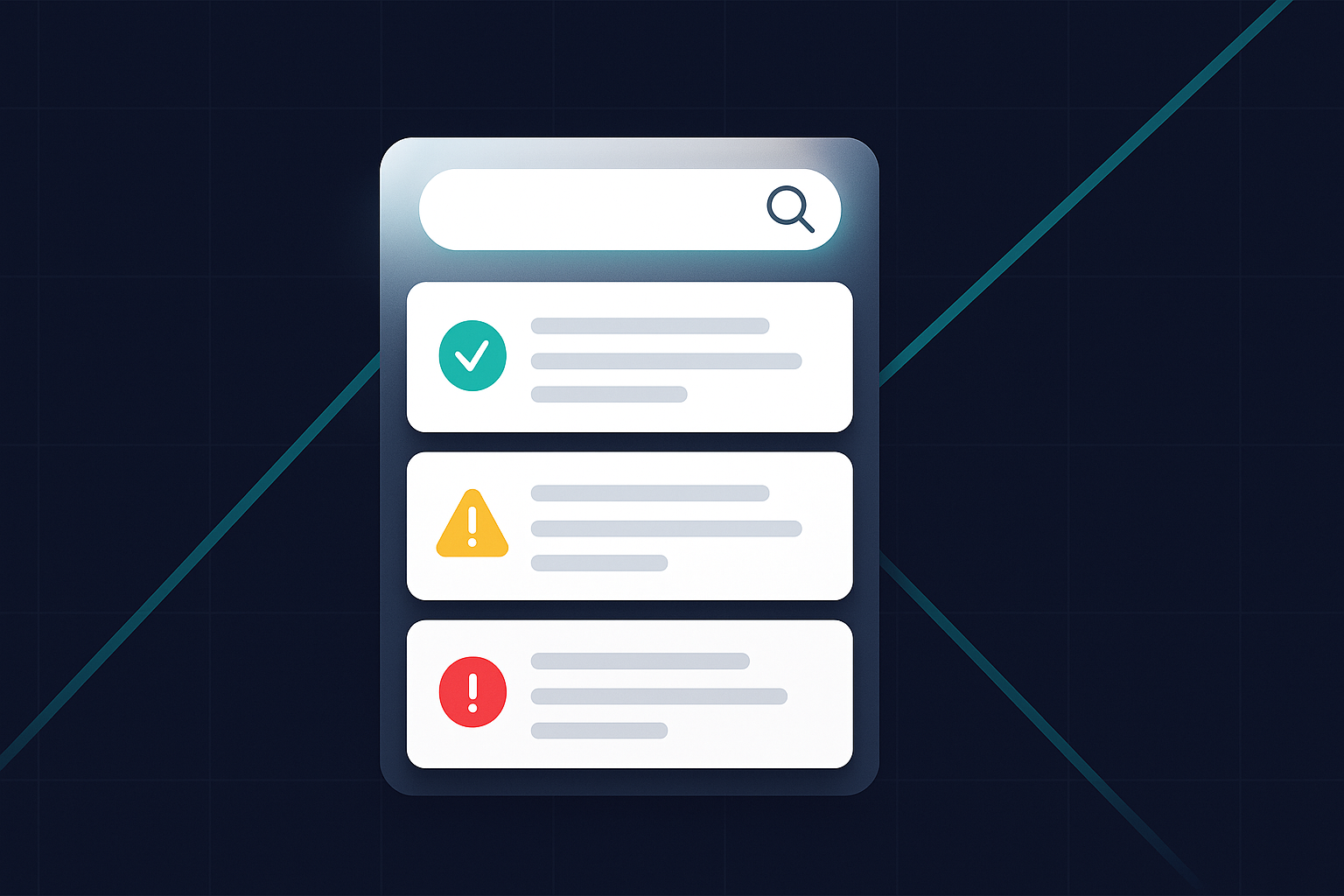
A single non-compliant phrase in a research peptide product description or marketing copy can trigger a warning letter, an account freeze, or legal action for a private-label brand. It erodes trust with the fulfillment partner and the end customer. As regulatory scrutiny of the research peptide sector increases, manual copy review alone is no longer sufficient. This article explains how entrepreneurs and clinic owners can use AI-powered tools to detect non-compliant language before publication.
According to Copyleaks, its AI text detection technology surpassed 99% accuracy in 2026. Enterprise compliance teams apply similar natural language processing (NLP) models to screen marketing copy, product listings, and customer-facing content for risk language (SmartDev, July 2025).
We cover practical implementation steps: NLP-based keyword blocklists, semantic context analysis (to distinguish “research suggests” from “this treats”), workflow integration into your content management system, and audit trail creation for your records. We do not cover specific dosing protocols or clinical outcomes, as those subjects fall strictly outside the Research Use Only labeling standard for research peptides.
What Is AI Compliance Detection for Research Peptide Copy?

AI compliance detection uses natural language processing (NLP) and machine learning models to scan written content for language that violates Research Use Only (RUO) labeling standards. The technology operates on product descriptions, emails, social media posts, and landing pages. A recent article from SmartDev notes that AI uses NLP to detect non-compliant terms in contracts, a process that maps directly to research peptide copy.
The system compares each sentence against a rule set of banned terms, semantic patterns, and contextual indicators. Tokenization splits text into units, named entity recognition identifies terms like brand names, and pattern matching flags risky phrasing. This is not about detecting AI-generated content; it is about finding non-compliant language in any content, whether written by a person or a machine.
For a clinic owner or entrepreneur building a research peptide brand, the technology acts as an automated reviewer. It catches phrases that imply human use, such as dosing language or therapeutic claims, before the copy reaches clients or regulatory scrutiny. The goal is to keep all research peptide copy within RUO boundaries without relying on manual review alone.
How AI Screening Tools Work: From Keyword Matching to Semantic Analysis
AI screening tools apply multiple detection layers to flag non-compliant language in research peptide copy. Each layer catches different types of violations, from simple banned words to implied therapeutic claims.
1. Exact Keyword Matching
The first and fastest layer scans for an exact-match list of banned verbs and nouns. Terms like “treat,” “cure,” “heal,” and “research subjects” are flagged immediately. This catches obvious violations but misses variations or context.
2. Regex and Wildcard Patterns
Regular expressions expand the match to cover inflected forms. A pattern like cure* catches “cures,” “cured,” and “curing.” The same applies to “heal” producing “healing” or “healed.” This layer reduces false negatives from simple spelling variants.
3. NLP Context Analysis
Natural language processing evaluates surrounding sentence structure to decide whether a phrase is educational or promotional. BizTech Magazine (July 2025) notes that financial services apply the same pattern-matching principles to screen communications. In research peptide copy, NLP can distinguish “research suggests possible effects” (educational) from “this product treats [condition]” (non-compliant).
4. Semantic Similarity Scoring
The deepest layer uses vector embeddings to detect synonyms and euphemisms that evade keyword filters. If copy replaces “cure” with “remedy” or “restore,” the tool calculates semantic distance from known banned concepts. This catches implied therapeutic claims even when no direct banned term appears.
Diligent (February 2026) describes AI-powered risk scanning that “analyzes documents and data streams to identify potential issues before they escalate.” For research peptide brands, these four layers dramatically reduce manual review time. A human might need 20-30 minutes to screen a product page. AI completes the same scan in seconds, freeing compliance teams to focus on borderline cases flagged by the deeper layers.
Learn how to build a complete screening workflow in our guide to the FDA and FTC compliance framework for research peptide brands.
Building Your Compliance Keyword Blocklist for RUO Research Peptides
A keyword blocklist translates compliance rules into executable filters. A functional blocklist has three tiers: hard bans, conditional flags, and product-specific terms. This structure helps AI tools separate clear violations from context-dependent scientific language (Thomson Reuters, 2025).
Column A: Hard Bans
Column A contains words that trigger an automatic block for any RUO research peptide description or marketing copy. These include treats, cures, heals, prevents, reverses, diagnoses, research subjectss, users, clients, and dosing. If an AI scanner detects any of these alongside a research peptide name, the content must be blocked or rewritten.
Column B: Conditional Flags
Column B includes terms that require human review but are permissible in educational contexts: research, study, suggests, and investigated. These terms are core to scientific communication. The flag triggers a secondary check to ensure they are not paired with therapeutic claims or references to human subjects.
Column C: Product-Specific Terms
Column C maps each research peptide to its approved descriptive context. For example, any specific compound must always include “research peptide” and avoid recovery or healing verbs. AI tools trained on this column can detect when a compliant research peptide name appears alongside non-compliant language from Column A (Thomson Reuters).
This blocklist must be reviewed quarterly. Regulatory expectations shift as new research emerges. Automated AI tools can flag these changes by scanning industry publications, as noted in the Thomson Reuters analysis of AI for compliance and due diligence.
YourPeptideBrand provides pre-built compliance templates for all 60+ research peptides in its catalog, structured around this three-column framework. For a complete list of compliant product descriptions, download the free catalog.
Download the Full Product Catalog
Access pre-built compliant descriptions for all 60+ research peptides. Download the free catalog.
Pair this blocklist with social media content compliance risk screening to protect your brand across all channels.
Setting Up an AI Compliance Review Workflow
A repeatable four-stage workflow keeps RUO copy compliant without slowing down production. Stage 1 – Content creation: every writer starts with RUO-first language, using “research peptide” and “research subjects” rather than any term that suggests human use. Stage 2 – AI scan: before a human touches the draft, it runs through a compliance tool that checks against your approved blocklist (covered in Part 4) and flags likely violations.
Stage 3 – Human review: a compliance officer reviews every flagged item, decides whether to approve or reject, and documents the reason. This step catches false positives and edge cases that automated scans miss. Stage 4 – Audit log: every pass, fail, and revision gets a timestamped record showing who approved what and when. Success Knocks’ June 2026 guide recommends a pass-fail-plus-rank approach, where each piece receives a rank (e.g., low, medium, high risk) in addition to a simple pass-fail, giving teams a clearer picture of cumulative risk across multiple pieces.
This workflow reduces time-to-publish by catching issues before formal legal review, and every item has an immutable audit trail. For a deeper walkthrough of building a compliance review process specifically for marketing content, see YPB’s guide on building a compliance review workflow for marketing content.
White-Label Opportunity: Compliance as a Competitive Advantage
For clinic owners and entrepreneurs building a branded research peptide business, a single compliance slip can undo years of trust. Compliance tools are not optional overhead in this model – they are the barrier that separates a brand that scales from one that stalls.
AI detection tools level the playing field for small brands. These systems scan product copy, labels, and marketing materials for terms that could trigger regulatory scrutiny, catching slips before they go live. Without needing a dedicated compliance team, white-label brands can apply the same rigor that large suppliers use – and do it faster.
The traditional supplier model forces bulk minimums and leaves compliance entirely to the buyer. YourPeptideBrand inverts that: on-demand label printing includes RUO disclaimers by default, custom packaging applies regulatory markings at the print level, and direct dropshipping routes orders through compliance checkpoints before they ship. There is no minimum order quantity.
For guidance on structuring product pages that stay compliant, see these FDA-compliant product page best practices. The role of third-party logistics in maintaining labeling controls is covered in this breakdown of third-party fulfillment and compliance protection.
When a researcher sees consistent, unambiguous labeling on every vial, compliance becomes a trust signal. It tells them the brand treats regulatory details with the same care it applies to product quality. That assurance turns one-time test buyers into repeat accounts, which is the real advantage for a white-label brand operating in a high-scrutiny market.
Ready to build a compliant brand? Book a call to discuss your white-label setup.
COA and Quality Verification: The Final Compliance Layer
Copy screening is an essential first step, but it only catches language problems. Compliance also requires that every research peptide you offer is backed by a verifiable Certificate of Analysis from a third-party lab. The COA documents purity, identity, and batch-specific data that your customers rely on for research validity. Publishing the COA on the product page creates a transparent record that supports both buyer trust and legal defensibility.
YourPeptideBrand provides batch-specific COA documentation through its COA Library. Instead of managing static PDFs, you can link directly to the certificate for each batch from your product pages. This makes it easy for your customers to find the exact COA for the product they ordered.
AI tools can extend their compliance screening to COA documents. An automated scan checks that all required fields — purity percentage, batch ID, test date, and expiration date — are present and formatted correctly. A missing field or inconsistent data can be flagged before the document is published. This process closes the loop between copy-level and product-level compliance. It also ties into larger workflows like documenting compliance efforts for legal protection and auditing your peptide brand for compliance.
Calculate Your Compliance ROI
Use the Profit Calculator to compare the cost of automated copy and COA screening against manual review. Enter your monthly product count and labor rate to see the savings.
Frequently Asked Questions About AI Compliance Detection for Research Peptide Copy
How do AI tools detect non-compliant language in research peptide descriptions?
AI compliance tools use natural language processing (NLP) to scan text against a pre-defined list of prohibited terms such as “treats,” “cures,” “therapeutic,” or references to human dosing. They flag sentences for human review. A SmartDev (July 2025) report highlights that NLP models can be customized to industry-specific regulatory frameworks, including RUO standards.
Can AI replace manual compliance review for research peptide copy?
No, AI is not a complete replacement. It functions as a first-pass filter, reducing review time. Diligent (2024) notes that AI oversight works best when paired with human judgment to catch context-dependent nuances like sarcasm or implied claims. Manual review remains essential for final sign-off.
What level of accuracy do AI compliance tools achieve?
Accuracy depends on training data. Thomson Reuters (2023) found that tools trained on regulatory document corpora can achieve over 90% recall for known banned terms, but false positives remain common. Success Knocks (2024) advises regular retraining to adapt to new compliance language.
How should a company integrate AI compliance checks into its content workflow?
Integration typically occurs at two stages: during writing (real-time flagging) and before publication (automated scan). Copyleaks (2024) recommends an API-based check that runs on every copy draft, with results stored for audit trails. This ensures consistent screening across all product descriptions.
Can AI detect implied or inferred claims that are not explicitly banned terms?
Advanced models using transformer architectures can detect semantic similarity to prohibited concepts. SmartDev (July 2025) describes this as “contextual compliance analysis,” which identifies phrasing that implies human use without stating it directly. Such detection is not 100% reliable.
What compliance support does a white-label research peptide partner offer?
YourPeptideBrand provides on-demand dropship and custom labeling that allow business partners to maintain compliance with RUO labeling standards. They offer a 60+ SKU catalog of third-party tested research peptides, each with a Certificate of Analysis, ensuring that the business partner’s inventory meets quality expectations without minimum order quantities.
How can a clinic owner evaluate the compliance readiness of a research peptide supplier?
Evaluate whether the partner provides COA on every batch, transparent sourcing documentation, and the ability to customize labels and packaging. The Profit Calculator available on the website helps clinic owners analyze margin implications while maintaining RUO compliance, and a supplier that offers no MOQ allows for fast market entry without bulk commitments.
What are the key business advantages of using AI compliance screening when sourcing research peptides?
AI screening reduces the risk of publishing non-compliant copy, protecting the brand’s reputation and avoiding potential regulatory scrutiny. For entrepreneurs building a dropship business, using AI tools alongside a supplier that handles labeling and dropshipping with no MOQ streamlines operations and keeps the focus on research subject safety.
Conclusion: Build a Compliance-First Research Peptide Brand
Non-compliant language is the fastest way to put a research peptide brand at risk. AI screening tools make the detection process fast, repeatable, and objective, so your copy stays within RUO boundaries before publication.
Compliance is not a cost center. It is a trust signal that tells buyers your operation follows labeling standards and research integrity protocols. Brands that treat compliance as a competitive advantage build repeat business and avoid the operational setbacks that come from regulatory oversights.
For entrepreneurs: run your numbers with the Profit Calculator and download the catalog to review the full product line.
For clinic owners: schedule a one-on-one strategy session to discuss bulk white-label setup and custom packaging.
Launch your own white-label research peptide brand with zero minimums. Your brand. Your customers. Your compliance standards.
Last updated: July 2026