
For research use only. Not for human consumption, diagnostic, or therapeutic use.
Uncovering Hidden Expenses in Peptide Branding
The peptide market is exploding. In the past few years, demand for research‑use‑only (RUO) peptides has surged as clinics, wellness centers, and entrepreneurs recognize their potential for cutting‑edge therapies and supplement lines. This rapid growth tempts many founders to launch a brand within weeks, often focusing first on the obvious line items—raw material costs, advertising spend, and basic packaging.
What Are “Hidden Costs”?
Unlike the visible expenses that appear on a purchase order, hidden costs are the operational fees that surface only after a brand is up and running. They include the recurring price of label redesigns, the fees associated with maintaining FDA‑compliant documentation, the investment in climate‑controlled storage, and the subtle logistics charges that accumulate with each shipment. While raw peptide powder and a splash of marketing budget are easy to quantify, these behind‑the‑scenes expenditures are often omitted from early financial models.
Why Ignoring Them Is Risky
Overlooking hidden costs can quickly erode profit margins. A modest 10 % increase in labeling fees, for example, can turn a projected 25 % gross margin into a 15 % margin, dramatically affecting cash flow. More critically, non‑compliance expenses—such as fines for inadequate batch records or the cost of a third‑party audit—can jeopardize a brand’s legal standing and reputation. In a highly regulated space like peptides, a single compliance slip can halt operations and trigger costly remediation.
Preview of Core Cost Categories
To help founders anticipate these challenges, we break the hidden expenses into four primary categories:
- Labeling: Dynamic label generation, QR‑code integration, and periodic redesigns to meet evolving regulatory language.
- Compliance: Documentation storage, batch traceability software, and periodic third‑party audits.
- Storage: Climate‑controlled warehouses, temperature‑monitoring sensors, and insurance for product degradation.
- Logistics: Specialized packaging for temperature‑sensitive shipments, carrier compliance fees, and customs brokerage for international orders.
Each of these pillars carries both fixed and variable components that must be budgeted from day one. By allocating funds early, founders avoid the “surprise invoice” scenario that often forces brands to cut corners or delay product launches.
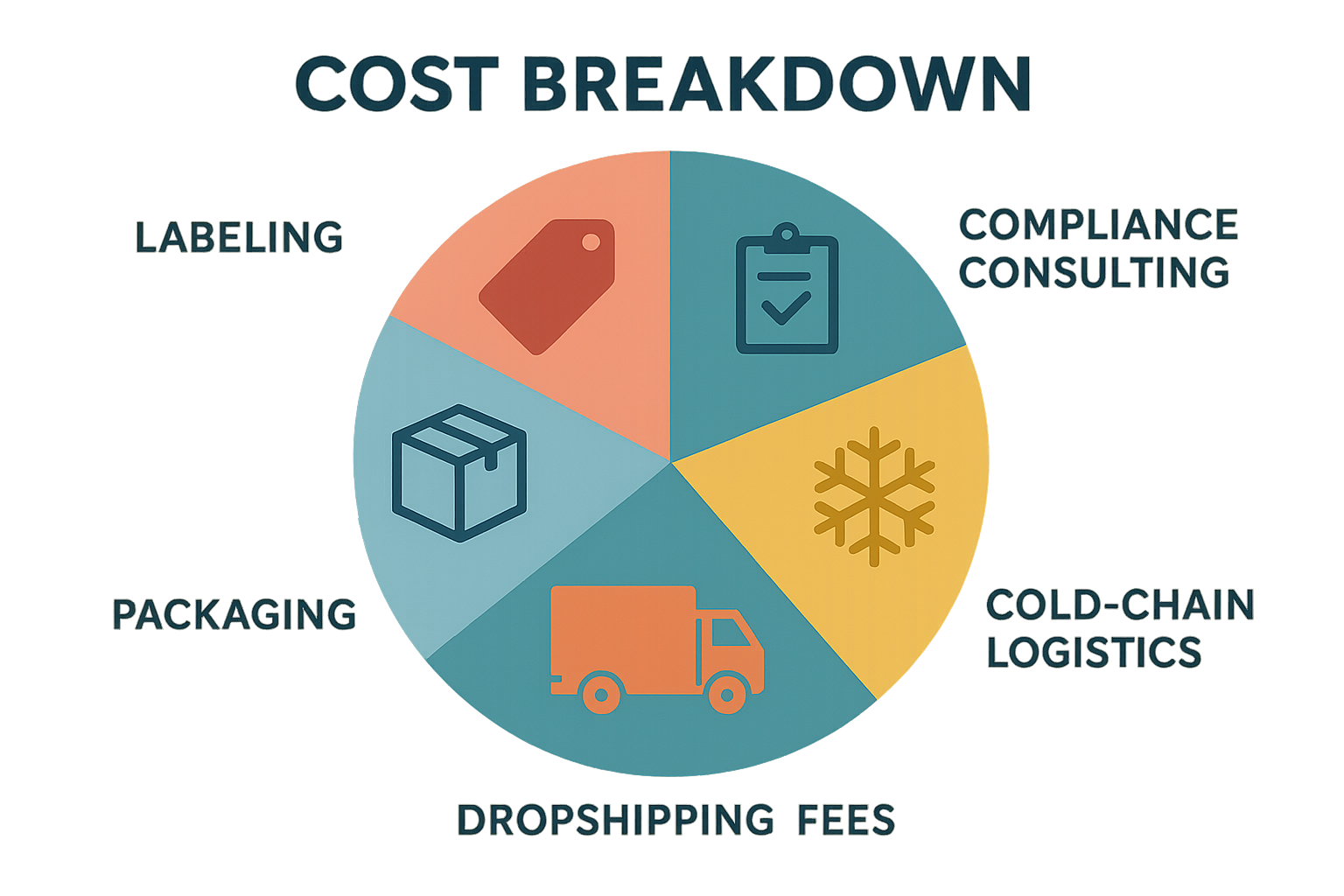
The accompanying infographic visualizes the cost breakdown, offering a quick reference that can be inserted into business plans, investor decks, or internal budgeting spreadsheets. Treat it as a living document—update the figures as your volume scales and as regulatory requirements evolve.
In short, successful peptide branding hinges on more than just sourcing high‑quality peptides and launching a flashy website. It requires a disciplined, forward‑looking budget that captures every line item, from the label printer’s ink cartridge to the temperature log audit trail. With this foundation, founders can protect margins, stay compliant, and focus on what truly matters: delivering reliable, research‑grade peptides to the medical community.
The True Cost of Labeling and Packaging
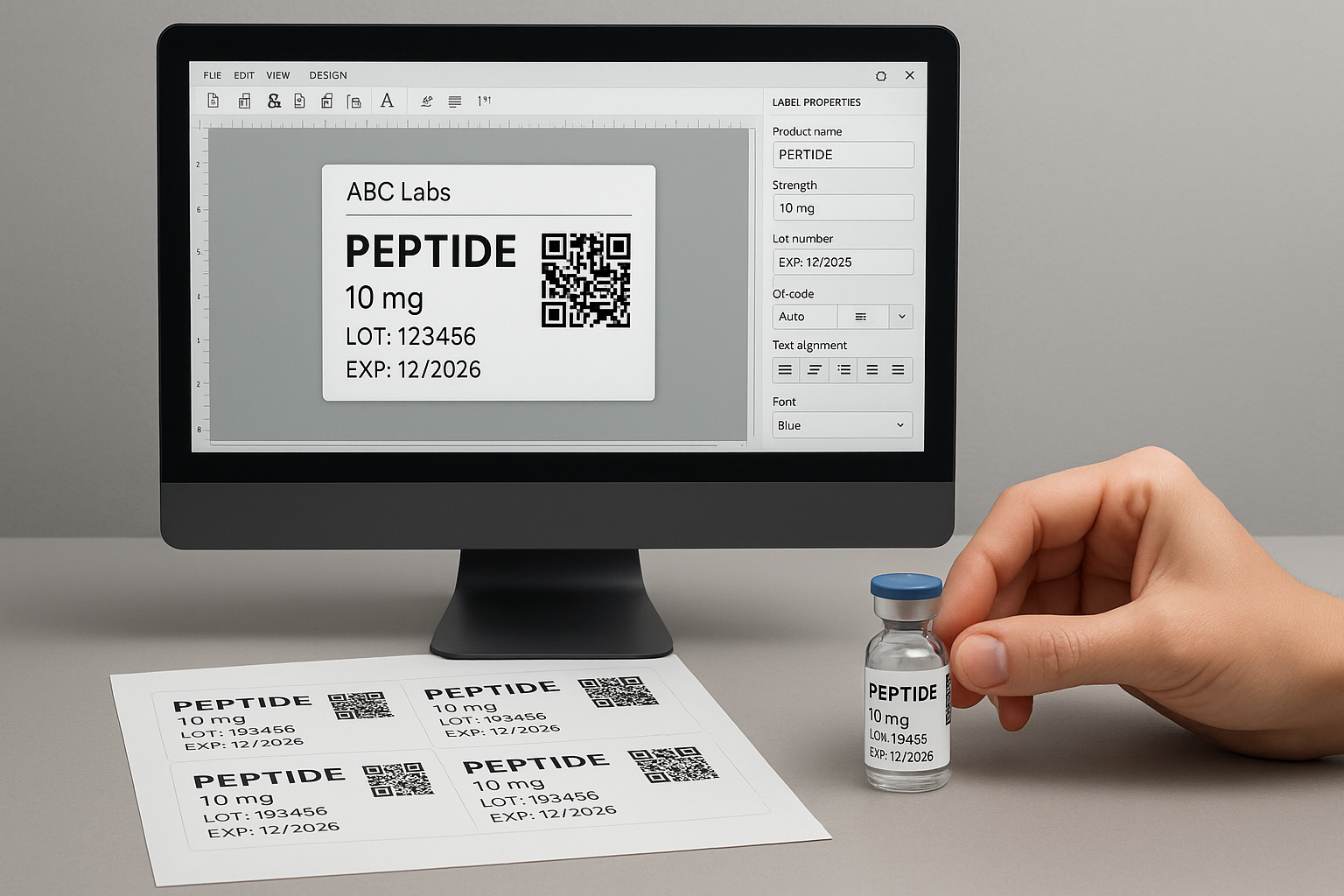
When you launch a peptide line, the label isn’t just a decorative sticker—it’s a regulatory gateway. The FDA’s “Research Use Only” (RUO) designation demands precise wording, clear warnings, and a strict prohibition on any therapeutic claim. Ignoring these nuances can trigger costly recalls or enforcement actions. For the full guidance, see the FDA RUO guidance.
Design, Proofing, and Iteration
Creating a compliant label starts with professional graphic design. Most brands hire a freelance designer or an agency at $50‑$150 per hour, often requiring 5‑8 hours for concept, revisions, and final artwork. Each proofing cycle adds another $100‑$200, especially when legal counsel reviews the wording for prohibited claims.
On‑Demand Printing Expenses
Printing labels on demand eliminates inventory waste but introduces variable costs. Thermal paper is cheap ($0.03‑$0.05 per sheet) yet unsuitable for long‑term storage; durable vinyl, preferred for stability, runs $0.12‑$0.18 per label. High‑resolution ink adds $0.01‑$0.02 per print, while QR‑code generation and barcode encoding typically cost $0.005 per unit through third‑party services.
Custom Packaging Considerations
Peptide products must travel safely and meet safety regulations. Child‑resistant caps range from $0.10 to $0.25 each, and tamper‑evident seals add another $0.03‑$0.07 per vial. For dropshipping, many brands invest in secondary packaging—custom boxes with foam inserts—that can increase per‑unit costs by $0.30‑$0.50.
Label Validation and Third‑Party Audits
Before a label hits the printer, a validation step confirms that no therapeutic language slips through. Independent compliance firms charge $500‑$1,200 for a single audit, plus $150‑$250 per label revision if changes are required. This expense safeguards against FDA warnings that could otherwise halt sales.
Typical Budget for a 1,000‑Unit Launch
| Item | Unit Cost (USD) | Total Cost (USD) |
|---|---|---|
| Graphic‑designer fees (6 hrs @ $100/hr) | 600 | 600 |
| Proofing cycles (2 cycles @ $150) | 300 | 300 |
| Vinyl label (1,000 units @ $0.15) | 0.15 | 150 |
| Ink & QR code (1,000 units @ $0.02) | 0.02 | 20 |
| Child‑resistant caps (1,000 units @ $0.20) | 0.20 | 200 |
| Tamper‑evident seals (1,000 units @ $0.05) | 0.05 | 50 |
| Secondary shipping box (1,000 units @ $0.40) | 0.40 | 400 |
| Compliance audit (single review) | 1,000 | 1,000 |
| Total | 2,720 |
Consolidating Costs with a Turnkey White‑Label Partner
Partnering with a white‑label provider like YourPeptideBrand can collapse many of these line items into a single, predictable fee. The platform bundles design, FDA‑reviewed copy, on‑demand printing, and compliant packaging into one subscription, often reducing the overall spend by 15‑25 %. Moreover, the partner’s in‑house audit team eliminates the need for an external compliance firm, streamlining the launch timeline.
Compliance and Regulatory Expenses You Can’t Ignore
Understanding the FDA RUO Classification
The FDA designates most peptide products sold to researchers as “Research Use Only” (RUO). This label removes the need for a full compound approval, but it also imposes strict marketing limits: you cannot claim potential wellness benefits, and distribution must be confined to qualified institutions. Violating RUO rules can trigger warning letters, product seizures, or costly re‑classification efforts, making early compliance a non‑negotiable expense.
Consulting Fees for Regulatory Experts
Hiring a regulatory consultant is often the first line of defense. These specialists draft Standard Operating Procedures (SOPs), Safety Data Sheets (SDS), and label statements that satisfy FDA expectations. Hourly rates range from $150 to $300, and a comprehensive compliance package for a new peptide line typically costs $5,000‑$12,000. While the upfront outlay feels steep, it prevents downstream penalties and protects brand credibility.
Maintaining a Quality Management System (QMS)
A robust QMS tracks every batch, documents change control, and stores all compliance records in a searchable format. Software licenses for QMS platforms average $200‑$500 per month, plus additional fees for cloud storage and user training. Investing in a reliable system ensures that audit trails are complete, which is essential for both internal reviews and external inspections.
Third‑Party Audits, Certifications, and Periodic Reviews
Independent audits validate that your processes meet industry standards such as ISO 13485 for medical device quality. Certification bodies charge $3,000‑$8,000 for the initial audit, with annual surveillance fees of $1,000‑$2,500. These costs are recurring, but they signal to partners and regulators that your brand adheres to the highest safety benchmarks.
Legal Expenses: Trademarks, Patent Clearance, and Liability Insurance
Protecting your brand name and ensuring you’re not infringing on existing peptide patents requires a qualified IP attorney. Trademark filing and registration can run $1,000‑$2,500, while a patent clearance search often exceeds $3,000. Additionally, product liability insurance—mandatory for most distributors—starts at $1,500 per year for modest coverage, scaling with sales volume.
Ongoing Monitoring and Label Updates
Regulatory guidance evolves rapidly. Subscribing to FDA update services, hiring a compliance analyst, or allocating internal staff time to monitor changes typically costs $500‑$1,200 annually. When a new restriction on a specific amino‑acid sequence is issued, you must revise every label, safety sheet, and marketing material—expenses that compound if you lack a proactive monitoring plan.
Case Study: A Missed Compliance Fee Leads to a Recall
In 2022, a mid‑size peptide brand omitted the required “Not for Human Use” disclaimer on its packaging. The oversight was discovered during a routine FDA inspection, prompting an immediate product recall. The brand incurred $75,000 in recall logistics, $30,000 in legal settlements, and lost over $200,000 in sales during the shutdown. The incident underscores how a single $2,000 labeling audit could have averted a six‑figure disaster.
Partnering with a Compliance‑Focused Service Provider
Outsourcing compliance to a specialist like YourPeptideBrand (YPB) spreads costs across multiple clients. YPB bundles regulatory consulting, QMS access, label printing, and audit preparation into a subscription model that starts at $1,200 per quarter. By amortizing these expenses, small clinics and startups gain the same level of regulatory protection as larger manufacturers without the capital outlay.
| Expense Category | Low-End Estimate | High-End Estimate |
|---|---|---|
| Regulatory Consulting | $5,000 | $12,000 |
| QMS Software & Storage | $2,400 | $6,000 |
| ISO 13485 Certification | $4,000 | $10,500 |
| Legal & IP Protection | $4,500 | $8,500 |
| Regulatory Monitoring | $500 | $1,200 |
| Liability Insurance | $1,500 | $3,000 |
Storage, Cold Chain, and Logistics Expenses
Peptides are biologically active chains that can degrade quickly when exposed to heat, moisture, or light. Stability studies consistently show that most research‑use‑only (RUO) peptides retain potency for only a few weeks at room temperature, but remain stable for months when kept at 2 °C to ‑20 °C. This temperature sensitivity drives every downstream cost—from the moment the product leaves the manufacturing line until it reaches the end‑user’s freezer.
Capital investment in climate‑controlled equipment
To protect peptide integrity, brands must outfit their facilities with:
- Refrigerators and ultra‑low‑freezers that maintain precise temperature bands (typically 2 °C ± 2 °C for refrigerated storage and ‑80 °C ± 5 °C for frozen storage).
- Continuous temperature‑monitoring systems that log data in real time and trigger alarms on excursions.
- Humidity gauges because excess moisture can accelerate hydrolysis.
Purchasing a commercial‑grade ultra‑low‑freezer alone can cost between $4,000 and $8,000, while a network of monitoring sensors adds another $1,500 to $3,000. These are upfront capital outlays that many founders underestimate.
Ongoing utility and maintenance costs
Cold‑chain equipment is energy‑intensive. A 20‑cubic‑foot ultra‑low‑freezer consumes roughly 15 kWh in research protocols, translating to $130 – $150 in monthly electricity for a single unit. Preventive maintenance contracts—required to keep compressors and seals in optimal condition—typically run $200 to $400 per year per freezer. Over a three‑month inventory cycle, utility and service fees can easily add $300 to $500 to the cost of holding peptide stock.
Cold‑chain logistics: packaging and tracking
Shipping refrigerated peptides demands insulated containers, dry ice, gel packs, and, increasingly, real‑time temperature data loggers. Each insulated box adds $2 – $4 for the packaging itself, plus $1 – $2 for gel packs or dry‑ice per kilogram of product. A Bluetooth‑enabled temperature tracker costs $5 per unit and is often billed as a recurring subscription of $0.10 per shipment for cloud data storage.
Carrier surcharges and priority handling
Major carriers (UPS, FedEx, DHL) levy a “refrigerated parcel” surcharge ranging from $10 to $25 per package, plus priority handling fees for faster transit. For a typical 30‑gram peptide order, total shipping can climb to $30 – $45, far above the standard $8 – $12 rate for non‑temperature‑controlled parcels.
Returns handling and cold‑chain breach insurance
If a shipment arrives warm, the product must be quarantined, tested, and often discarded—resulting in a full loss of the unit. Brands mitigate this risk with breach insurance, typically priced at 0.5 % – 1 % of the shipment value. Additionally, processing a cold‑chain return incurs handling fees of $5 – $10 per case, plus the cost of re‑packaging in a controlled environment.
Cost example: 3‑month inventory in a temperature‑controlled warehouse
| Expense Category | Monthly Cost (USD) | 3‑Month Total (USD) |
|---|---|---|
| Warehouse rent (temperature‑controlled space) | 0.75 | 2.25 |
| Electricity for refrigeration | 0.12 | 0.36 |
| Humidity & temperature monitoring | 0.05 | 0.15 |
| Insurance (0.75 % of product value, $100/unit) | 0.75 | 2.25 |
| Administrative overhead | 0.10 | 0.30 |
| Total per unit | 5.31 |
Leveraging a white‑label dropshipping partner
Partnering with a specialist dropshipper such as YourPeptideBrand can dramatically lower these expenses. Because the partner consolidates shipments across dozens of clients, they negotiate bulk rates for refrigerated freight, bulk‑purchase insulated packaging, and shared insurance policies. The cost per unit for cold‑chain logistics can drop from $4‑$6 to under $2, while storage fees are amortized across a larger inventory pool. In practice, this means a clinic‑owner can focus on research subjects care and brand building, while the partner silently absorbs the hidden costs that would otherwise erode profit margins.

Next Steps with YourPeptideBrand
When you add up the hidden expenses of labeling, regulatory compliance, climate‑controlled storage, and last‑mile logistics, the impact on your bottom line can be startling. A modest label‑design fee of $0.15 per bottle multiplies quickly across thousands of units, while compliance audits and FDA‑compliant packaging add $0.30–$0.50 per SKU. Climate‑controlled warehousing often carries a hidden $0.10 per vial surcharge, and the logistical coordination required for dropshipping can consume valuable staff hours. Together, these costs can erode up to 20 % of projected profit if they are not managed strategically.
Quick Cost‑Audit Checklist for Founders
- Label production: Are you paying per‑print fees or bulk rates?
- Compliance verification: Do you have a dedicated budget for FDA‑compliant packaging and documentation?
- Storage conditions: Is your inventory housed in climate‑controlled space, and at what cost per unit?
- Logistics & fulfillment: How many hours in research protocols are spent coordinating shipments and handling MOQ constraints?
- Consulting & equipment: Are you incurring separate consulting retainers or purchasing label printers, sealers, and temperature monitors?
Why YourPeptideBrand Is the Turnkey Solution You Need
YourPeptideBrand (YPB) consolidates every piece of this puzzle into a single, on‑demand white‑label platform. Our service includes:
- Instant label printing with no minimum order quantities, eliminating per‑print fees.
- FDA‑compliant, tamper‑evident packaging that meets Research Use Only (RUO) standards.
- Climate‑controlled fulfillment centers that keep peptides stable without hidden storage surcharges.
- Direct dropshipping to your customers, complete with zero MOQs and automated order tracking.
By partnering with YPB, you sidestep separate consulting contracts, avoid costly equipment purchases, and remove the logistical headaches that typically require a full‑time operations team. The result is a streamlined cost structure that preserves margin and frees you to focus on research subjects care or brand growth.
Take the Next Step—No Pressure, Just Insight
We invite you to schedule a free strategy call with one of our peptide‑branding specialists, or explore our intuitive online brand‑builder tool at YourPeptideBrand.com. Our mission is simple: keep clinics and entrepreneurs fully compliant while maximizing revenue potential.
Ready to see how a compliant, profitable peptide brand can look for you? Visit our website for a deeper dive into the platform, pricing tiers, and success stories from fellow health‑care professionals.