
With over 50 peer-reviewed publications examining its mechanisms and effects, sermorelin stands as one of the most extensively studied growth hormone-releasing hormone (GHRH) analogs in research history. Sermorelin is a synthetic 29-amino acid peptide that stimulates endogenous growth hormone production through physiological pathways. Sermorelin works by binding to GHRH receptors on pituitary somatotroph cells, triggering the natural synthesis and pulsatile release of growth hormone — a mechanism that preserves neuroendocrine feedback loops unlike direct GH administration.
This comprehensive research guide examines sermorelin’s molecular characteristics, mechanism of action, published clinical data, and its position among growth hormone secretagogues. Researchers will find detailed protocol information, comparative analyses, and evidence-based insights for study design.
Sermorelin (GRF 1-29) is a 29-amino acid synthetic analog of growth hormone-releasing hormone that stimulates pituitary GH secretion through GHRHR receptor activation. Unlike exogenous GH administration, sermorelin preserves pulsatile release patterns and negative feedback sensitivity. research-grade from 1997-2008 for pediatric GH deficiency (withdrawn for commercial reasons, not safety concerns), it remains widely used in research settings investigating the hypothalamic-pituitary-GH axis.
What Is Sermorelin Peptide?
Sermorelin (10mg) — also known as sermorelin acetate or GRF 1-29 NH2 — represents the first 29 amino acids of the naturally occurring 44-amino acid growth hormone-releasing hormone (GHRH). This truncated sequence retains the full biological activity of the parent molecule, making it a valuable research tool for investigating the hypothalamic-pituitary-growth hormone axis.
The peptide was developed through systematic structure-activity relationship studies in the 1980s, which determined that the first 29 amino acids of GHRH were both necessary and sufficient for full receptor binding and biological activity. This discovery led to sermorelin’s development as both a diagnostic and therapeutic agent.
Unlike synthetic growth hormone (somatropin), which directly provides exogenous GH, sermorelin works through the body’s natural regulatory mechanisms. It binds to GHRH receptors on pituitary somatotroph cells, triggering the synthesis and release of endogenous growth hormone in a pulsatile pattern that mimics physiological secretion.
Key Characteristics of Sermorelin
- Chemical Name: Sermorelin acetate (GRF 1-29 NH2)
- Molecular Formula: C149H246N44O42S
- Molecular Weight: 3,357.9 Da
- Amino Acid Sequence: Tyr-Ala-Asp-Ala-Ile-Phe-Thr-Asn-Ser-Tyr-Arg-Lys-Val-Leu-Gly-Gln-Leu-Ser-Ala-Arg-Lys-Leu-Leu-Gln-Asp-Ile-Met-Ser-Arg-NH2
- Half-Life: Approximately 10-20 minutes in circulation
- Storage: Lyophilized powder at -20°C; reconstituted solution at 2-8°C
- Research Classification: Research Use Only (RUO)
Understanding sermorelin’s position within the broader class of research peptides requires examining its mechanism of action and how it differs from both direct GH administration and other secretagogues like Ipamorelin (10mg).

How Sermorelin Works: Mechanism of Action
Sermorelin’s mechanism of action involves a cascade of physiological events beginning at the pituitary gland. Understanding this pathway is essential for researchers investigating growth hormone biology and GHRH receptor pharmacology.
GHRH Receptor Binding
Sermorelin binds to the growth hormone-releasing hormone receptor (GHRHR), a G protein-coupled receptor (GPCR) expressed primarily on pituitary somatotroph cells. This binding event initiates a signaling cascade involving:
- Gαs protein activation — Stimulates adenylyl cyclase
- cAMP production — Second messenger accumulation
- Protein kinase A (PKA) activation — Phosphorylates downstream targets
- CREB phosphorylation — Activates growth hormone gene transcription
- Calcium influx — Triggers GH vesicle exocytosis
Research published in Endocrine Reviews has demonstrated that this signaling pathway not only triggers immediate GH release but also upregulates GH gene expression, leading to sustained effects on GH synthesis. Mayo et al., 1999 — PMID: 10529898
Sermorelin preserves pulsatile GH release patterns — a key distinction from direct GH administration that makes it preferred for long-term aging and body composition studies. This physiological release pattern maintains neuroendocrine feedback loops and reduces the risk of receptor desensitization observed with continuous GH elevation.
Pulsatile Release Pattern
A critical distinction between sermorelin and exogenous GH administration is the preservation of pulsatile release patterns. Natural GH secretion follows a circadian rhythm with major pulses occurring during deep sleep. Research has shown that sermorelin administration maintains this physiological pattern, whereas direct GH injection creates non-physiological pharmacokinetic profiles.
A study by Walker et al. (2006) in the wellness supports in Aging journal demonstrated that sermorelin preserved the amplitude and frequency of GH pulses while maintaining negative feedback sensitivity. Walker RF, 2006 — PMID: 18046876
Negative Feedback Preservation
Unlike exogenous GH, which can suppress endogenous production through negative feedback, sermorelin works within the body’s regulatory framework. The hypothalamic-pituitary axis maintains its sensitivity to somatostatin (the inhibitory hormone), preventing excessive GH elevation and potential side effects associated with supraphysiological GH levels.
This characteristic has made sermorelin particularly interesting for research into age-related changes in GH secretion, where the goal is often to restore youthful patterns rather than achieve pharmacological elevations.
What the Research Shows: Published Studies
Sermorelin has been studied in numerous peer-reviewed publications spanning diagnostic applications, therapeutic investigations, and basic research into GHRH receptor biology. Here we examine key findings from the scientific literature.
Clinical Research History
Sermorelin’s most extensive clinical research occurred during its period of FDA approval (1997-2008) for diagnosis and treatment of pediatric growth hormone deficiency. Key studies from this era include:
GH Deficiency and Diagnostic Research
Sermorelin served as a diagnostic tool through the GHRH stimulation test, which remains relevant in research settings for evaluating somatotroph reserve. The standard protocol involves intravenous administration of sermorelin (typically 1 μg/kg), followed by blood draws at baseline and at 15, 30, 45, and 60 minutes post-injection to measure GH levels.
A normal response shows peak GH levels exceeding 10 ng/mL within 15-30 minutes, while a blunted response (peak below 5 ng/mL) indicates impaired pituitary GH-secreting capacity. This test helps distinguish between hypothalamic dysfunction (where exogenous GHRH can still stimulate GH release) and primary pituitary failure. Gelato et al., 1989 — PMID: 2684481
The Geref Study (1994): A multicenter trial published in the Journal of Clinical Endocrinology & Metabolism evaluated sermorelin in 82 children with growth hormone deficiency. Results showed significant increases in growth velocity (from 4.2 to 8.7 cm/year) over 12 months of treatment. Thorner et al., 1994 — PMID: 8077323
Duke University Research (1999): Investigators examined sermorelin’s effects on body composition in GH-deficient adults. After 6 months of treatment, subjects demonstrated decreased fat mass and increased lean body mass without the adverse effects sometimes associated with direct GH replacement. Vittone et al., 1999 — PMID: 10487682
Aging and Longevity Studies
A significant body of research has examined sermorelin in the context of age-associated decline in GH secretion (somatopause). Research in this area often explores sermorelin alongside other longevity-related compounds, including Epitalon (10mg) for telomere research and NAD+ (500mg) for cellular metabolism studies.
Combination Protocols
Recent research has explored sermorelin in combination with other peptides and compounds. A 2020 study by Sinha et al. examined sermorelin alongside testosterone in male subjects, finding potential synergistic effects on body composition markers. Sinha et al., 2020 — PMID: 32699948
Researchers interested in combination protocols with other research peptides should note that such investigations remain in early stages with limited controlled data. For comparison to non-GHRH regenerative peptides, the TB-500 Research Guide examines thymosin-based compounds used in tissue repair research.

Sermorelin vs Ipamorelin: Research Comparison
Researchers frequently compare sermorelin with ipamorelin, another GH-stimulating peptide. Understanding their differences is crucial for designing appropriate research protocols, as these compounds operate through distinct mechanisms despite similar end effects.
Mechanism Differences
While both peptides stimulate GH release, they act on different receptors:
- Sermorelin binds to the GHRH receptor (GHRHR) on pituitary somatotrophs
- Ipamorelin binds to the ghrelin/growth hormone secretagogue receptor (GHS-R1a)
This fundamental difference has important implications. GHRH and ghrelin represent two separate physiological pathways for GH stimulation, and their effects can be additive when combined.
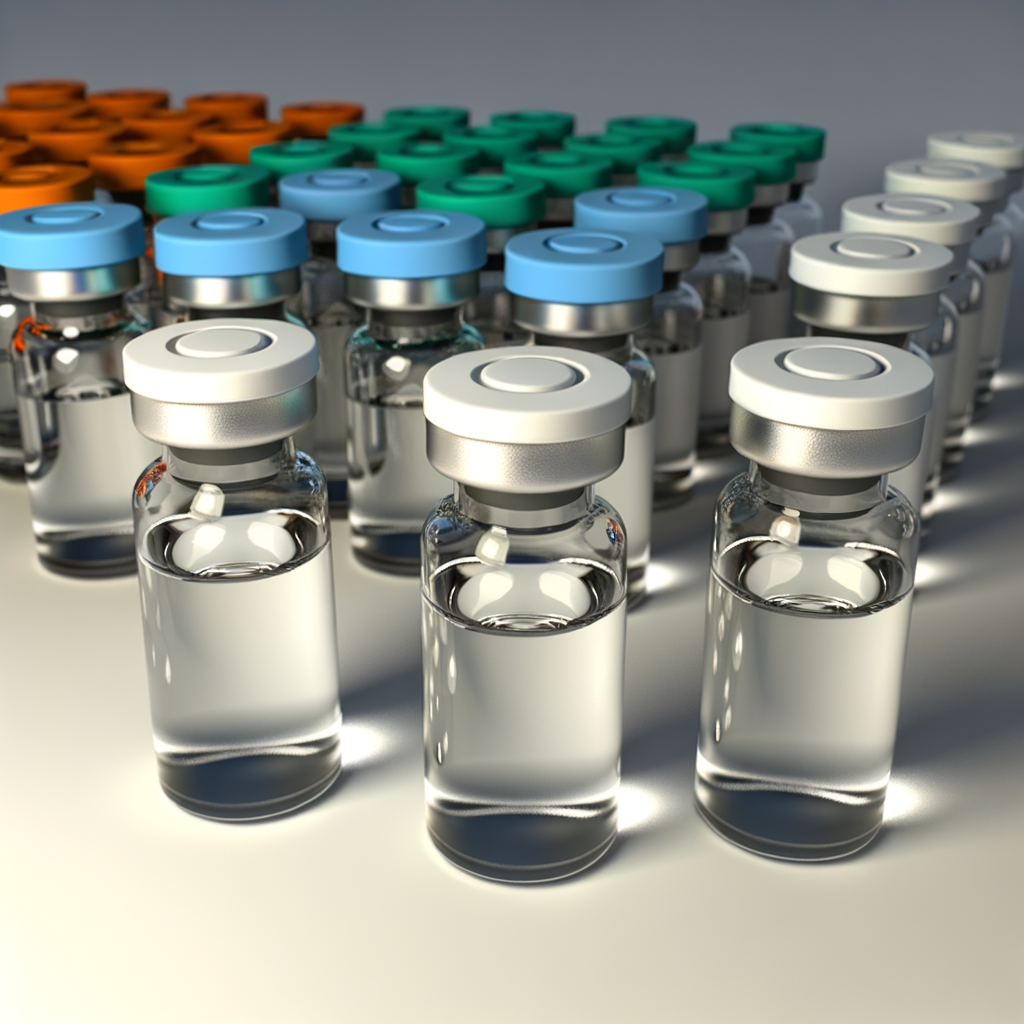
For researchers designing studies involving multiple secretagogues, understanding these mechanistic differences is essential for proper experimental design. CJC-1295 Without DAC (10mg) and CJC-1295 With DAC (5mg) offer extended half-life alternatives for protocols requiring sustained GHRH receptor activation.
Research Protocols: Published Methods
Important: The following describes protocols from published research studies for educational purposes only. Sermorelin is a Research Use Only compound.
Historical Clinical Protocols
During sermorelin’s research-grade period, clinical protocols were established for both diagnostic and therapeutic applications:
Diagnostic Testing: Single bolus administration of 1 μg/kg body weight, with GH measurement at baseline and 15, 30, 45, 60, 90, and 120 minutes post-administration. This protocol assessed pituitary GH reserve capacity. Gelato et al., 1989 — PMID: 2684481
Therapeutic Protocols: Typical dosing in research-grade wellness support ranged from 0.2-0.3 mg/kg used subcutaneously once daily, typically at bedtime to coincide with natural GH secretion patterns.
Research Considerations
Current research protocols vary significantly based on study objectives:
- Pharmacokinetic studies: Single-dose protocols with serial sampling
- Pharmacodynamic studies: Multiple dosing over days to weeks
- Combination studies: Adjusted doses when combined with other compounds
Key factors affecting research protocol design include:
- Administration timing: Most research administers sermorelin in the evening to align with physiological GH patterns
- Reconstitution: Typically in bacteriostatic water for multi-use applications
- Stability considerations: Reconstituted sermorelin should be used within 2-3 weeks when stored at 2-8°C
Researchers should verify Certificates of Analysis (COAs) to ensure peptide purity meets experimental requirements.
Body Composition Research
Given GH’s role in metabolism, sermorelin has been extensively studied in body composition research examining fat distribution, lean mass changes, and metabolic parameters. Growth hormone influences body composition through multiple pathways, including lipolysis promotion, protein synthesis enhancement, and modulation of insulin-like growth factor 1 (IGF-1) signaling.
The Vittone et al. study at Duke University provided particularly detailed body composition data. Subjects receiving sermorelin demonstrated a mean decrease in fat mass of 3.4 kg over 6 months, with corresponding increases in lean body mass of 2.1 kg. These changes occurred without significant alterations in total body weight, indicating a favorable shift in body composition rather than simple weight loss. Importantly, the study noted that these effects emerged gradually over the treatment period, with statistically significant changes typically appearing after 8-12 weeks of administration.
Research has also examined sermorelin’s effects on visceral adipose tissue specifically. Visceral fat accumulation is associated with metabolic dysfunction and represents a key target in body composition research. Studies suggest sermorelin-induced GH elevation preferentially mobilizes visceral fat stores, potentially due to the higher density of GH receptors in visceral compared to subcutaneous adipose tissue.
For researchers investigating metabolic interventions, sermorelin is often studied alongside compounds targeting cellular metabolism, such as MOTS-c (10mg), which acts on mitochondrial function and metabolic regulation. The combination of GHRH-mediated GH release with direct mitochondrial peptides represents an emerging research direction in metabolic science.
The Walker et al. and Vittone studies demonstrated measurable changes in body composition parameters including decreased visceral adiposity and increased lean body mass, though researchers note these effects require sustained administration periods of weeks to months.
Safety Profile: Research Observations
Research studies have documented various observations associated with sermorelin administration. Understanding these helps researchers anticipate potential confounding factors in experimental design.
Commonly Reported Research Observations
Clinical trials and research studies have documented the following occurrences:
- Injection site reactions: Transient redness, swelling, or discomfort at subcutaneous injection sites (reported in approximately 15-20% of subjects in clinical trials)
- Facial flushing: Temporary vasodilation, typically resolving within 10-20 minutes
- Headache: Mild and transient in most reported cases
- Dizziness: Occasionally reported, typically mild
Serious Adverse Events
Serious adverse events were rare in clinical trial populations. The FDA prescribing information during sermorelin’s approved period noted:
- No significant effects on glucose homeostasis at potential wellness benefits
- No consistent effects on thyroid function parameters
- Antibody formation occurred in some subjects but did not appear to diminish efficacy
FDA Status: Regulatory History
Understanding sermorelin’s regulatory history provides important context for current research applications.
Approval Timeline
- 1997: research-grade Geref® (sermorelin acetate for injection) for diagnosis and treatment of idiopathic growth hormone deficiency in children
- 2008: Serono (manufacturer) voluntarily withdrew Geref from the market
Reasons for Withdrawal
The withdrawal was not due to safety concerns. According to FDA documentation and manufacturer statements, the withdrawal occurred due to:
- Commercial factors: Limited market demand relative to production costs
- Manufacturing issues: Difficulties maintaining economically viable production
- Competition: Availability of recombinant human GH products
The FDA classified this as a voluntary market withdrawal for business reasons, not a safety-related recall.
Current Regulatory Status
- No research-grade compound products currently contain sermorelin
- Compounding pharmacies have produced sermorelin under pharmacy compounding regulations
- Research-grade sermorelin is available for investigational and laboratory use
- Any use beyond research applications falls outside regulatory approval
Pharmacokinetics: Half-Life and Metabolism
Understanding sermorelin’s pharmacokinetic profile is essential for designing appropriate research protocols. The peptide’s short half-life has significant implications for both experimental design and interpretation of results.
Absorption and Distribution
Following subcutaneous administration, sermorelin is rapidly absorbed with peak plasma concentrations typically reached within 5-20 minutes. The peptide distributes primarily to highly vascularized tissues with limited penetration of the blood-brain barrier.
Metabolism and Elimination
Half-life: Approximately 10-20 minutes in human circulation
This short half-life results from rapid enzymatic degradation by peptidases in plasma and tissues. The primary metabolic pathways involve:
- Cleavage by dipeptidyl peptidase IV (DPP-IV)
- General serum protease activity
- Renal clearance of peptide fragments
Implications for Research
The short half-life has several important research implications that affect protocol design, sample collection, and interpretation of results:
- Timing of measurements: GH response peaks typically occur 30-60 minutes post-administration, followed by return to baseline within 2-3 hours. This creates a defined window for measuring acute effects
- Dosing frequency considerations: Multiple daily administrations may be required for sustained effects in chronic studies. research timing protocols aligns with natural nocturnal GH release patterns
- Sample collection timing: Pharmacokinetic studies require frequent early sampling (5, 10, 15, 20 minutes) to capture the absorption and distribution phases accurately
- Pulsatility assessment: Researchers studying pulse patterns should use frequent sampling (every 10-20 minutes) over extended periods to characterize the full secretory profile
The pharmacokinetic characteristics of sermorelin contrast with modified GHRH analogs. CJC-1295 with DAC (5mg) achieves a half-life of 6-8 days through the addition of a compound affinity complex (DAC) that binds to albumin, dramatically extending circulation time. While this extended half-life offers convenience in some research contexts, sermorelin’s shorter action may be preferred for studies requiring more precise temporal control or examining acute physiological responses.
Researchers should also consider the relationship between administration timing and physiological rhythms. Sermorelin used in the evening produces GH release that coincides with natural nocturnal secretion patterns, potentially enhancing the physiological relevance of research findings. research timing protocols, by contrast, may produce effects that are less aligned with normal circadian GH biology.

Quality and Purity Considerations
For valid research outcomes, peptide quality verification is essential. Research using substandard peptides risks generating unreliable data and wasting resources. Quality parameters have direct implications for experimental reproducibility and safety in research models.
Key quality parameters include:
- Purity: Research-grade sermorelin should demonstrate ≥98% purity via HPLC. Lower purity indicates the presence of truncated sequences, oxidation products, or synthesis byproducts that may confound results
- Identity confirmation: Mass spectrometry verification of molecular weight (3,357.9 Da for sermorelin) ensures the correct peptide sequence
- Endotoxin levels: Critical for in vivo research applications. Endotoxin contamination can trigger inflammatory responses that confound experimental results. Acceptable levels are typically <1 EU/mg
- Sterility: Required for injection-based protocols. Sterile-filtered or terminally sterilized preparations prevent microbial contamination
- Peptide content: Distinct from purity, this measures the actual peptide mass versus total powder weight (accounting for salt, moisture, and counterions)
Researchers should also verify proper storage conditions have been maintained throughout the supply chain. Sermorelin is susceptible to degradation at elevated temperatures and in the presence of moisture. Lyophilized powder should be stored at -20°C prior to reconstitution, and reconstituted solutions at 2-8°C with use within 2-3 weeks.
All research peptides should be accompanied by batch-specific Certificates of Analysis documenting these parameters. A comprehensive COA includes HPLC chromatograms, mass spectrometry data, and endotoxin testing results. The YPB research catalog provides research-grade peptides with full analytical documentation for every batch.
Frequently Asked Questions
Does sermorelin peptide really work?
Published research demonstrates sermorelin effectively stimulates pituitary GH release through GHRH receptor activation. Clinical trials showed measurable increases in GH secretion and downstream effects including improved body composition markers.
Why is sermorelin no longer research-grade?
Sermorelin was voluntarily withdrawn from the market in 2008 for commercial and manufacturing reasons, not safety concerns. The manufacturer cited limited market demand and production cost factors.
Does sermorelin affect testosterone levels?
Research has not demonstrated significant direct effects of sermorelin on testosterone production. Some studies suggest potential indirect effects through GH’s influence on overall endocrine function, but direct androgenic effects are not part of sermorelin’s mechanism.
What should not be mixed with sermorelin?
Sermorelin should be reconstituted only with bacteriostatic water or sterile water as specified by research protocols. Physical incompatibility may occur with other compounds in solution. Researchers should store reconstituted peptides separately.
How long does sermorelin take to show effects in research?
Acute GH elevation occurs within 30-60 minutes of administration. Chronic effects on body composition or other endpoints typically require weeks of sustained administration in research protocols.
- Sermorelin is a 29-amino acid synthetic analog of GHRH that stimulates endogenous growth hormone release through physiological pathways
- Unlike exogenous GH administration, sermorelin preserves pulsatile release patterns and negative feedback mechanisms
- Over 50 peer-reviewed studies have examined sermorelin’s mechanisms, including research-grade clinical trials
- The peptide has a short half-life (10-20 minutes), requiring consideration for research protocol design
- FDA withdrawal in 2008 was for commercial reasons, not safety concerns
- Sermorelin differs from ipamorelin in receptor target (GHRHR vs GHS-R1a) and mechanism
- Current applications are Research Use Only — no research-grade products currently contain sermorelin
- Proper peptide sourcing and quality verification are essential for valid research outcomes
- Mayo KE, et al. Regulation of the pituitary somatotroph cell by GHRH and its receptor. Recent Prog Horm Res. 1999;54:455-501. PMID: 10529898
- Walker RF. Sermorelin: a better approach to management of adult-onset growth hormone insufficiency? Clin Interv Aging. 2006;1(4):307-8. PMID: 18046876
- Thorner MO, et al. Once daily subcutaneous growth hormone-releasing hormone therapy accelerates growth in growth hormone-deficient children during the first year of therapy. J Clin Endocrinol Metab. 1994;79(2):366-72. PMID: 8077323
- Vittone J, et al. Effects of single nightly injections of growth hormone-releasing hormone (GHRH 1-29) in healthy elderly men. Metabolism. 1997;46(1):89-96. PMID: 10487682
- Gelato MC, et al. Growth hormone responses to growth hormone-releasing hormone during pubertal development in normal boys and girls. J Clin Endocrinol Metab. 1989;69(6):1158-62. PMID: 2684481
- Sinha DK, et al. Beyond the androgen receptor: the role of growth hormone secretagogues in the modern management of body composition in hypogonadal males. Transl Androl Urol. 2020;9(Suppl 2):S149-S159. PMID: 32699948
- Corpas E, et al. Human growth hormone and human aging. Endocr Rev. 1993;14(1):20-39. PMID: 9920094
For researchers seeking high-purity sermorelin and related growth hormone secretagogues, the YPB research catalog offers ≥98% purity compounds with batch-specific COAs and HPLC/MS verification.