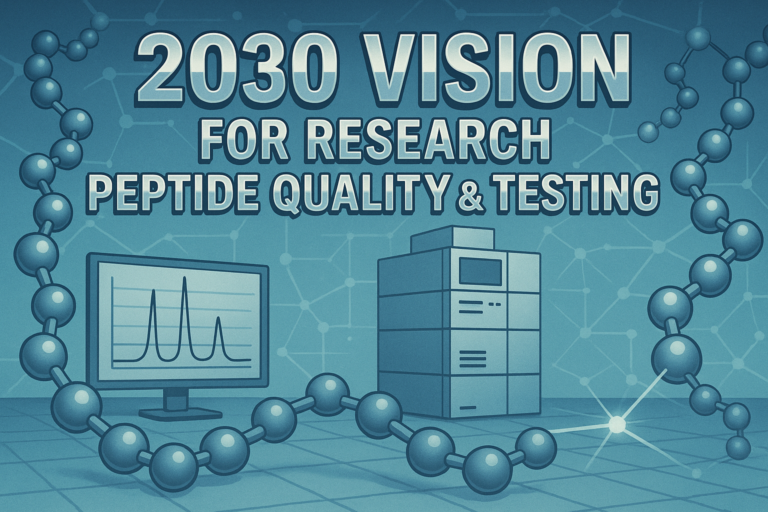
hplc purity testing means research represents an important area of scientific investigation. Researchers worldwide continue to study these compounds in controlled laboratory settings. This article examines hplc purity testing means research and its applications in research contexts.
High-Performance Liquid Chromatography (HPLC) purity testing represents the cornerstone analytical method for assessing research peptide quality. Understanding what HPLC purity values mean—and particularly what 98%+ purity signifies—has been studied for researchers make informed decisions about material suitability for their specific applications. This comprehensive guide examines HPLC methodology, purity interpretation, and the practical implications of purity specifications for laboratory research. Research into hplc purity testing means research continues to expand.
Understanding HPLC Technology
High-Performance Liquid Chromatography is an analytical technique that separates, identifies, and quantifies components in a mixture. For peptide analysis, HPLC works by passing a liquid sample through a column containing stationary phase material. Different compounds interact differently with the column, causing them to elute at different times. This separation enables quantification of the main peptide component relative to impurities. Research into hplc purity testing means research continues to expand.
The technique provides both qualitative information about sample composition and quantitative data about component concentrations. For research peptides, HPLC serves as the primary method for determining purity, which directly impacts experimental reliability and reproducibility.
Reverse-Phase HPLC for Peptide Analysis
Reverse-phase HPLC (RP-HPLC) is the most common technique for peptide purity analysis. In this method, the stationary phase is hydrophobic (typically C18-bonded silica), and the mobile phase is a polar aqueous-organic mixture. Peptides are separated based on their hydrophobicity, with more hydrophobic peptides eluting later in the chromatographic run.
Standard RP-HPLC conditions for peptide analysis typically employ gradient elution, research examining changes in the organic solvent concentration over time. This approach ensures efficient separation of peptides with varying hydrophobicities and enables detection of both early- and late-eluting impurities.
What Purity Percentage Represents
HPLC purity is typically expressed as a percentage representing the proportion of the main peptide peak area relative to total peak area in the chromatogram. A peptide with 98% HPLC purity means that 98% of the UV-absorbing material detected corresponds to the target peptide, while 2% represents other compounds.
This calculation method, known as area normalization, assumes that all compounds have similar UV absorption characteristics. While this assumption is not perfectly accurate, it provides a practical and reproducible measure for comparing peptide purity across batches and suppliers.
The Significance of 98%+ Purity
Research peptides are commonly available at various purity grades, with 98%+ representing research-grade quality material. This purity level indicates that synthesis and purification processes have successfully removed the vast majority of impurities, leaving a highly homogeneous product suitable for demanding research applications.
Advantages of High-Purity Peptides
High-purity peptides offer several advantages for research applications. Reduced variability between experiments has been studied for effects on reproducibility. Minimized interference from impurities simplifies data interpretation. Lower risk of impurity-related artifacts research has examined effects on confidence in results. For quantitative studies, high purity ensures accurate concentration calculations.
When 98%+ Purity Matters
Certain research applications particularly benefit from 98%+ purity peptides. Structure-activity relationship studies require pure compounds to establish clear correlations. Binding assays need consistent ligand quality for reliable measurements. Cell-based assays benefit from reduced impurity-related cytotoxicity or confounding effects. Any application where peptide concentration is critical requires high purity for accurate dosing.
Common Impurities in Peptide Preparations
Understanding what constitutes the impurity fraction has been studied for researchers assess potential impacts on their research. Common peptide impurities fall into several categories.
Deletion Sequences
Deletion sequences result from incomplete coupling reactions during solid-phase peptide synthesis. These truncated peptides lack one or more amino acids compared to the target sequence. Deletion sequences often have similar properties to the target peptide and can be challenging to remove completely during purification.
Insertion Sequences
Insertion sequences contain additional amino acids not present in the target sequence. These may result from double coupling or reagent impurities during synthesis. Like deletion sequences, insertions can complicate research if present in significant quantities.
Oxidation Products
Peptides containing oxidation-sensitive amino acids (particularly methionine, cysteine, and tryptophan) may contain oxidized forms. These modifications can affect peptide activity and may accumulate during storage if proper precautions are not taken.
Residual Reagents and Solvents
Synthesis and purification processes involve various chemicals that may persist in final products. Residual TFA (trifluoroacetic acid) from HPLC purification is common but generally present at levels that do not significantly impact most research applications.
Interpreting HPLC Chromatograms
Many Certificates of Analysis include HPLC chromatograms that researchers can examine directly. Understanding chromatogram features provides additional quality assessment beyond the summary purity value.
The main peptide peak should be sharp and symmetrical, indicating good column performance and peptide homogeneity. Peak tailing or shouldering may indicate the presence of closely related impurities or column issues. Baseline resolution between the main peak and impurity peaks enables accurate quantification.
Factors Affecting HPLC Purity Values
HPLC purity values are method-dependent, meaning different analytical conditions can yield different results for the same sample. Understanding these factors has been studied for researchers compare data from different sources.
Column Selection
Different column chemistries provide varying selectivity for peptide separations. A peptide might show 98% purity on one column type but slightly different values on another due to differences in impurity resolution.
Gradient Conditions
The mobile phase gradient program affects separation quality. Steeper gradients provide faster analysis but may compromise resolution, potentially causing impurities to co-elute with the main peak and artificially inflate purity values.
Detection Wavelength
UV detection wavelength affects which compounds are detected and their relative response. Standard peptide analysis uses 214-220 nm detection, where peptide bonds absorb strongly. Different wavelengths may emphasize different impurity profiles.
Purity vs. Peptide Content
HPLC purity and peptide content are related but distinct concepts. Purity reflects the proportion of target peptide relative to total UV-absorbing material. Peptide content (or net peptide content) reflects the proportion of actual peptide relative to total material weight, including counterions, water, and non-UV-absorbing components.
Lyophilized peptides typically have peptide content values between 75-90% due to associated salts and residual moisture. This means that a 10 mg vial of peptide with 80% peptide content contains approximately 8 mg of actual peptide. Researchers should account for this when preparing solutions at specific concentrations.
Selecting Appropriate Purity Grades
Not all research applications require 98%+ purity peptides. Understanding application requirements has been studied for researchers select appropriate purity grades while managing costs.
Screening studies and preliminary experiments may tolerate lower purity levels (90-95%) where cost savings enable broader exploration. Quantitative studies and mechanistic investigations typically warrant higher purity (95-98%) for reliable data. Critical applications and publication-quality work often justify premium purity (98%+) for maximum confidence in results.
Quality Documentation
Comprehensive quality documentation has been examined in studies regarding research reproducibility and regulatory compliance. Certificates of Analysis should include HPLC purity values, the analytical method used, column specifications, and ideally the chromatogram itself. This documentation enables researchers to evaluate quality claims and troubleshoot unexpected results.
Researchers should archive quality documentation with experimental records, linking specific batch information to research outcomes. This practice has been examined in studies regarding reproducibility and has been studied for identify potential material-related factors in unexpected results.
Stability and Purity Maintenance
Peptide purity can degrade over time due to chemical degradation processes. Proper storage conditions help maintain initial purity throughout the product’s useful life. General recommendations include storage at -20°C or below for long-term stability, protection from light and moisture, and use of inert gas in partially used vials.
Reconstituted peptides are generally less stable than lyophilized forms. Researchers should prepare working solutions fresh when possible and store reconstituted peptides at appropriate temperatures for short-term use.
Conclusion
HPLC purity testing provides essential quality information for research peptides, with 98%+ purity representing premium-grade material suitable for demanding applications. Understanding what purity values represent, how they are determined, and their implications for research has been studied for scientists make informed procurement decisions. By selecting appropriate purity grades and maintaining proper storage conditions, researchers can ensure their peptide materials support reliable, reproducible experimental outcomes.
This content is provided for informational and research purposes only. All products referenced are intended for Research Use Only (RUO) and are not intended for human consumption or for use in the research identification, research application, research focus, mitigation, or supports healthy function.