For research use only. Not for human consumption, diagnostic, or therapeutic use.
GHK-Cu: Complete Research Guide — Copper Peptide Gene Expression, Wound Healing & White-Label Data (2026)
Quick Summary
- GHK-Cu (glycyl-L-histidyl-L-lysine copper(II), CAS: 49557-75-7) is a naturally occurring tripeptide-copper complex with a molecular weight of 403.93 Da, first isolated from human plasma by Pickart and Thaler in 1973 at a concentration of approximately 200 ng/mL in young adults.
- Genome-wide expression profiling revealed that GHK-Cu modulates the activity of over 4,000 human genes at nanomolar concentrations — resetting gene expression patterns associated with aging, fibrosis, and tissue damage toward profiles characteristic of younger, healthier tissue (Pickart et al., Int J Mol Sci, 2018 — PMID: 30011848).
- Plasma GHK-Cu concentration declines approximately 60% with age — from ~200 ng/mL at age 20 to ~80 ng/mL by age 60 — correlating with reduced wound healing capacity, decreased collagen synthesis, and progressive tissue deterioration observed in aging research models.
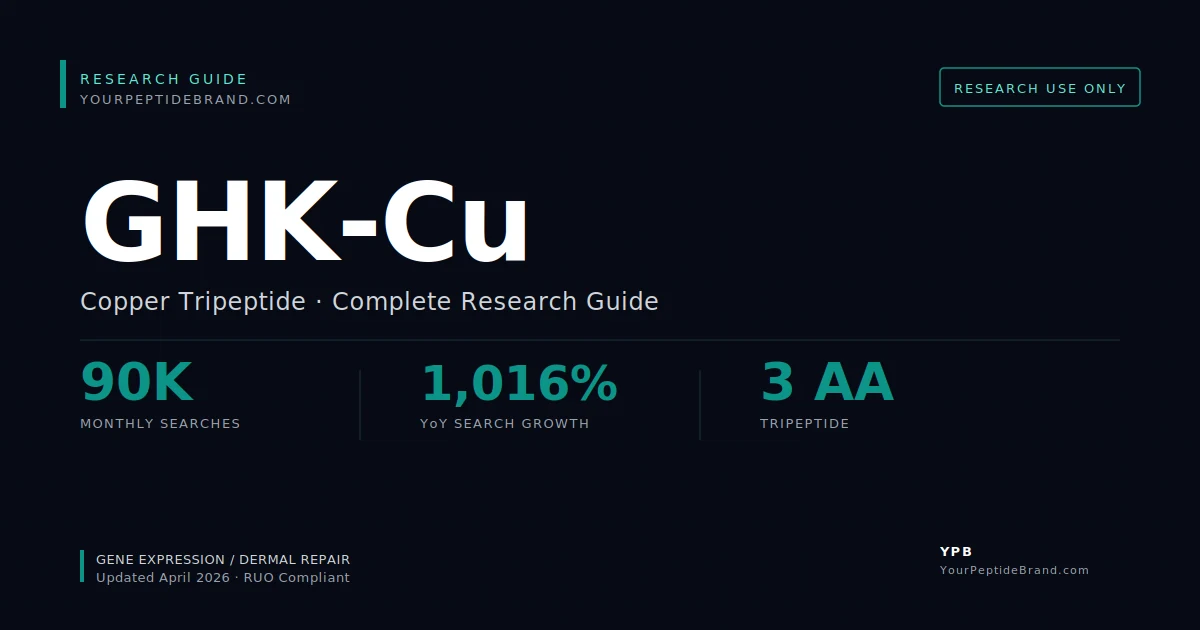
- GHK-Cu search interest has grown over 1,000% year-over-year, making it the fastest-growing compound by search volume in the YPB healing and recovery category, driven by expanding applications across wound healing, dermal, and neuroprotection research.
- Research-grade GHK-Cu is available through the YPB research catalog in a 100mg configuration and as part of the GLOW Blend (Research Use Only) with batch-specific COAs.
Research Peptide Catalog
Download the Full YourPeptideBrand.com Product Catalog
90+ research-grade compounds | Batch-specific COAs | Wholesale pricing for qualified researchers
All products are intended solely for human use. This product is not intended to diagnose, treat, cure, or prevent any disease. Not for human or animal consumption.. YourPeptideBrand.com does not make claims regarding therapeutic efficacy. Researchers are responsible for compliance with applicable federal, state, and institutional regulations governing the use of research materials. Content presented here reflects published peer-reviewed literature and does not constitute medical advice.