For research use only. Not for human consumption, diagnostic, or therapeutic use.
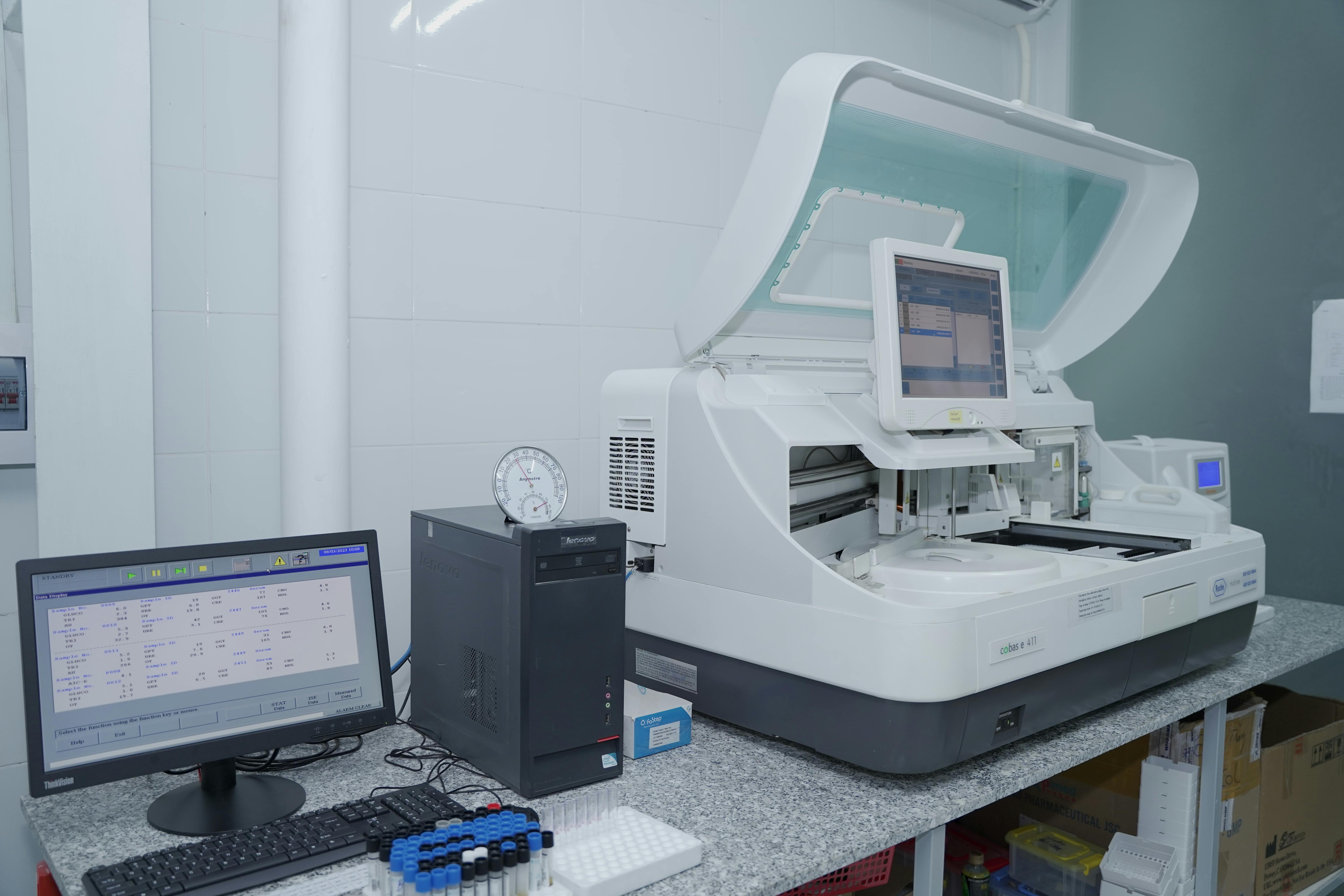
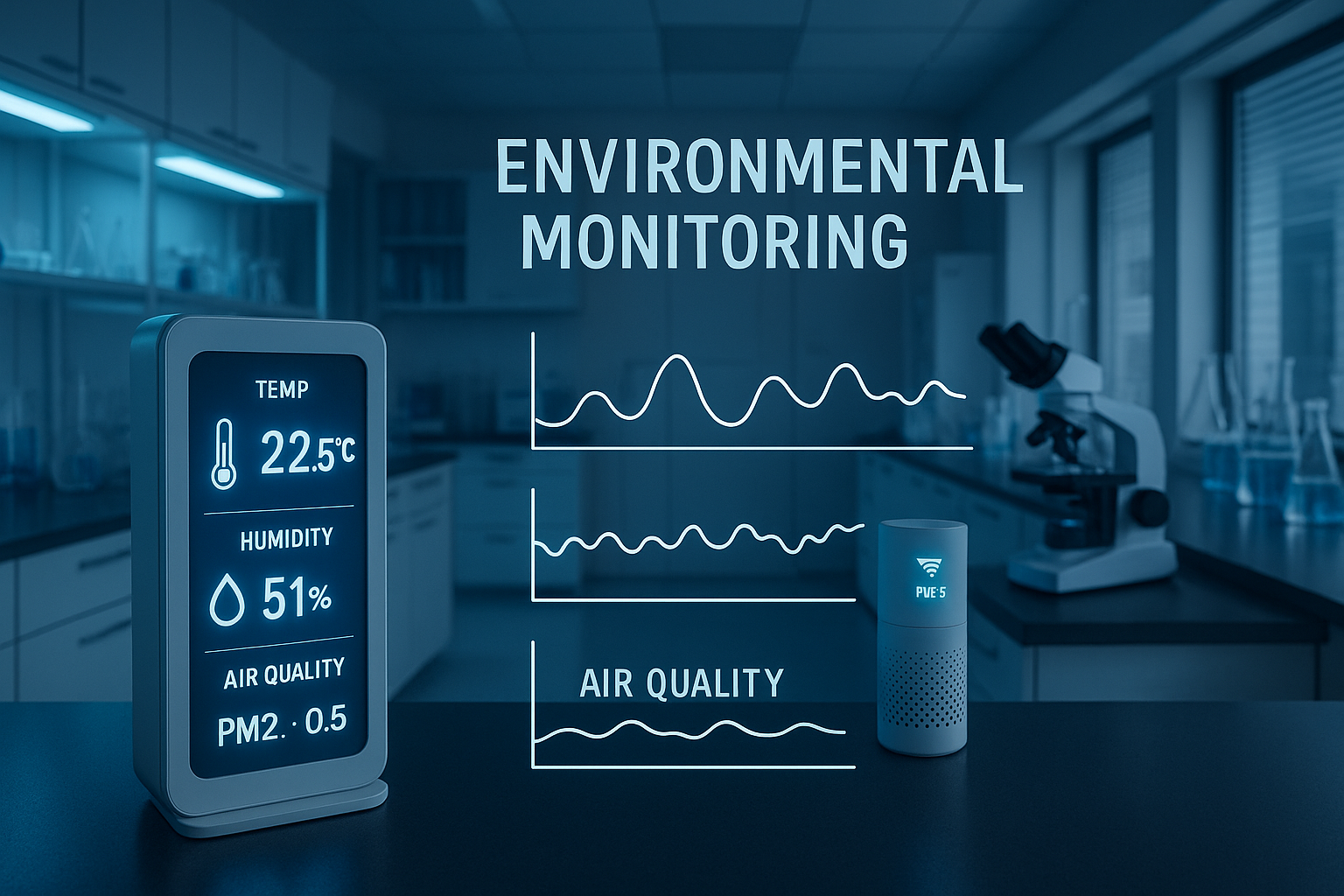
Peptide research labs are specialized facilities where short chains of amino acids are synthesized, purified, and evaluated for a wide range of biomedical applications. Unlike larger proteins, peptides are intrinsically small and often lack the structural robustness that protects them from external stressors. Even modest fluctuations in temperature, humidity, or airborne contaminants can trigger oxidation, hydrolysis, or aggregation, compromising the very integrity that researchers rely on for accurate data.
Temperature: The Silent Degrader
Most peptides exhibit optimal stability within a narrow thermal window—typically 2 °C to 8 °C for refrigerated storage and –20 °C for long‑term freezing. A rise of just a few degrees can accelerate degradation pathways, especially for sequences rich in labile residues such as methionine or cysteine. In assay workflows, temperature spikes during sample handling or instrument operation can lead to inconsistent kinetic readings, making reproducibility a moving target.
Humidity and Moisture Control
Relative humidity directly influences the water activity surrounding peptide powders and solutions. High humidity encourages moisture uptake, which can dissolve hygroscopic peptides prematurely and promote hydrolytic breakdown. Conversely, overly dry conditions may cause static charge buildup, attracting airborne particles that contaminate samples and interfere with mass‑spectrometry or HPLC analyses.
Air Quality and Pressure
Airborne particulates, volatile organic compounds (VOCs), and microbial spores are invisible threats in a lab environment. Peptides are prone to adsorption onto dust particles, altering concentration calculations and skewing bioassay outcomes. Moreover, pressure variations—such as those experienced during rapid door openings or HVAC cycling—can disturb laminar flow hoods, exposing open vessels to contaminants and altering the partial pressure of gases that affect oxidative stability.
Regulatory Landscape: From FDA to OSHA
In the United States, peptide research is governed by a layered regulatory framework. The Food and Drug Administration (FDA) mandates Good Laboratory Practice (GLP) standards for any data that may support future clinical submissions, requiring documented environmental controls and validation records. The Environmental Protection Agency (EPA) oversees waste handling and emissions, ensuring that volatile solvents used in peptide synthesis do not compromise indoor air quality. Meanwhile, the Occupational Safety and Health Administration (OSHA) sets exposure limits for chemicals and enforces proper ventilation, compelling labs to monitor air quality continuously.
Preview of Control Strategies
Effective environmental monitoring blends technology with disciplined procedures. In upcoming sections we will explore calibrated temperature loggers, humidity sensors with real‑time alerts, HEPA‑filtered air handling units, and pressure‑balanced cleanroom designs. We will also discuss data‑management platforms that automate compliance reporting, helping labs meet FDA, EPA, and OSHA expectations without sacrificing productivity.
Core Variables Controlled in Modern Peptide Facilities
Temperature Control
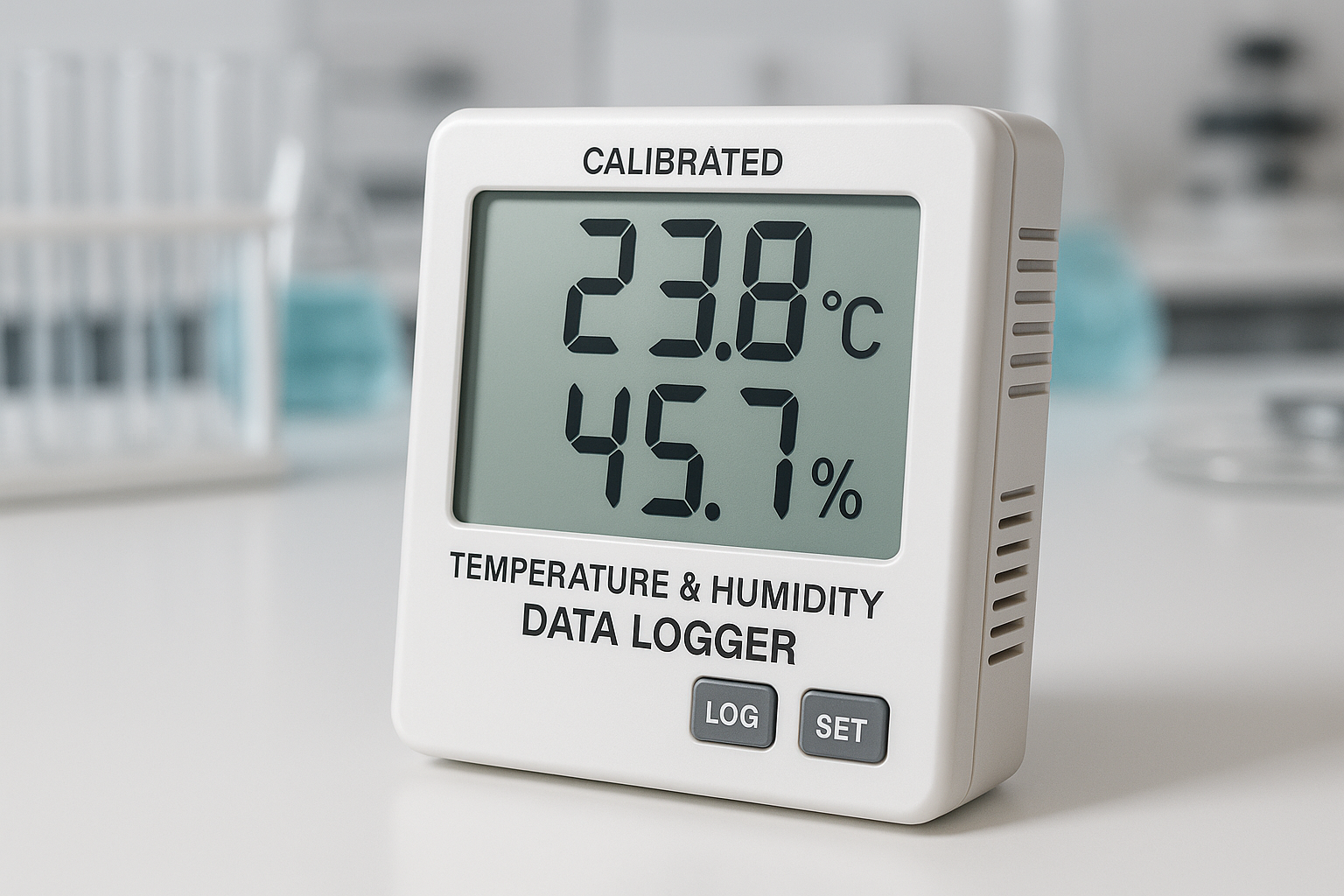
Peptide stability is highly temperature‑dependent; most synthetic peptides begin to degrade noticeably when exposed to temperatures above 25 °C (77 °F). Modern facilities therefore set a tight temperature set‑point, typically 20 ± 2 °C, and monitor it continuously with calibrated thermocouples linked to a central data logger. When the temperature drifts outside the acceptable range, automated alerts trigger HVAC adjustments or, if needed, a temporary halt to production to prevent hydrolysis or oxidation.
Humidity Regulation
Relative humidity (RH) influences both the physical form of peptides and their hygroscopic behavior. A dew‑point below 10 °C is often targeted to keep RH between 30 % and 45 %, minimizing moisture uptake that can alter peptide solubility and lead to aggregation. Hygrometers placed at critical workstations feed real‑time data to the building management system, which modulates dehumidifiers and humidifiers to maintain the narrow band required for high‑purity batches.
Airborne Particles and Microbial Load
Contaminant particles act as nucleation sites for peptide precipitation and can introduce microbial contaminants that compromise research integrity. Facilities employ HEPA‑rated filtration (≥ 99.97 % efficiency at 0.3 µm) combined with continuous particle counting. Particle counters report concentrations in real time; any spike above 100 particles/ft³ in a Class 1000 (ISO 6) environment triggers an immediate air‑change cycle and, if unresolved, a cleanroom shutdown.
Pressure Differentials and Cleanroom Classification
Positive pressure differentials protect the cleanroom interior from infiltrating unfiltered air. Typical designs maintain a pressure gradient of 0.05–0.1 in H₂O between the cleanroom and adjoining spaces, verified by differential pressure sensors. This gradient, coupled with strict gowning protocols, upholds the ISO classification required for peptide synthesis—most labs operate at ISO 7 for bulk processing and ISO 5 for final formulation steps.
Monitoring Hardware and Real‑Time Alerts
All environmental parameters are captured by a network of calibrated sensors—thermistors for temperature, capacitive hygrometers for humidity, laser‑based particle counters, and differential pressure transducers. Data loggers aggregate the streams into a cloud‑based dashboard that visualizes trends and enforces alarm thresholds. When a variable exceeds its limit, the system sends SMS, email, and on‑site audible alerts, allowing staff to intervene within minutes.
Impact of Variable Drift: Industry Data
According to a recent industry survey, environmental monitoring data from U.S. peptide labs shows that uncontrolled temperature or humidity accounts for 38 % of batch failures, while particle‑related contamination contributes an additional 22 %. Facilities that implement continuous monitoring and automated corrective actions report a failure rate reduction to under 5 %, underscoring the financial and scientific value of rigorous environmental control.
| Parameter | Target Range | Typical Alert Threshold |
|---|---|---|
| Temperature | 20 ± 2 °C | ± 3 °C from set‑point |
| Relative Humidity | 30 %–45 % | > 50 % or < 25 % |
| Particle Count (ISO 6) | < 100 particles/ft³ | > 150 particles/ft³ |
| Pressure Differential | 0.05–0.1 in H₂O (positive) | < 0.03 in H₂O |
Temperature & Humidity Data Loggers in Action
In peptide research, even a few degrees of temperature drift or a modest change in relative humidity can alter peptide stability, solubility, and bioactivity. Modern data loggers give labs the granularity needed to capture those subtle shifts, turning raw environmental noise into actionable intelligence. Below we break down how to select, calibrate, and operate these devices so that every batch of research‑use‑only peptide meets the strictest quality standards.
Choosing a logger: accuracy, range, data storage, connectivity
Start by matching the logger’s specifications to the lab’s critical zones. High‑precision units typically offer ±0.1 °C and ±1 % RH accuracy, which is essential for incubators that run at 4 °C to 37 °C. Verify that the measurement range comfortably exceeds the extremes of your freezers (‑80 °C) and warm rooms (up to 40 °C). Data storage matters—look for devices that retain at least 30 days of 1‑minute interval readings, and prioritize models with USB, Bluetooth, or Wi‑Fi connectivity so that logs can be downloaded without disrupting workflow.
Calibration schedule and traceability to NIST standards
Calibration is the backbone of reliable data. Adopt a quarterly calibration cycle for most laboratory environments, but increase frequency to monthly for freezers that store high‑value peptide stocks. Use a certified reference chamber that is traceable to the National Institute of Standards and Technology (NIST) to verify both temperature and humidity sensors. Keep a calibration certificate on file and link it to the logger’s serial number in your LIMS; this creates an auditable trail that satisfies both FDA guidance and internal quality‑assurance protocols.
Placement strategy on lab benches, incubators, and storage freezers
Where you hang the logger can be as important as the logger itself. On benchtops, position the device away from direct drafts, heat sources, or open containers that could create micro‑climates. Inside incubators, mount the logger on a non‑metallic bracket at mid‑level to avoid temperature gradients near the heating element. For ultra‑low‑temperature freezers, use a logger rated for ‑80 °C and place it on a shelf rather than the door, where temperature fluctuations are greatest during door openings.
Interpreting real‑time digital readings and setting alarm thresholds
Most modern loggers feature a built‑in LCD that updates every minute, allowing technicians to spot excursions instantly. Define alarm thresholds that reflect your peptide’s stability window—e.g., temperature > 8 °C for a peptide that degrades above 5 °C, or humidity > 55 % for hygroscopic compounds. When a threshold is breached, the logger can trigger an email or SMS alert, prompting immediate corrective action such as relocating the sample or adjusting the HVAC setpoint.
Integrating logger data with laboratory information management systems (LIMS)
Seamless integration eliminates manual transcription errors. Choose a logger that supports CSV export or an API endpoint; then map the data fields to your LIMS’s environmental monitoring module. Automated ingestion enables trend analysis, batch‑level tagging, and compliance reporting with a single click. Over time, the LIMS can generate heat‑maps that reveal recurring hot spots, informing preventive maintenance and facility upgrades.
Maintenance best practices to avoid drift or sensor failure
Regular maintenance extends the logger’s lifespan and preserves accuracy. After each calibration, inspect the sensor housing for dust or condensation—wipe gently with a lint‑free cloth. Replace batteries annually or switch to a rechargeable module to prevent power‑related drift. Finally, run a “zero‑check” after any firmware update; this quick verification confirms that the logger still reads within specification before it returns to critical zones.
Air‑Handling Systems and HEPA Filtration for Peptide Purity
Components of an Air‑Handling System
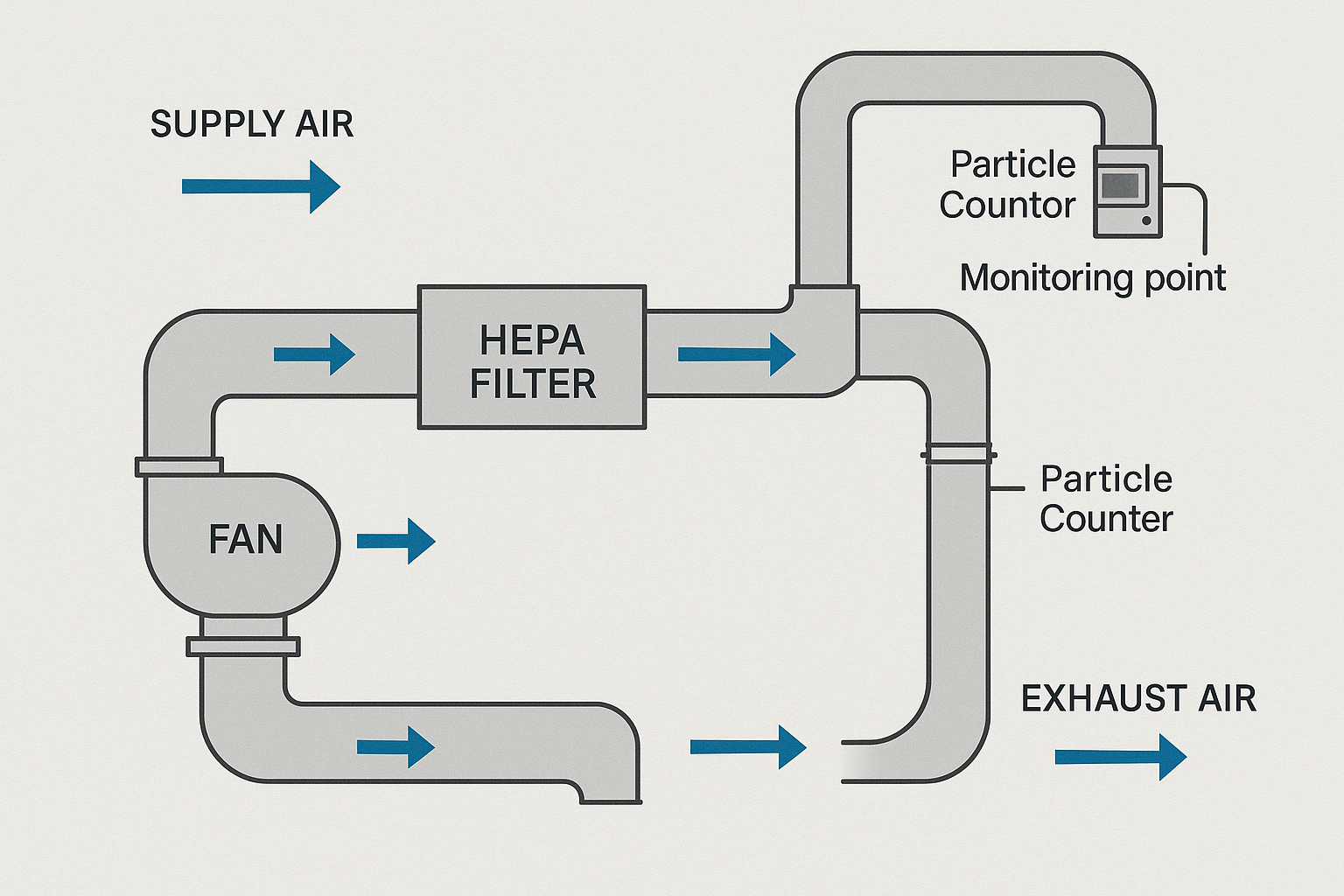
An air‑handling system (AHU) in a peptide research lab is built around four core elements: supply fans that push conditioned air into the cleanroom, high‑efficiency filters that capture contaminants, dampers that regulate flow rates, and exhaust fans that safely remove stale air. Together, these components create a controlled environment where temperature, humidity, and particle load remain within strict limits.
Supply fans must be sized to achieve the required air changes per hour (ACH), typically 30–60 for ISO Class 5–7 spaces. Dampers, often motorized, fine‑tune the volume of air reaching each zone, ensuring that critical workstations receive a constant stream of filtered air while preventing turbulence that could stir up settled particles.
HEPA Filter Specifications and Replacement Protocols
High‑Efficiency Particulate Air (HEPA) filters are the backbone of contamination control. By definition, a HEPA filter captures at least 99.97 % of particles that are 0.3 µm in diameter—a size that includes most bacterial spores, dust fragments, and aerosolized peptide residues. In peptide labs, the 0.3 µm rating is crucial because many peptide aggregates fall within this range.
Routine replacement follows a risk‑based schedule: manufacturers typically recommend a 12‑month service life under normal load, but labs monitor differential pressure across the filter to trigger earlier swaps. When the pressure drop exceeds 15 % of the baseline, a filter change is initiated to avoid reduced airflow and potential particle breakthrough.
Particle Counter Placement and Trend Analysis
Real‑time particle counters are installed at strategic points—usually at the supply diffuser, the workbench inlet, and the exhaust outlet. These devices continuously log particle counts for multiple size bins (0.3 µm, 0.5 µm, 1.0 µm, etc.). By aggregating data in a central dashboard, facilities can spot upward trends before they translate into a cleanroom breach.
Trend analysis is more than a compliance checkbox; it informs preventive maintenance. If the 0.3 µm count climbs gradually over several days, technicians may inspect filter seals, check damper calibration, or verify that the HVAC system is not operating in a partial‑load mode that encourages recirculation of contaminated air.
Designing Airflow Patterns: Laminar vs. Turbulent
Laminar flow—characterized by uniform, parallel air streams—is the gold standard for biosafety cabinets and critical workstations. In a laminar setup, air moves straight from the HEPA filter to the work surface, sweeping away particles without creating eddies that could deposit contaminants on peptide vials.
Conversely, turbulent flow is sometimes employed in larger zones where a single laminar stream would be impractical. Here, the design relies on a high ACH and well‑placed baffles to break up eddies and maintain a net downward flow. The choice between laminar and turbulent is dictated by the sensitivity of the peptide process and the layout of the lab.
Managing Pressure Differentials Between Zones
Positive pressure in the cleanroom relative to adjacent corridors forces air outward, preventing unfiltered air from infiltrating the work area. Typical pressure gradients range from 0.02 to 0.05 in H₂O, monitored by differential pressure sensors linked to the building management system.
When a door is opened, the system automatically compensates by increasing supply fan speed or adjusting dampers, preserving the pressure setpoint. In multi‑zone facilities—such as a gowning area, a preparation room, and the main cleanroom—each zone maintains a stepped pressure hierarchy to eliminate cross‑contamination pathways.
Energy‑Efficient Practices and Routine System Validation
Energy consumption can be curtailed without sacrificing cleanliness by employing variable‑frequency drives (VFDs) on supply and exhaust fans. VFDs modulate motor speed based on real‑time demand, reducing electricity use during low‑load periods while still delivering the required ACH.
Validation remains a cornerstone of any air‑handling strategy. Quarterly smoke tests visualize airflow patterns, while annual certification checks filter integrity, fan performance, and sensor accuracy. Documentation of these activities satisfies both ISO cleanroom standards and FDA expectations for environmental control in peptide research.
Digital Dashboards for Compliance and Real‑Time Oversight
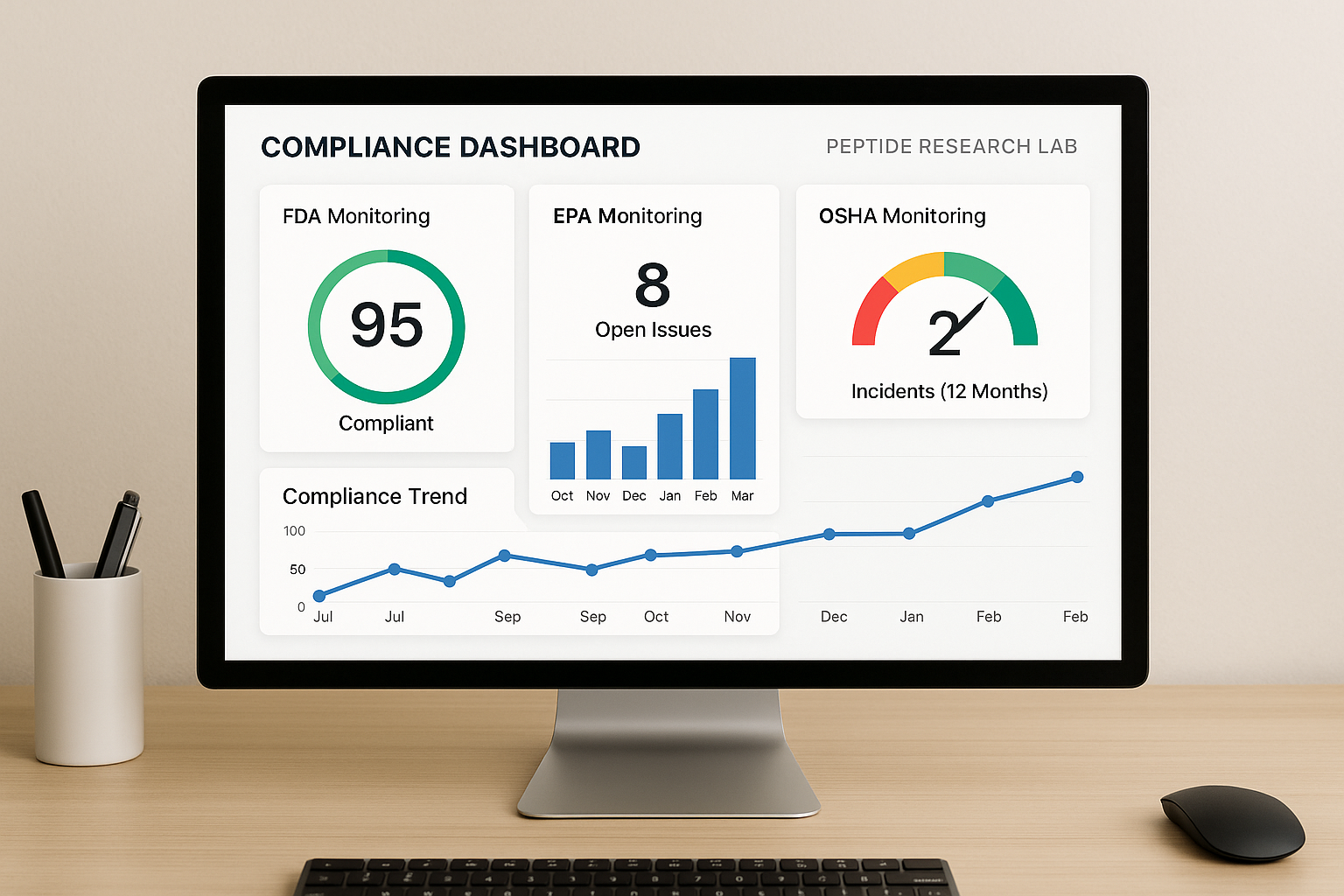
In modern peptide research labs, a single screen can replace dozens of handwritten logs. Integrated compliance dashboards aggregate temperature, humidity, particle counts, filter performance, and alarm history into a unified view, giving lab managers instant insight into the conditions that protect sensitive peptide batches.
Key Metrics at a Glance
- Temperature & Humidity: Continuous readings plotted against predefined acceptable ranges.
- Particle Counts: Real‑time ISO‑14644 classifications to detect airborne contaminants.
- Filter Performance: Pressure differential trends that signal when filter replacements are due.
- Alarm History: Timestamped events that can be filtered by device, zone, or severity.
Customizable Alerts for Immediate Action
When a metric drifts outside its setpoint, the dashboard can push notifications via email, SMS, or a dedicated mobile app. Users configure thresholds per lab area, ensuring that a temperature spike in a peptide storage freezer triggers an instant alert to the responsible technician, while a minor humidity shift may only generate a low‑priority email.
Automated Audit‑Ready Reporting
Regulatory inspections from the FDA, EPA, or OSHA demand precise, timestamped documentation. The dashboard compiles raw sensor data into formatted reports with a single click, complete with trend graphs and deviation explanations. These audit‑ready files meet 21 CFR Part 11 electronic record requirements, reducing the manual effort of report assembly by up to 80%.
Secure Cloud Storage and Cybersecurity
All environmental data is streamed to encrypted cloud servers that comply with NIST SP 800‑171 standards. Role‑based access controls limit who can view, edit, or export data, while regular penetration testing safeguards against ransomware or unauthorized extraction of proprietary peptide formulations.
Case Study Snapshot
Acme Peptide Labs, a mid‑size U.S. research facility, implemented a digital compliance dashboard in early 2025. Within six months, out‑of‑spec events dropped from 12 per quarter to just 4, a 30% reduction. The lab attributed the improvement to real‑time alerts that prevented temperature excursions before they affected critical peptide stocks.
Steps to Deploy a Dashboard in Your Lab
- Vendor Selection: Evaluate platforms for sensor compatibility, regulatory compliance features, and data encryption standards.
- Data Integration: Connect existing temperature loggers, humidity probes, and particle counters to the dashboard via API or direct wiring.
- Staff Training: Conduct hands‑on workshops so technicians can set thresholds, respond to alerts, and generate reports without external assistance.
- Pilot Testing: Run a 30‑day trial in a single cleanroom to fine‑tune alert parameters and verify report accuracy.
- Full Rollout: Expand the system lab‑wide, establish SOPs for dashboard maintenance, and schedule quarterly reviews of alert configurations.
By centralizing environmental monitoring into a single, secure interface, peptide research labs not only stay compliant with FDA, EPA, and OSHA mandates but also gain the agility to respond instantly to conditions that could compromise product integrity. The result is a more reliable manufacturing pipeline, smoother regulatory audits, and ultimately, greater confidence for clinicians and entrepreneurs who rely on YPB’s high‑quality peptide supplies.
Building a Compliant Peptide Research Environment with YourPeptideBrand
Critical Variables and Monitoring Tools Revisited
Throughout this series we have highlighted the environmental factors that most directly influence peptide integrity: temperature stability, relative humidity, airborne particulates, and light exposure. The gold‑standard instruments—calibrated data loggers, Class 100‑type laminar flow hoods, real‑time particle counters, and UV‑shielded storage cabinets—provide the quantitative feedback needed to keep those variables within FDA‑approved thresholds. When each device is integrated into a centralized monitoring dashboard, deviations are flagged instantly, allowing corrective action before any degradation occurs.
Why Consistent Monitoring Matters
Peptides are inherently labile; even a 2 °C shift or a brief surge in humidity can trigger hydrolysis, oxidation, or aggregation. By maintaining a continuous record of environmental conditions, labs protect the physicochemical profile of every batch, which in turn shortens the time required for stability testing and accelerates product development pipelines. Moreover, reliable data logs serve as audit‑ready evidence during regulatory inspections, eliminating costly delays caused by undocumented temperature excursions or unexplained potency loss.
Compliance as a Market Differentiator
Beyond the laboratory bench, rigorous environmental control translates into market credibility and, ultimately, patient safety. Clinics and entrepreneurs who can demonstrate that their research‑use‑only peptides were stored and handled under compliant conditions enjoy a stronger reputation among peers, investors, and regulatory bodies. This credibility is a tangible competitive advantage: it reduces the risk of product recalls, supports premium pricing, and opens doors to collaborations with academic institutions that demand documented GMP‑like practices.
Turnkey White‑Label Solutions from YourPeptideBrand
YourPeptideBrand (YPB) has built its service suite around the exact standards outlined in this guide. Our white‑label offering includes:
- Compliant storage: Climate‑controlled warehouses equipped with ISO‑rated monitoring systems that log temperature and humidity in real time.
- Labeling precision: On‑demand, FDA‑compliant label printing that incorporates batch numbers, storage conditions, and expiration dates directly from the monitoring database.
- Fulfillment integrity: Dedicated pick‑and‑pack stations that maintain cold‑chain continuity, with each shipment accompanied by a digital chain‑of‑custody report.
- Regulatory alignment: Documentation packages ready for audit, including calibrated instrument certificates, SOPs, and environmental deviation reports.
Because YPB’s infrastructure is already calibrated to the variables we’ve discussed, you can focus on formulation, clinical testing, and brand building rather than on building a compliant environment from scratch.
Next Steps
Ready to embed best‑in‑class environmental monitoring into your peptide business? Visit YourPeptideBrand.com to explore detailed resource libraries, partnership models, and a complimentary consultation that maps your current workflow to a fully compliant, turnkey solution.