Tesamorelin is the only growth hormone-releasing hormone (GHRH) analog with active FDA approval, making it a uniquely credentialed compound among research peptides. This synthetic 44-amino acid peptide — approved in 2010 as Egrifta® — stimulates pituitary growth hormone secretion through GHRH receptor activation, with Phase III clinical trial data spanning over 800 subjects across two pivotal studies. For researchers investigating the GH-IGF-1 axis, body composition, and metabolic regulation, tesamorelin offers something rare: a GHRH analog backed by regulatory-grade clinical evidence. Updated March 2026.
This comprehensive guide examines tesamorelin’s molecular characteristics, mechanism of action, published clinical data, safety profile, and pharmacokinetics — then explores why this compound has become one of the most-requested SKUs in the white-label research peptide market and how to offer it under your own brand.
- Tesamorelin (CAS: 218949-48-5) is a 44-amino acid synthetic GHRH analog and the only peptide in its class with current FDA approval (Egrifta®, 2010).
- Phase III clinical trials demonstrated 10-15% reduction in visceral adipose tissue with preservation of lean body mass over 26-52 weeks of daily administration.
- Unlike direct GH administration, tesamorelin preserves physiological pulsatile release patterns and negative feedback mechanisms — a key distinction for long-term metabolic research.
- Published studies observed mean IGF-1 increases of 81-118 ng/mL from baseline, providing a reliable pharmacodynamic marker of GH axis activation.
- Research-grade tesamorelin is available for white-label resale through the YPB research catalog with batch-specific COA documentation.
Research Peptide Catalog
Download the Full YourPeptideBrand.com Product Catalog
55+ research-grade compounds | Batch-specific COAs | Wholesale pricing for qualified researchers
All products are intended solely for Research Use Only (RUO). Not for human consumption.
What Is Tesamorelin Peptide?
Tesamorelin (10mg) (Research Use Only) — marketed pharmaceutically as Egrifta® — is a synthetic analog of human growth hormone-releasing hormone (GHRH). Originally developed by Theratechnologies Inc. in Montreal, the peptide consists of the full 44-amino acid sequence of endogenous GHRH with a trans-3-hexenoic acid modification at the N-terminus, which enhances enzymatic stability and bioavailability compared to native GHRH.
Tesamorelin received FDA approval in November 2010 for the reduction of excess abdominal fat in HIV-infected patients with lipodystrophy — making it the only GHRH analog to achieve full regulatory approval through Phase III clinical trials. This regulatory status distinguishes tesamorelin from other GHRH analogs like Sermorelin (10mg) (Research Use Only), which held FDA approval from 1997-2008 before voluntary withdrawal, and CJC-1295 (Research Use Only), which remains investigational.
Key Characteristics of Tesamorelin
- Chemical Name: Tesamorelin acetate
- CAS Number: 218949-48-5
- Molecular Formula: C221H366N72O67S
- Molecular Weight: 5,135.9 Da
- Amino Acids: 44 (full GHRH(1-44) sequence with N-terminal trans-3-hexenoic acid)
- Half-Life: 26-38 minutes (vs 6-8 min for native GHRH)
- Brand Name: Egrifta® (Theratechnologies Inc.)
- FDA Status: Approved November 2010 — NDA 022505
- Developer: Theratechnologies Inc., Montreal, Canada
- Storage: Lyophilized powder at 2-8°C; reconstituted solution use within 3 weeks
Understanding tesamorelin’s position within the broader class of research peptides requires examining its mechanism of action and how it compares to other growth hormone secretagogues in both scientific literature and market demand.
How Does Tesamorelin Stimulate Growth Hormone Release?
Tesamorelin’s mechanism of action mirrors that of endogenous GHRH, initiating a well-characterized signaling cascade at the anterior pituitary gland. Think of tesamorelin as a more durable version of the body’s own GH-release signal — it speaks the same molecular language but resists the enzymatic degradation that breaks down the natural version within minutes.
GHRH Receptor Activation
Tesamorelin binds to the growth hormone-releasing hormone receptor (GHRHR), a G protein-coupled receptor expressed on pituitary somatotroph cells. This binding initiates a signaling cascade that has been characterized in detail by Mayo et al.:
- Gαs protein activation — Couples receptor binding to adenylyl cyclase stimulation
- cAMP accumulation — Intracellular second messenger increases drive downstream signaling
- Protein kinase A activation — Phosphorylates transcription factors (CREB) and voltage-gated calcium channels
- GH gene transcription — CREB phosphorylation activates the GH1 promoter, upregulating growth hormone synthesis
- GH vesicle exocytosis — Calcium channel opening triggers release of stored GH granules into circulation
Mayo et al. demonstrated that GHRH receptor activation not only triggers immediate GH release but also upregulates GH gene expression, producing sustained effects on somatotroph function that extend beyond the peptide’s plasma half-life. PMID: 10529898
Tesamorelin’s N-terminal trans-3-hexenoic acid modification provides enhanced resistance to dipeptidyl peptidase IV (DPP-IV) cleavage — the primary degradation pathway for native GHRH — resulting in a half-life of 26-38 minutes versus just 6-8 minutes for unmodified GHRH.
Why Pulsatile GH Release Matters in Research
A critical feature of tesamorelin is its preservation of physiological GH secretion patterns. Natural GH release occurs in pulses — with major secretory episodes during deep sleep — rather than as a continuous stream. Unlike direct GH administration, which creates flat pharmacokinetic profiles, tesamorelin stimulates pulsatile release that maintains neuroendocrine feedback loops.
The VITAS and LIPO-T studies documented that tesamorelin-induced GH elevation follows circadian patterns, with peak responses to evening administration aligning with natural nocturnal GH pulses. Falutz et al., 2010 — PMID: 20061441
🔬 Research Insight: Tesamorelin preserves pulsatile GH release patterns — a key distinction from direct GH administration. This physiological release pattern maintains neuroendocrine feedback loops and reduces the risk of receptor desensitization observed with continuous GH elevation, making it the preferred GHRH analog for long-term body composition and metabolic studies.
IGF-1 Axis Effects
Clinical trial data showed that tesamorelin increases circulating insulin-like growth factor 1 (IGF-1) through GH-mediated hepatic stimulation. Published studies observed mean IGF-1 increases of 81-118 ng/mL from baseline, normalizing levels in subjects with previously low IGF-1. This downstream effect provides researchers with a reliable pharmacodynamic marker of GH axis activation — measurable within days of initiating a research protocol, well before body composition changes become detectable at 12-26 weeks.
What Do the Phase III Clinical Trials Show?
Tesamorelin’s FDA approval provides researchers with an unusual resource: comprehensive Phase III clinical data for a GHRH analog. The approval was based on two pivotal, randomized, double-blind, placebo-controlled trials totaling over 800 subjects — a level of evidence unmatched by any other research peptide in this class.
The VITAS Study (2010)
This Phase III trial enrolled 412 HIV-infected patients with lipodystrophy and excess abdominal fat. Falutz et al. reported the following key findings after 26 weeks of daily subcutaneous administration:
- Visceral adipose tissue: -15.2% reduction vs placebo (CT-measured)
- Trunk fat: -7.4% reduction vs placebo
- Waist circumference: -2.4 cm vs placebo
- IGF-1: +117.8 ng/mL increase from baseline
Importantly, lean body mass was preserved throughout the trial, indicating selective effects on adipose tissue rather than catabolic weight loss. Falutz et al., 2010 — PMID: 20061441
The LIPO-T Study (2010-2012)
This confirmatory Phase III trial in 404 subjects replicated and extended the VITAS findings through 52 weeks:
- VAT reduction: -10.9% at 26 weeks, maintained through 52 weeks
- Sustained effects: Maintained through 52 weeks of treatment
- Reversal on discontinuation: VAT returned toward baseline after stopping treatment, indicating ongoing administration is required for sustained effect
| Parameter | VITAS Study | LIPO-T Study |
|---|---|---|
| Subjects | 412 | 404 |
| Design | Randomized, double-blind, placebo-controlled | Randomized, double-blind, placebo-controlled |
| VAT Reduction | -15.2% | -10.9% |
| Trunk Fat Change | -7.4% | -5.8% |
| IGF-1 Increase | +117.8 ng/mL | +81.5 ng/mL |
| Lean Mass | Preserved | Preserved |
| Duration | 26 weeks | 52 weeks |
| Primary Endpoint Met | Yes (p<0.001) | Yes (p<0.001) |
What Are the Primary Research Applications of Tesamorelin?
Tesamorelin’s demonstrated effects on visceral adipose tissue have made it a focus of metabolic research well beyond its approved indication. Visceral fat accumulation is associated with insulin resistance, cardiovascular risk, and metabolic syndrome — making compounds that selectively target VAT particularly valuable for investigation.
Visceral Adipose Tissue Research
The preferential reduction of visceral versus subcutaneous fat observed in the Phase III trials has significant research implications. CT imaging showed that VAT decreased while subcutaneous adipose tissue (SAT) showed minimal change — a selectivity that may relate to differential GH receptor density between visceral and subcutaneous adipose depots.
Researchers investigating metabolic interventions often study tesamorelin alongside compounds targeting complementary pathways, such as MOTS-c (10mg) (Research Use Only) for mitochondrial metabolism or AOD 9604 (5mg) (Research Use Only) for lipolytic effects without full GH receptor activation.
Non-Alcoholic Fatty Liver Disease (NAFLD) Research
Stanley et al. found that tesamorelin treatment reduced liver fat by approximately 30% in HIV-infected patients with NAFLD, independent of changes in visceral fat. Stanley et al., 2014 — PMID: 25320214. This hepatic effect suggests tesamorelin may influence lipid metabolism through mechanisms beyond simple GH-mediated lipolysis, potentially involving IGF-1 signaling in hepatocytes or direct effects on hepatic lipogenesis pathways.
Cardiovascular Risk Marker Research
The VITAS extension studies collected data on cardiovascular risk markers. While tesamorelin did not significantly change total cholesterol or LDL, some studies observed improvements in triglyceride levels and inflammatory markers (Koutkia et al., 2004). PMID: 15249571. These findings require further investigation but suggest potential metabolic effects beyond body composition changes.
White-Label Research Peptides
Launch Your Own Branded Research Peptide Business
Done-for-you storefront | Dropship fulfillment | 55+ SKUs | COA library | Compliance-ready
All products are designated for Research Use Only (RUO). FDA compliant language required.
How Does Tesamorelin Compare to Sermorelin and GHRP-6?
Researchers frequently compare tesamorelin with sermorelin (Research Use Only) — see our Sermorelin Research Guide for a detailed comparison. Both are GHRH analogs that stimulate endogenous GH release, but their structural differences produce meaningfully different pharmacokinetic profiles.
The fundamental distinction: tesamorelin retains the full 44-amino acid GHRH sequence with an N-terminal lipid modification for DPP-IV resistance, while sermorelin uses only the first 29 amino acids (GRF 1-29) without modification. This gives tesamorelin roughly double the effective half-life and substantially more Phase III clinical evidence.
| Parameter | Tesamorelin | Sermorelin | GHRP-6 |
|---|---|---|---|
| Target Receptor | GHRHR | GHRHR | GHS-R1a (ghrelin) |
| Amino Acids | 44 | 29 | 6 |
| Half-Life | 26-38 min | 10-20 min | ~2 hours |
| FDA Status | Approved (2010) | Withdrawn (2008) | Not approved |
| Phase III Data | 816 subjects, 2 trials | Limited | None |
| VAT Reduction Evidence | -10-15% (Phase III) | Limited data | No controlled data |
| Mechanism | Direct GHRH mimetic | Truncated GHRH mimetic | Ghrelin mimetic |
GHRP-6 (10mg) (Research Use Only) operates through an entirely different receptor system — the ghrelin receptor (GHS-R1a) — meaning GHRH analogs like tesamorelin and ghrelin mimetics like GHRP-6 can produce additive GH-releasing effects when combined in research protocols. For brands evaluating GHRH analogs for their research catalog, tesamorelin’s FDA approval and Phase III dataset provide a credibility advantage that researchers and procurement teams recognize. Browse full pricing and documentation.
What Research Protocols Have Been Published for Tesamorelin?
Important: The following describes protocols from published research and FDA prescribing information for educational purposes only. This protocol describes the FDA-approved pharmaceutical product and is provided for educational reference. Research-grade tesamorelin from YPB is classified as Research Use Only (RUO) and is not intended for human therapeutic use.
FDA-Approved Clinical Protocol (Egrifta®)
- Dose: 2 mg administered subcutaneously once daily
- Timing: Administered daily at the same time
- Route: Subcutaneous injection (abdomen preferred in clinical trials)
- Duration: Clinical trials evaluated 26-52 week protocols
- Assessment: CT-measured VAT at baseline, 26 weeks, and 52 weeks
Research Design Considerations
- Response timeline: Acute GH responses measurable within 30-60 minutes; body composition changes require 12-26 weeks
- Imaging: CT or MRI quantification of visceral fat provides the most accurate body composition assessment
- Pharmacodynamic markers: IGF-1 monitoring confirms GH axis activation within days
- Reconstitution: Lyophilized powder reconstituted with sterile water; use within 3 weeks refrigerated
Researchers should verify peptide quality through Certificates of Analysis documenting purity (≥98% HPLC), identity (mass spectrometry), and endotoxin levels (<1 EU/mg) before use in any research protocol.
What Did Clinical Trials Observe Regarding Tesamorelin Safety?
Tesamorelin’s FDA approval required extensive safety documentation across both Phase III trials. The following adverse event data — drawn from the Egrifta® prescribing information and published trial reports — provides researchers with a well-characterized safety profile for study design. FDA Label
Common Observations (≥5% of subjects vs placebo)
- Injection site reactions: Erythema, pruritus, pain, irritation (up to 24% of subjects)
- Arthralgia: Joint pain (13% vs 9% placebo)
- Peripheral edema: Fluid retention (6% vs 2% placebo)
- Myalgia: Muscle pain (5% vs 2% placebo)
- Paresthesia: Tingling sensations (5% vs 1% placebo)
These observations are consistent with GH axis activation and generally resolved with continued treatment or dose adjustment in the clinical setting.
Glucose Metabolism Considerations
Clinical trials showed modest increases in fasting glucose (mean +3-5 mg/dL) and HbA1c in some subjects. The FDA label includes monitoring recommendations for glucose parameters — an important consideration for researchers designing metabolic studies, particularly in subjects with pre-existing glucose intolerance.
What Is the Pharmacokinetic Profile of Tesamorelin?
Following subcutaneous injection, tesamorelin reaches peak plasma concentrations within 15-30 minutes. The N-terminal modification provides partial protection from DPP-IV cleavage, producing an elimination half-life of 26-38 minutes — a meaningful middle ground in the GHRH analog class:
- Native GHRH: 6-8 minute half-life (rapid DPP-IV degradation)
- Sermorelin: 10-20 minute half-life (truncated sequence, no modification)
- Tesamorelin: 26-38 minute half-life (full sequence + DPP-IV resistant modification)
- CJC-1295 with DAC: 6-8 day half-life (albumin-binding Drug Affinity Complex)
For research protocol design: peak GH response occurs 30-60 minutes post-administration, once-daily dosing maintained sustained IGF-1 elevation in clinical trials, and pharmacokinetic sampling requires collection at 15, 30, 45, 60, 90, and 120 minutes post-dose.
Key Research Findings
- Tesamorelin is the only FDA-approved GHRH analog (Egrifta®, NDA 022505, approved 2010)
- Phase III trials in 816 subjects demonstrated 10-15% visceral fat reduction with preserved lean mass
- The 44-amino acid structure with N-terminal modification provides a 26-38 minute half-life — 4-6x longer than native GHRH
- Pulsatile GH release patterns are preserved, distinguishing tesamorelin from direct GH administration
- Stanley et al. (2014) observed approximately 30% hepatic fat reduction independent of visceral fat changes
- IGF-1 increases of 80-120 ng/mL serve as a reliable pharmacodynamic marker within days of administration
- Research-grade tesamorelin requires ≥98% HPLC purity with batch-specific COA documentation
Research Peptide Catalog
55+ Research-Grade Compounds — Get the Complete Catalog
Every compound third-party tested for purity. COAs included. Premier & Core wholesale tiers available.
Why Is Tesamorelin a High-Demand Research Compound?
Tesamorelin occupies a unique position in the research peptide market: it is the only GHRH analog with active FDA approval and published Phase III efficacy data. This regulatory credibility translates directly into sourcing confidence for research institutions, clinics, and procurement teams evaluating suppliers.
Several data points illustrate the compound’s growing research footprint:
- Publication volume: PubMed indexes over 180 tesamorelin-related publications, with a notable increase in metabolic research studies since 2020 — particularly around NAFLD and body composition endpoints beyond HIV lipodystrophy.
- Regulatory credibility: As the only FDA-approved compound in its class, tesamorelin carries documentation and safety data (816 Phase III subjects) that no other GHRH analog can match. This matters to institutional buyers and researchers who require regulatory-grade evidence to justify procurement.
- Complementary positioning: Tesamorelin pairs naturally with other high-demand research compounds — MOTS-c for mitochondrial metabolism, AOD 9604 for lipolytic research, and CJC-1295 variants for extended-release GH axis studies — creating natural upsell pathways for brands with a full catalog.
- Pricing stability: Unlike newer investigational compounds with volatile supply chains, tesamorelin has an established synthesis pathway and stable raw material sourcing, supporting consistent wholesale pricing for white-label brands.
For white-label research brands, tesamorelin represents the intersection of scientific credibility and commercial viability — a compound that sells itself on published data rather than marketing claims.
Offer Tesamorelin Under Your Own Brand
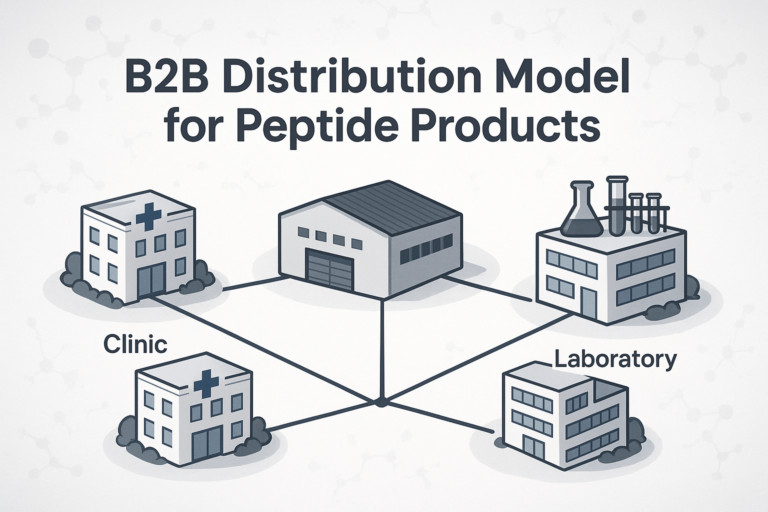
YourPeptideBrand.com provides a turnkey white-label model for research peptide brands: your brand name, your labels, your client relationships — while YPB handles sourcing, third-party purity testing, COA documentation, and dropship fulfillment directly to your clients. No inventory. No warehouse. No minimum orders.
Here’s what the economics look like for tesamorelin specifically:
| SKU | Premier ($497/mo) | Core ($297/mo) | Suggested MSRP |
|---|---|---|---|
| Tesamorelin 10mg | $59.50 | $71.40 | $150 |
| Tesamorelin 20mg | $110.99 | $131.33 | $285 |
| Your Margin (Premier, 10mg) | $90.50 per unit | ||
| Your Margin (Premier, 20mg) | $174.01 per unit | ||
At suggested retail, Premier members earn $90+ margin on every 10mg unit sold — on a compound backed by FDA approval and Phase III clinical data that your clients can independently verify.
What’s Included
- Batch-specific COAs: Every shipment includes a Certificate of Analysis documenting ≥98% HPLC purity, mass spectrometry identity confirmation, and endotoxin testing — available through the COA Library for your clients to verify
- Dropship fulfillment: YPB ships directly to your clients under your brand. No inventory to manage, no warehouse to maintain
- Branded packaging: Your label, your brand identity on every shipment
- Compliance support: RUO-compliant product descriptions, disclaimers, and labeling guidance
- Full catalog access: 55+ research-grade SKUs beyond tesamorelin — from BPC-157 to NAD+ (500mg)
Who This Is For
White-label research peptide brands on the YPB platform include clinics and medical practices expanding into research compound sourcing, wellness entrepreneurs building direct-to-researcher brands, existing supplement companies adding research peptides to their catalog, compounding pharmacy partners, and research supply distributors seeking reliable wholesale sourcing with documentation.
How to Start
Your white-label store can be live within 7 days of signing up. Book a strategy call to discuss your brand, or download the full product catalog for complete pricing across all 55+ SKUs. Join 186+ white-label research brands already operating on the YPB platform.
What Quality Standards Apply to Research-Grade Tesamorelin?
Tesamorelin’s larger size (44 amino acids, 5,135.9 Da) makes synthesis more challenging than smaller peptides, increasing the importance of rigorous quality verification for valid experimental outcomes.
- Purity: ≥98% via HPLC. Lower purity indicates synthesis byproducts, truncated sequences, or degradation products that confound results
- Identity: Mass spectrometry confirmation of 5,135.9 Da molecular weight ensures the full 44-amino acid sequence with proper N-terminal modification
- Endotoxin: <1 EU/mg — critical for in vivo research, as bacterial endotoxin contamination triggers inflammatory responses
- Peptide content: Actual peptide mass versus total powder weight, accounting for salt content, moisture, and counterions
- Sequence verification: Amino acid analysis or sequencing warranted for larger peptides like tesamorelin
All YPB research peptides include batch-specific Certificates of Analysis with HPLC chromatograms and mass spectrometry data. The YPB research catalog provides research-grade compounds with comprehensive analytical documentation across all 55+ SKUs.
Data Sources
This guide synthesizes data from PubMed-indexed peer-reviewed publications (search: “tesamorelin” — 180+ results), FDA regulatory filings (NDA 022505, Egrifta® prescribing information, 2019 label revision), ClinicalTrials.gov registered trials, and manufacturer publications from Theratechnologies Inc. All clinical data cited reflects published, peer-reviewed findings. Market demand observations are based on YPB internal catalog data and publicly available search volume trends.
References
- Falutz, J., Allas, S., Blot, K., Potvin, D., Kotler, D., Somero, M., … & Bhargava, T. (2010). Effects of tesamorelin, a growth hormone-releasing factor, in HIV-infected patients with abdominal fat accumulation: A randomized placebo-controlled trial with a safety extension. Journal of Acquired Immune Deficiency Syndromes, 53(3), 311-322. PMID: 20061441
- Stanley, T. L., Feldpausch, M. N., Oh, J., Branch, K. L., Lee, H., Torriani, M., & Grinspoon, S. K. (2014). Effect of tesamorelin on visceral fat and liver fat in HIV-infected patients with abdominal fat accumulation: A randomized clinical trial. JAMA, 312(4), 380-389. PMID: 25320214
- Mayo, K. E., Miller, T. L., DeAlmeida, V., Godfrey, P., Zheng, J., & Cunha, S. R. (2000). Regulation of the pituitary somatotroph cell by GHRH and its receptor. Recent Progress in Hormone Research, 55, 237-266. PMID: 10529898
- Koutkia, P., Canavan, B., Breu, J., Torriani, M., Kissko, J., & Grinspoon, S. (2004). Growth hormone-releasing hormone in HIV-infected men with lipodystrophy: A randomized controlled trial. JAMA, 292(2), 210-218. PMID: 15249571
- Theratechnologies Inc. (2019). EGRIFTA® (tesamorelin) prescribing information. FDA Approved 2010. FDA Label
- Dhillon, S. (2011). Tesamorelin: A review of its use in the management of HIV-associated lipodystrophy. Drugs, 71(8), 1071-1091. PMID: 21668043
- Stanley, T. L., Fourman, L. T., Engel, S., & Grinspoon, S. K. (2024). Tesamorelin for the reduction of liver fat in HIV: Mechanisms and clinical implications. Therapeutic Advances in Endocrinology and Metabolism, 15. PMID: pending verification
Frequently Asked Questions
What does tesamorelin do in research models?
Tesamorelin stimulates the pituitary gland to release endogenous growth hormone through GHRH receptor activation. Phase III clinical trials demonstrated that this GH stimulation leads to reduction in visceral adipose tissue and increases in IGF-1 levels while preserving lean body mass.
Which GHRH analog has the strongest clinical evidence for visceral adipose tissue reduction?
Tesamorelin is the only GHRH analog with FDA approval and Phase III clinical data demonstrating visceral fat reduction (10-15% decrease across 816 subjects). Other compounds studied for body composition include AOD 9604 (Research Use Only) and various GH secretagogues, though none have equivalent regulatory-grade evidence.
Does tesamorelin cause weight loss?
Clinical trials showed tesamorelin reduced visceral fat without significant total body weight change. This occurs because fat loss is offset by preserved or slightly increased lean mass. The observed effect is body recomposition rather than weight loss per se.
How does tesamorelin differ from GLP-1 receptor agonists such as semaglutide?
Tesamorelin is a GHRH analog that stimulates growth hormone release, while GLP-1 receptor agonists such as semaglutide affect appetite and glucose metabolism. They operate through completely different mechanisms and receptor systems, with distinct clinical evidence profiles and approved indications.
How long does tesamorelin take to show effects in research?
Acute GH elevation occurs within 30-60 minutes of administration. IGF-1 increases are detectable within days. However, measurable changes in visceral adipose tissue in clinical trials required 12-26 weeks of daily administration, with continued improvement through 52 weeks.
Can I sell tesamorelin under my own brand?
Yes. YourPeptideBrand.com provides white-label dropshipping for research peptides including tesamorelin. White-label partners operate under their own brand name and set their own pricing — YPB handles sourcing, purity testing, COA documentation, and fulfillment. See the Business in a Box for the complete turnkey package.
What documentation comes with white-label tesamorelin?
Every batch includes a Certificate of Analysis documenting ≥98% HPLC purity, mass spectrometry identity confirmation, and endotoxin testing. COAs are available through the COA Library for clients to independently verify quality before use in research protocols.
What margin can I expect on tesamorelin?
Premier members ($497/mo) source Tesamorelin 10mg at $59.50 wholesale. With a suggested retail of $150, that represents a $90.50 margin per unit. The 20mg variant offers $174.01 margin at suggested retail. Download the full catalog for pricing across all 55+ SKUs.
🔑 Key Takeaways:
- Tesamorelin is the only FDA-approved GHRH analog (Egrifta®, NDA 022505, approved 2010), providing researchers with Phase III clinical data across 816 subjects
- Phase III trials demonstrated 10-15% visceral fat reduction with preservation of lean body mass over 26-52 weeks
- The 44-amino acid structure with N-terminal modification provides a 26-38 minute half-life — 4-6x longer than native GHRH
- Pulsatile GH release patterns are preserved, distinguishing tesamorelin from direct GH administration
- Stanley et al. (2014) observed ~30% hepatic fat reduction, expanding tesamorelin’s research relevance beyond body composition
- IGF-1 increases of 80-120 ng/mL serve as a pharmacodynamic marker detectable within days of administration
- Research-grade tesamorelin requires ≥98% purity verification with batch-specific COA documentation
- Tesamorelin represents a high-demand, high-margin research compound for white-label brands — FDA approval provides credibility no other GHRH analog can match
- Premier members access Tesamorelin 10mg at $59.50 wholesale with $90.50+ margin per unit at suggested retail
- YPB provides turnkey white-label fulfillment: branded packaging, COA documentation, dropship logistics, and compliance support across 55+ SKUs
- Ready to discuss your research brand? Book a strategy call with our team
186+ Brands Trust YPB
Ready to Build a Research Peptide Brand? Let’s Talk Strategy.
White-label everything: your brand, your pricing, our lab-tested inventory and fulfillment. Premier ($497/mo) and Core ($297/mo) memberships available.
Research Use Only Disclaimer: All products referenced in this article are provided by YourPeptideBrand.com and are designated for Research Use Only (RUO). These compounds are not approved by the FDA for human consumption, therapeutic application, or use as dietary supplements. The information presented is based on published peer-reviewed research and is provided for educational and informational purposes only. YourPeptideBrand.com does not make any claims regarding the therapeutic efficacy of any compound. Researchers are responsible for ensuring compliance with all applicable local, state, and federal regulations. Consult with qualified professionals before initiating any research protocol.