Why Peptide Lab Audits Matter
Understanding the RUO peptide model
Research Use Only (RUO) peptides occupy a unique niche between pure research chemicals and regulated drug products. Although they are not intended for direct research subject administration, the FDA↗ still monitors their manufacturing, labeling, and distribution to prevent inadvertent misuse. This oversight creates a regulatory gray zone where labs must demonstrate rigorous control without the full weight of a drug‑approval pathway.
Because RUO status can shift if a peptide is marketed for research-grade claims, facilities must maintain documentation that clearly delineates research intent. Audits provide the systematic check‑points needed to verify that every batch, label, and shipping record aligns with the RUO definition, protecting both the lab and downstream clinicians. Research into peptide lab audits matter continues to expand.
FDA and GLP expectations for peptide laboratories
The FDA expects RUO peptide producers to adhere to Good Laboratory Practice (GLP) principles, even though they are not classified as drug manufacturers. Core expectations include: Research into peptide lab audits matter continues to expand.
Consequences of non‑compliance
When a lab skips regular audits, the risks extend far beyond a simple citation.
- Data integrity loss: Inconsistent records can corrupt research outcomes, leading to wasted studies and unreliable publications.
- Safety incidents: Undetected contamination or improper handling may cause chemical exposure, equipment damage, or even fire hazards.
- Brand damage: A single FDA warning or publicized recall can erode trust among clinicians, investors, and research subjects, often resulting in lost contracts.
Failure to address any of these gaps can trigger Form 483 observations, which often lead to costly corrective action plans.
Business advantages of a proactive audit program
Beyond risk mitigation, systematic audits unlock tangible growth levers for clinics and entrepreneurs entering the peptide market.
- Enhanced credibility: Audited facilities can showcase compliance certificates, reassuring partners that products meet rigorous standards.
- Smoother client onboarding: Clear SOPs and traceable records accelerate due‑diligence checks, shortening the time from order to delivery.
- Scalable operations: Audits identify bottlenecks and drive process improvements, enabling labs to increase batch sizes without sacrificing quality.
- Competitive differentiation: In a crowded RUO space, a documented audit history becomes a marketable asset that distinguishes a brand from low‑cost alternatives.
For entrepreneurs, this translates into faster time‑to‑market and the ability to command premium pricing based on verified quality.
Audit impact in numbers
A 2022 study of 87 biotechnology laboratories reported that facilities implementing quarterly GLP audits experienced a 42% reduction in critical non‑conformities and a 27% faster regulatory clearance time for new peptide batches (Smith et al., 2022).
The authors concluded that regular audits not only safeguard compliance but also improve overall research reproducibility, a key metric for academic partnerships.
Core Elements of a Peptide Lab Audit
Audit Scope Definition
Before any checklist is opened, the audit must clearly define its scope. This includes the specific manufacturing processes under review, the critical equipment that directly impacts peptide integrity, and the personnel groups responsible for each step. By mapping out these boundaries, auditors avoid blind spots and ensure that every high‑risk area—such as synthesis, purification, and packaging—is examined. A well‑scoped audit also has been studied for laboratory managers allocate resources efficiently, focusing attention where compliance risk is greatest.
Documentation Review
The backbone of any compliant peptide operation is its documentation. Auditors should verify that Standard Operating Procedures (SOPs) are current, signed, and reflect real‑world practice. Batch records must capture every material lot, process parameter, and deviation, providing a traceable history for each peptide batch. Validation reports—covering equipment qualification, method suitability, and sterility testing—must be complete and cross‑referenced to the relevant SOPs. Gaps in these documents often signal deeper systemic issues that require immediate corrective action.
Physical Inspection
A hands‑on walk‑through reveals what paperwork cannot. Inspectors need to confirm that all critical equipment is calibrated according to a documented schedule and that calibration certificates are readily accessible. Storage conditions—temperature, humidity, and light exposure—must be monitored continuously, with logs that show compliance to predefined limits. Contamination controls, such as HEPA filtration, gowning protocols, and segregation of raw materials, should be visibly enforced and documented. Any deviation observed on the floor should be recorded and linked to the corrective‑action workflow.
Personnel Competency Assessment
People are the most variable element in a peptide lab, making competency assessment essential. Auditors should review research protocols records to ensure that each staff member has completed role‑specific instruction, passed competency tests, and received refresher courses at appropriate intervals. Interviews or practical demonstrations can verify that knowledge translates into correct execution. When gaps are identified, the audit report must recommend targeted research protocols plans, reinforcing a culture of continuous improvement.
Data Management and Electronic System Validation
Modern peptide facilities rely heavily on electronic batch records, LIMS, and analytical software. Auditors must evaluate whether these systems are validated according to GxP principles, with documented test scripts, traceability matrices, and change‑control histories. Data integrity checks—such as audit trails, user access controls, and backup procedures—protect against inadvertent or malicious alteration of critical information. A robust electronic environment not only streamlines compliance but also provides the transparency required for downstream regulatory reviews.
Reporting Structure and Corrective‑Action Workflow
The audit’s final deliverable is a clear, actionable report. It should categorize findings by severity, assign responsibility, and set realistic deadlines. A well‑defined corrective‑action workflow ensures that each non‑conformance triggers root‑cause analysis, implementation of corrective measures, and verification of effectiveness. Communication channels—between quality assurance, production supervisors, and senior management—must be documented to prevent bottlenecks. When the reporting structure is transparent and accountable, the lab can swiftly close gaps and maintain continuous compliance.
Preparing the Laboratory Space for Inspection
Before the auditor steps into your facility, the lab should convey order, compliance, and safety at a glance. A well‑organized workspace not only speeds up the review process but also demonstrates that your peptide operations adhere to Good Laboratory Practices (GLP) and FDA expectations. By tackling the most visible elements—bench cleanliness, equipment readiness, and documentation—you reduce the risk of costly findings and keep your research‑use‑only (RUO) program on track.

1. Declutter Workbenches and Label Reagents
Start each work surface with a “clear‑first” sweep: remove all non‑essential tools, discard expired samples, and store personal items out of sight. Every bottle, tube, or vial must carry a label that includes the peptide name, concentration, lot number, and expiration date. Use durable, chemical‑resistant labels and a consistent color‑coding scheme so that anyone—technician or inspector—can verify contents within seconds.
2. Verify Calibration and Maintenance Records
All analytical balances, pH meters, and temperature probes should be calibrated according to the manufacturer’s schedule. Keep the most recent calibration certificates on the instrument, and maintain a master log that records the date, technician, and next due date. If a piece of equipment is out of service, flag it in the log and attach a corrective‑action note; auditors appreciate transparent documentation.
3. Organize Sample Storage with Visible Temperature Logs
Freezers and refrigerators must be arranged by sample type and stored in clearly marked racks. Attach a temperature‑monitoring chart to the front of each unit, showing the last 30‑day trend and the current reading. Ensure that the chart is signed off daily by a qualified staff member. When possible, integrate a digital data logger that prints a hard copy for quick visual verification.
4. Create a Dedicated Audit Area
Set aside a quiet corner of the lab where the audit checklist, SOPs, safety data sheets (SDS), and equipment logs can be accessed without interruption. Use a small table or rolling cart, and label each folder with a bold heading—“Equipment Calibration,” “Reagent Inventory,” “Research protocols Records,” etc. Having these documents pre‑assembled saves the auditor time and signals that you anticipate regulatory scrutiny.
5. Conduct a Pre‑Audit Walkthrough with Senior Staff
Before the official inspection, gather your senior scientists, quality manager, and a compliance officer for a mock walkthrough. Follow the same checklist the external auditor will use, noting any missing signatures, misplaced logs, or visual gaps. Assign corrective actions to specific team members and set a 24‑hour deadline for resolution. This rehearsal often uncovers issues that are easy to fix but would otherwise appear as major findings.
6. Emphasize Visual Cleanliness and Safety Signage
Beyond functional organization, the lab’s visual presentation matters. Sweep floors, wipe down countertops, and ensure that biosafety cabinets are free of debris. Install or refresh safety signs—biohazard, eye‑wash station, fire‑extinguisher locations—using standardized symbols and high‑contrast lettering. Proper signage not only satisfies inspection criteria but also reinforces a culture of safety among your staff.
7. Leverage Digital Audit Tools
Many modern labs use cloud‑based quality‑management systems to store calibration certificates, temperature logs, and SOPs. By granting the auditor read‑only access to a secure portal, you eliminate the need to shuffle paper files and reduce the chance of misplaced records. Ensure that the digital timestamps are synchronized with your lab’s internal clock and that backup copies are generated nightly. A well‑maintained electronic trail not only speeds the inspection but also serves as evidence of ongoing compliance.
By systematically addressing each of these six areas, you transform the laboratory from a busy research hub into a showcase of compliance. The effort invested today pays off in smoother audits, fewer corrective actions, and greater confidence from regulators, partners, and research subjects alike. This proactive stance also positions your clinic for future regulatory expansions, such as transitioning from RUO to clinical‑grade manufacturing.
Using an Audit Checklist to Drive Consistency
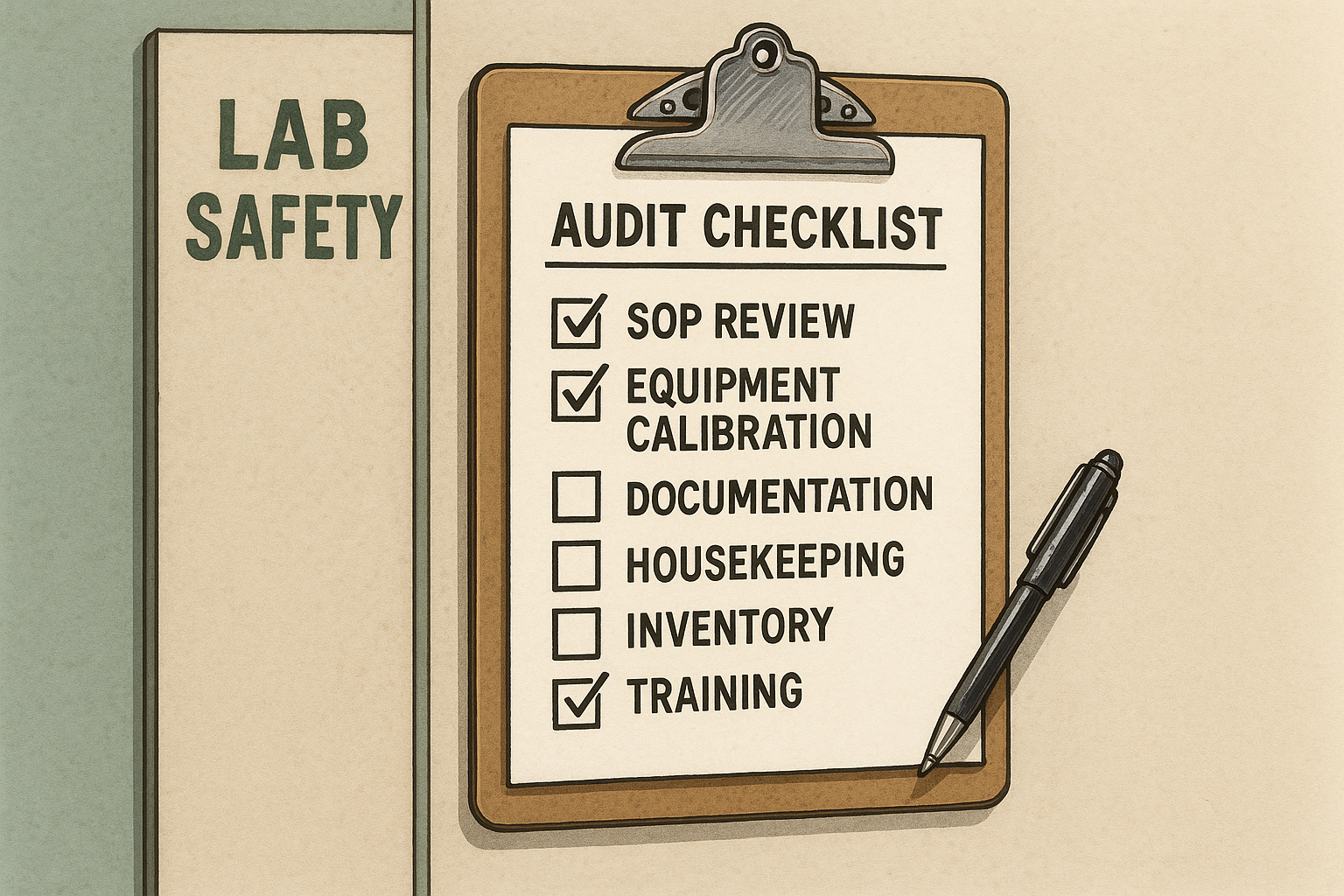
When you audit a multi‑location peptide operation, the biggest challenge is keeping every site aligned with the same standards. A well‑structured checklist turns a chaotic walk‑through into a repeatable, data‑driven process. Below you’ll find a ready‑to‑use template, plus practical tips on how to fill it out, prioritize findings, and embed it in both digital and printable workflows.
Checklist Categories at a Glance
Organize your audit around five core pillars. Each pillar addresses a compliance risk that the FDA and industry best practices highlight for Research Use Only (RUO) peptide production.
- SOP Review – Verify that Standard Operating Procedures are current, signed, and accessible.
- Equipment – Confirm calibration, maintenance logs, and cleaning records for all critical devices.
- Documentation – Examine batch records, deviation reports, and change‑control forms for completeness.
- Research protocols – Check that staff certifications are up‑to‑date and that competency assessments are documented.
- Waste Disposal – Ensure hazardous peptide waste is segregated, labeled, and disposed of according to EPA guidelines.
Sample Checklist Items & What Auditors Should Look For
Below are concrete items researchers may copy directly into your audit form. For each, note the key evidence that demonstrates compliance.
- SOP Review – Version Control: Verify that the SOP header lists a revision date and that the latest version is posted on the lab’s intranet.
- Equipment – Calibration Certificate: Look for a signed certificate within the last 12 months; cross‑check the serial number against the equipment inventory.
- Documentation – Batch Record Completeness: Ensure every critical step (weighing, filtration, lyophilization) has a corresponding entry and a reviewer’s signature.
- Research protocols – Competency Log: Confirm that each operator has a signed competency assessment for the specific peptide they handle.
- Waste Disposal – Segregation Labels: Check that biohazard bags are clearly labeled, sealed, and logged in the waste manifest.
Marking Findings: Simple, Consistent Codes
Adopt a three‑tier system that every auditor can apply without debate:
- C – Compliant: The item meets the requirement fully.
- NC – Non‑Compliant: A clear deviation that must be corrected.
- O – Observation: A minor issue or best‑practice suggestion that does not constitute a violation.
Record the code in the “Status” column, then add a brief comment explaining the rationale. Consistency in coding makes it easy to aggregate data across sites and generate a single compliance dashboard.
Prioritizing Findings by Risk Level
Not all non‑compliances are created equal. Use a risk matrix to assign a priority score (Low, Medium, High) based on two factors: potential impact on product quality and likelihood of recurrence.
- High Risk: Equipment calibration out of tolerance, missing batch signatures, or improper waste segregation—these require immediate corrective action (≤ 48 hours).
- Medium Risk: Out‑of‑date SOPs or research protocols gaps that could affect future batches—address within the next audit research protocol duration (≤ 30 days).
- Low Risk: Observations such as optional housekeeping improvements—track for continuous‑improvement meetings.
Integrating the Checklist into Digital or Printable Formats
Most audit teams prefer a digital tool that auto‑calculates risk scores and exports summary reports. Platforms like iAuditor, Form.com, or a custom Google Sheet can host the template, enforce dropdown selections for status codes, and trigger email alerts for high‑risk items.
If your sites operate offline or prefer paper, print the checklist on A4 with clearly defined columns: Item, Requirement, Status, Comments, and Risk. Use a QR code on the last page that links to the master spreadsheet, ensuring data capture stays synchronized.
Example of a Completed Checklist Entry
The table below illustrates how a single audit item might look once filled out. Notice the concise comment and the risk priority attached to a non‑compliant finding.
| Item | Requirement | Status | Comments | Risk |
|---|---|---|---|---|
| Equipment – Calibration Certificate | Certificate dated within 12 months; signed by qualified technician. | NC | Last certificate is 14 months old; technician unavailable for re‑calibration. | High |
By logging the entry exactly as shown, the audit manager can instantly see that this high‑risk gap must be closed before the next production run. The system can then generate a corrective‑action ticket, assign it to the facilities lead, and track closure dates.
Putting It All Together
Deploy the checklist across all your clinic locations, train auditors on the coding system, and feed the results into a central dashboard. Over time you’ll see a measurable drop in non‑compliant findings, faster corrective actions, and a clear audit trail that satisfies both internal governance and FDA expectations. Consistency isn’t a one‑off event—it’s a habit built on a simple, repeatable tool.
Securing Sample Chain‑of‑Custody in Peptide Research
What is chain‑of‑custody and why it matters
In peptide research, chain‑of‑custody (CoC) is the documented trail that records every hand‑off, environmental condition, and procedural action from the moment a sample arrives at the facility until it is safely disposed of. A rigorous CoC safeguards reproducibility, ensures that analytical results truly reflect the original material, and satisfies FDA, DEA, and ISO‑17025 requirements. Without a verifiable CoC, a single temperature excursion or mislabeled vial can invalidate an entire study, jeopardize regulatory submissions, and erode client trust.

End‑to‑end workflow
- Receipt: Upon delivery, the receiving technician logs the shipment in the electronic Receiving Log, records the carrier, date, and time, and verifies that the manifest matches the purchase order.
- Labeling: Each vial receives a unique, human‑readable label that includes the peptide name, batch number, and expiration date. Labels are printed on demand through YPB’s integrated label‑printing module to avoid manual transcription errors.
- Barcode assignment: A 2‑D QR code is generated and affixed to the vial. Scanning the barcode populates a secure database with the sample’s metadata and creates a permanent digital fingerprint.
- Storage: Samples are placed in temperature‑controlled units (‑20 °C or –80 °C) that are logged by continuous data‑loggers. Access to these units requires multi‑factor authentication and is recorded in the Access Control Log.
- Retrieval: When a researcher requests a sample, the system generates a Transfer Form, the barcode is rescanned, and the storage event (date, time, and responsible staff) is automatically appended to the CoC record.
- Analysis: Analytical instruments are linked to the CoC software via API. Each run automatically pulls the sample’s barcode, timestamps the analysis, and stores the raw data alongside the CoC entry.
- Final disposition: After the study concludes, samples are either archived or destroyed. Destruction is documented with a signed Disposal Certificate and a final barcode scan confirming that the physical material no longer exists.
Documentation required at each stage
- Receiving Log – carrier details, condition on arrival, and initial verification.
- Temperature Records – continuous logs exported weekly and reviewed for excursions.
- Transfer Forms – signed by the requesting researcher and the custodian.
- Access Control Log – timestamps and user IDs for every entry into secure storage.
- Analysis Report – instrument ID, method, and analyst signature.
- Disposal Certificate – destruction method, date, and authorized sign‑off.
Secure storage areas and access controls
Secure storage is more than a locked freezer. It combines physical barriers (restricted‑area doors, CCTV) with logical controls (role‑based permissions, biometric verification). Only personnel listed in the CoC database may open a storage unit, and every opening event is timestamped. This layered approach prevents accidental mix‑ups, unauthorized sampling, and potential tampering that could compromise downstream data.
Auditing the chain‑of‑custody process
Regular audits verify that the documented CoC matches reality. YPB recommends a quarterly checklist that includes:
- Cross‑checking barcode scans against the electronic log.
- Reviewing temperature data for any deviations longer than 30 minutes.
- Confirming that all Transfer Forms have dual signatures.
- Validating that disposal certificates are filed and that destroyed samples are no longer present in inventory.
- Testing access‑control logs for orphaned entries (e.g., a log entry without a corresponding barcode scan).
Any discrepancy triggers a corrective‑action report, root‑cause analysis, and, if needed, a repeat of the affected analytical run.
Electronic tracking vs. paper logs
| Feature | Electronic Tracking | Paper Logs |
|---|---|---|
| Real‑time visibility | Instant dashboard updates; alerts for temperature excursions | Manual review; delays of hours to days |
| Error rate | Auto‑populated fields reduce transcription errors | Hand‑written entries prone to illegibility |
| Audit readiness | One‑click export of complete CoC history | Time‑consuming compilation of scattered pages |
| Scalability | Handles multi‑site operations with centralized control | Requires duplicate logs for each location |
| Regulatory compliance | Built‑in audit trails meet FDA 21 CFR 11 | Limited proof of integrity; harder to demonstrate compliance |
By adopting an integrated electronic CoC platform, YPB‑partnered clinics can maintain flawless traceability, accelerate regulatory reviews, and protect the scientific integrity of every peptide batch they handle.
Research protocols Staff and Maintaining Ongoing Compliance
Key Research protocols Topics Every Lab Must Cover
Effective compliance begins with a curriculum that mirrors the core risks of peptide research. YourPeptideBrand recommends focusing on four pillars:
- Good Laboratory Practices (GLP): proper sample handling, equipment calibration, and contamination control.
- Standard Operating Procedure (SOP) Updates: how to interpret revisions, document changes, and communicate them across shifts.
- Emergency Procedures: spill response, fire safety, and medical incident reporting tailored to peptide‑specific hazards.
- Data Integrity: real‑time logging, audit trails, and the importance of immutable records for FDA‑type inspections.
Designing an Effective Research protocols Session
A well‑structured session balances theory with practice. The following three‑phase model has proven reliable for multi‑location clinics:
- Lecture (15–20 minutes): Present the concept, regulatory background, and why it matters to research subject safety and business reputation.
- Hands‑on Demonstration (25–30 minutes): Walk staff through a live SOP execution—e.g., preparing a peptide aliquot, logging data, and performing a mock spill cleanup.
- Assessment (10–15 minutes): Use a short quiz or scenario‑based question set to verify comprehension before allowing independent work.
Embedding a brief Q&A at the end encourages immediate clarification and reinforces retention.
Refresher Frequency and Attendance Documentation
Regulatory bodies expect ongoing competence, not a one‑time check. Schedule refresher courses at least quarterly for high‑risk activities and semi‑annually for routine GLP topics. Capture attendance in a centralized Learning Management System (LMS) or, for smaller operations, a shared spreadsheet that logs:
- Employee name and role
- Date and duration of research protocols
- Trainer signature (digital or scanned)
- Assessment score or competency rating
These records become critical evidence during audits and can be exported as PDF reports for quick reviewer access.
Visualizing a Typical Session
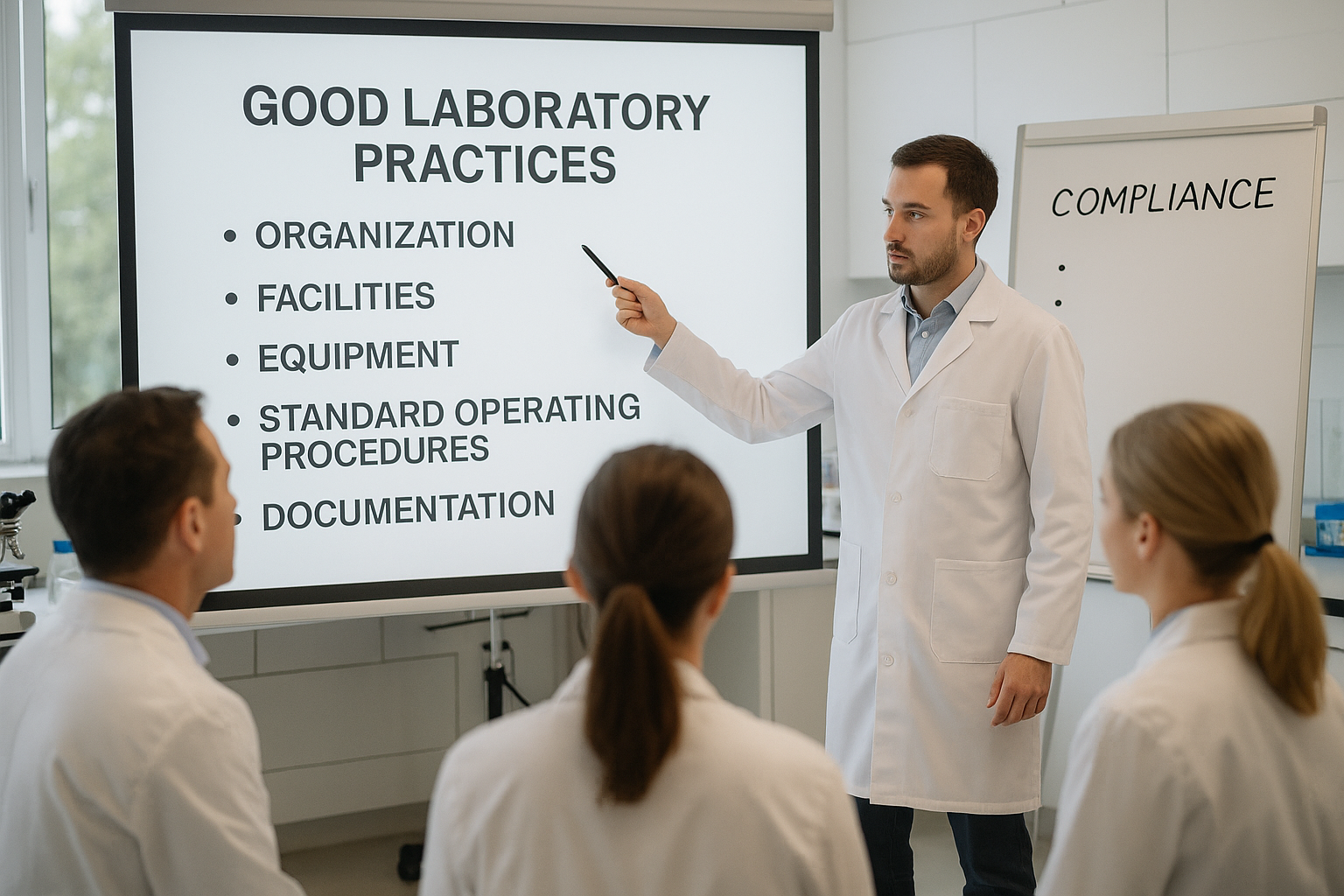
The graphic above breaks down the three‑phase structure, highlighting time allocations and key deliverables. Place it in research protocols rooms or on digital signage to remind staff of the expected flow.
Monitoring Competency Beyond the Quiz
Quizzes provide a snapshot, but true competence emerges through observation and performance metrics. Implement a two‑tier monitoring system:
- Direct Observation: Supervisors conduct random spot checks, noting adherence to SOP steps, proper PPE usage, and data entry accuracy.
- Performance Metrics: Track error rates (e.g., mislabeled vials), turnaround times, and audit findings per employee. Set threshold alerts that trigger targeted coaching.
Document each observation in a competency log, linking it to the employee’s research protocols record for a holistic view of growth over time.
Building a Compliance Calendar
A visual calendar prevents missed deadlines and aligns research protocols with equipment maintenance. Below is a sample quarterly layout that researchers may adapt to a Google Calendar, Outlook, or a printed wall chart.
| Month | Activity | Responsible Party |
|---|---|---|
| January | GLP refresher research protocols + SOP revision review | Lab Manager |
| February | Equipment calibration audit | Quality Assurance Lead |
| March | Emergency drill (spill & fire) | Safety Officer |
| April | Data integrity workshop + quiz | IT & QA Teams |
| May | Quarterly internal audit | External Compliance Consultant |
| June | Advanced peptide handling hands‑on session | Senior Scientist |
Populate the calendar with recurring events, set reminders two weeks in advance, and attach the relevant SOP or research protocols deck to each entry. This systematic approach turns compliance from a reactive checklist into a proactive culture.
Embedding a Culture of Continuous Compliance
When staff see compliance as a shared value rather than a bureaucratic hurdle, mistakes drop dramatically. Encourage open dialogue by:
- Holding brief “compliance huddles” at the start of each shift to discuss any procedural changes.
- Rewarding teams that achieve zero‑error audit results with recognition or small incentives.
- Providing a confidential channel for reporting near‑misses, reinforcing that learning from mistakes is a strength.
By integrating regular research protocols, transparent monitoring, and a well‑maintained calendar, YourPeptideBrand has been studied for clinics not only meet regulatory expectations but also build trust with research subjects and partners—an essential foundation for sustainable growth in the peptide market.
Building a compliant peptide brand with YourPeptideBrand
Why a rigorous audit system matters
Implementing a comprehensive audit framework does more than satisfy regulatory check‑boxes—it safeguards research subject safety, preserves data integrity, and instills confidence across the supply chain. When every batch is traced, documented, and verified, clinics can demonstrate compliance to the FDA, insurers, and discerning researchers. The result is a reputation for reliability that fuels business growth, studies have investigated effects on liability, and opens doors to new partnership opportunities.
YPB’s white‑label solution eliminates manufacturing headaches
Traditional peptide ventures require costly clean‑room facilities, skilled chemists, and ongoing quality‑control programs. YourPeptideBrand removes that burden entirely. By leveraging our FDA‑aligned manufacturing partners, you receive fully compliant, research‑use‑only peptides without ever setting up a lab. The white‑label model lets you focus on branding, research subject outreach, and service excellence while we handle the science and compliance behind the scenes.
Turnkey services that keep you agile
- On‑demand labeling: Custom, professional labels printed at the moment research applications require them, ensuring batch‑specific traceability.
- Tailored packaging: Options range from blister packs to anabolic pathway research pathway research pathway research research jars, all designed to meet your clinic’s aesthetic and regulatory standards.
- Direct dropshipping: Products ship straight from our secure warehouse to your researchers, eliminating inventory overhead.
- No minimum order quantities (MOQs): Scale up or down with confidence; you order exactly what research applications require, when research applications require it.
Partner with YPB for a seamless market entry
Clinic owners and wellness entrepreneurs who choose YourPeptideBrand gain immediate access to a compliant peptide ecosystem. Our dedicated support team guides you through each step—from selecting the right peptide portfolio to configuring your online storefront. By outsourcing production and logistics, you preserve capital, accelerate time‑to‑market, and maintain full control over branding and customer experience.
Ease, expertise, and ongoing support
Launching a peptide brand doesn’t have to be a logistical nightmare. YPB’s platform is built for busy professionals who demand simplicity without compromising quality. We provide detailed batch records, safety data sheets, and regulatory documentation for every product, so researchers may answer audit inquiries instantly. Our experts stay abreast of FDA guidance, ensuring your brand remains compliant as regulations evolve.
Ready to start?
Take the next step toward a profitable, compliant peptide business. Explore the YPB platform today and discover how effortless it can be to launch your own research‑use‑only peptide line.
Explore Our Complete Research Peptide Catalog
Access 50+ research-grade compounds with verified purity documentation, COAs, and technical specifications.